Treatments
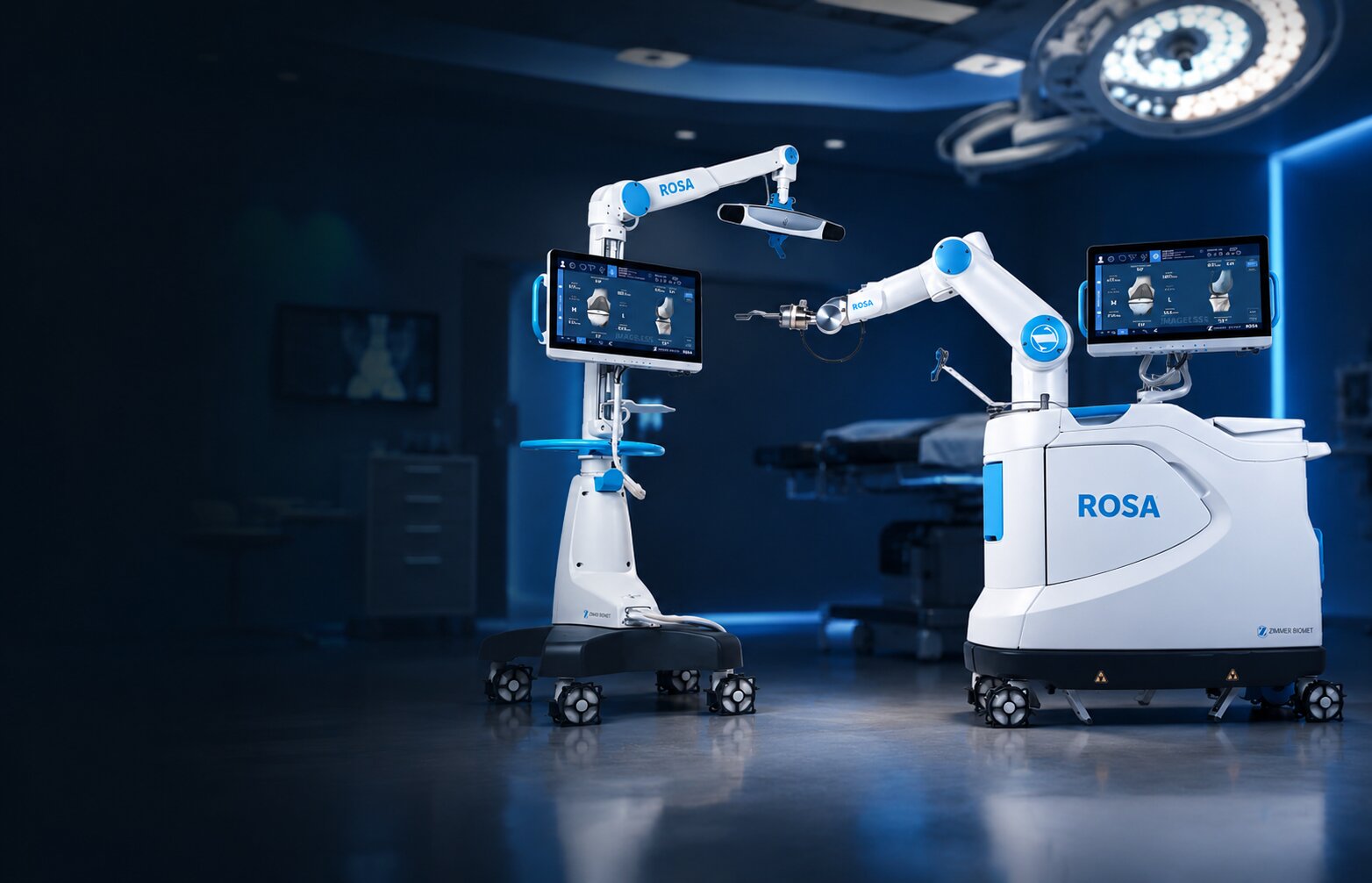
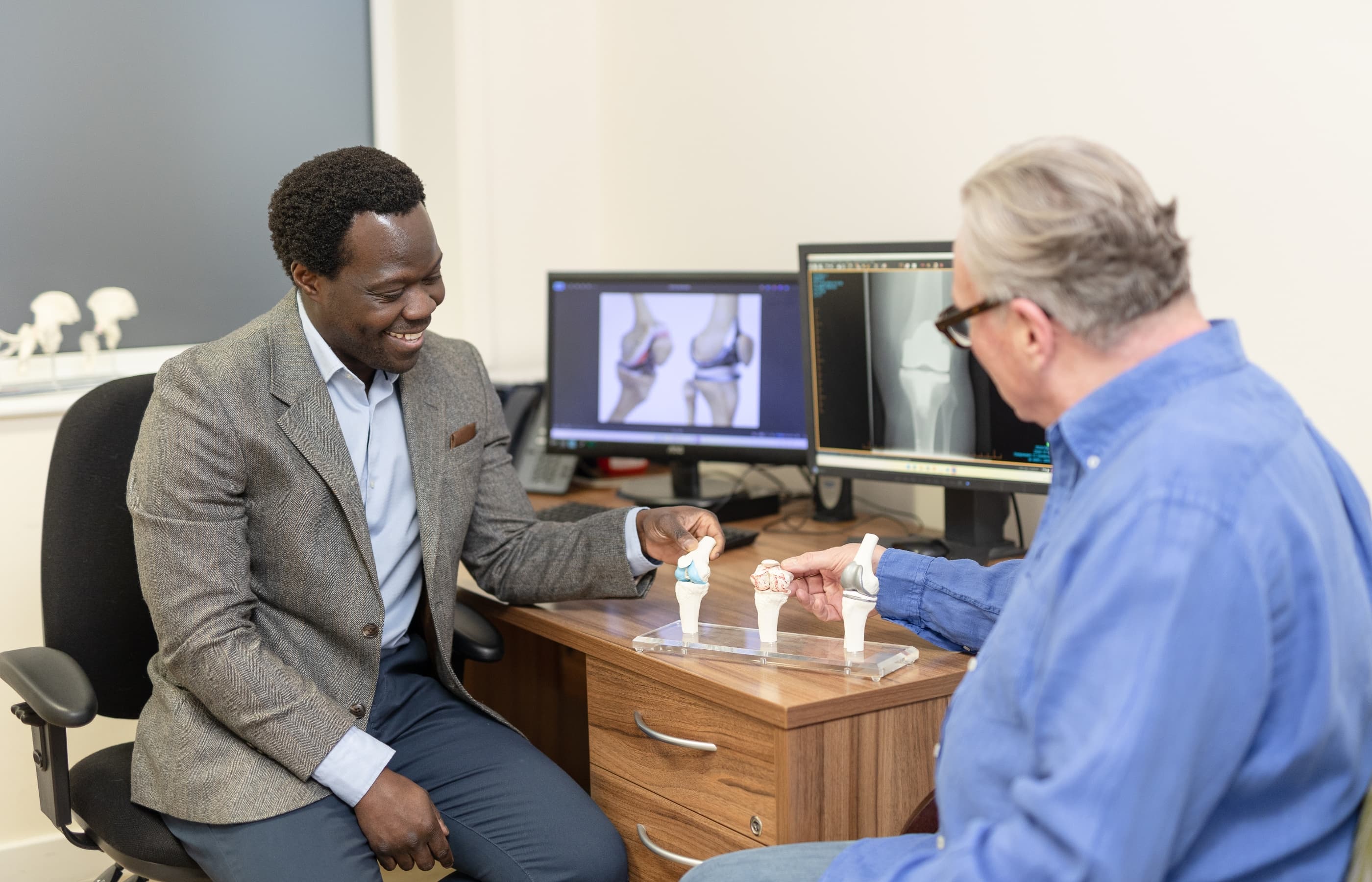
Mr Oni uses robotic assistance for knee replacement, planning and performing each operation around your exact anatomy. The robot does not perform the surgery, it supports Mr Oni's expertise with greater precision, for accurate alignment and a more natural-feeling knee.
about this treatment
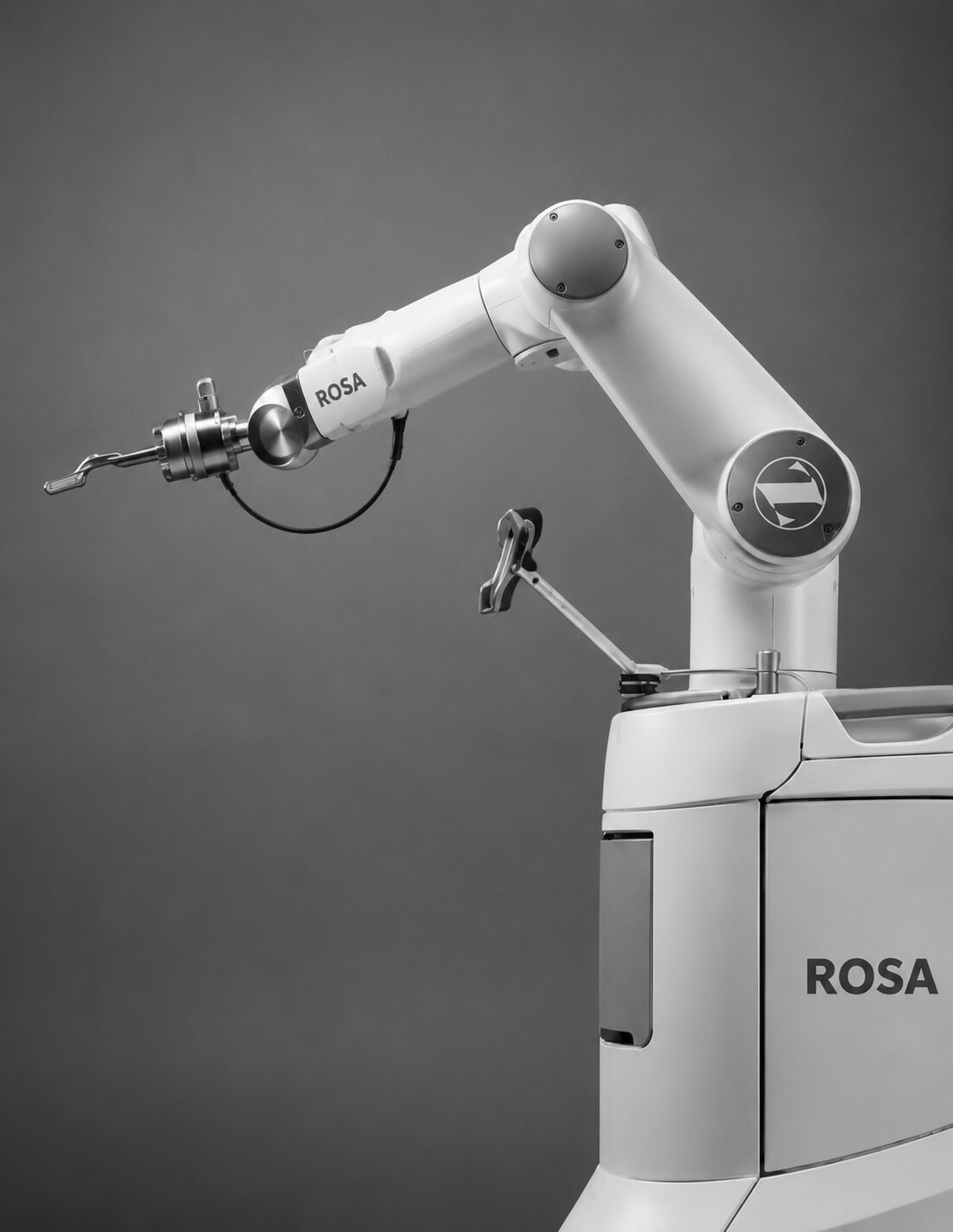
Robotic-assisted knee replacement is a modern advance that lets Mr Oni plan and perform your operation around your individual anatomy and condition. Before surgery, a CT scan builds a precise 3D model of your knee. During surgery, the robotic system provides real-time feedback and guides precise bone preparation and implant positioning within carefully planned, safe boundaries.
Importantly, the robot does not perform the operation. Mr Oni remains in full control throughout. The technology is a tool that supports his surgical expertise and judgement, not a replacement for it.
This accuracy helps optimise the alignment, balance and stability of the knee, all factors linked to comfort, function and how long the implant lasts. Because bone removal is controlled and measured, more of your healthy bone and soft tissue is preserved, which is particularly valuable in partial knee replacement. Mr Oni can use robotic assistance in both total and partial knee replacement.
is this right for me?
Robotic assistance is suitable for most patients having a knee replacement. Mr Oni will discuss whether it is right for your knee at your consultation.
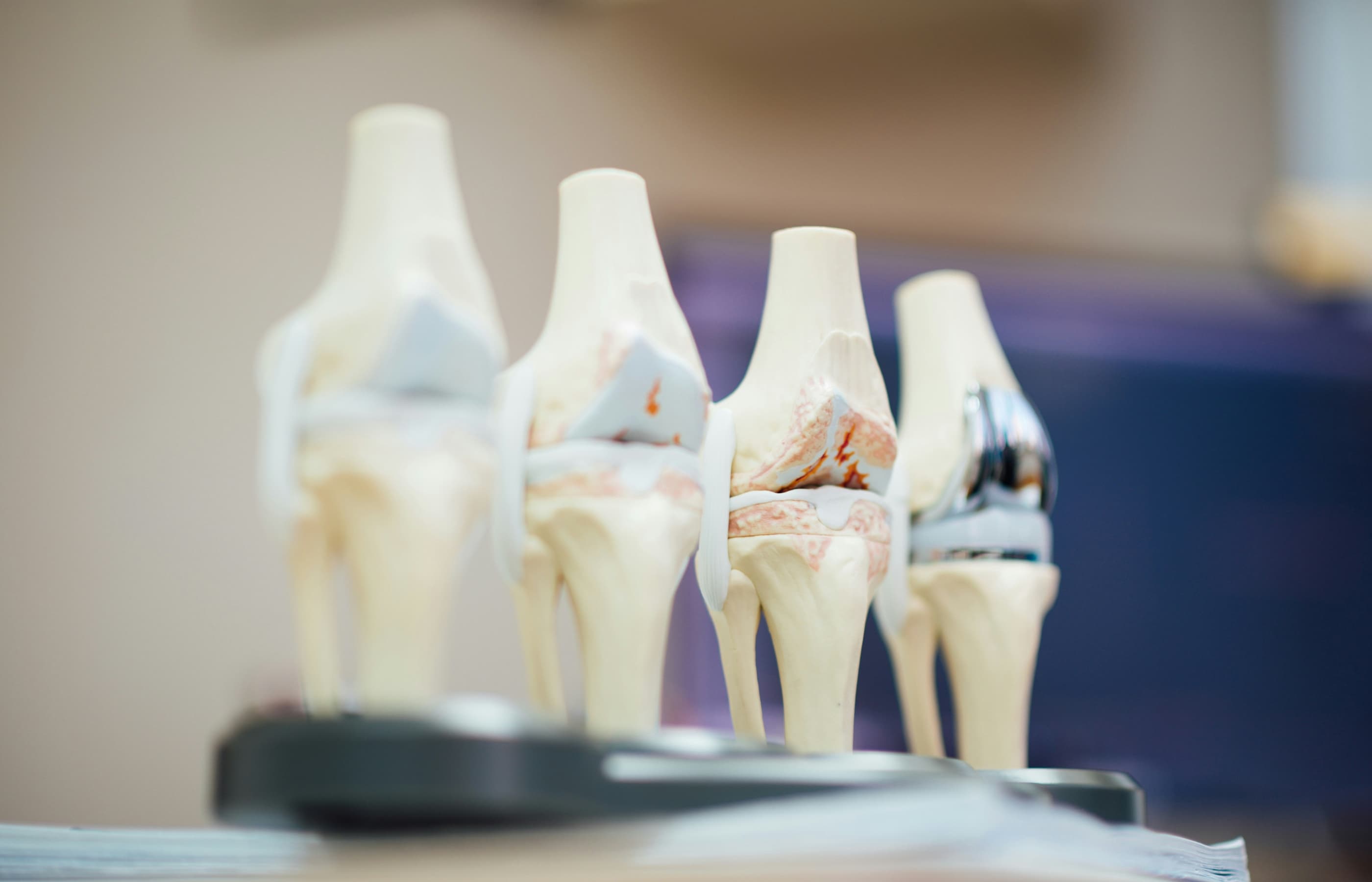
Robotic planning and guidance support accurate implant alignment and balance in a full knee replacement.
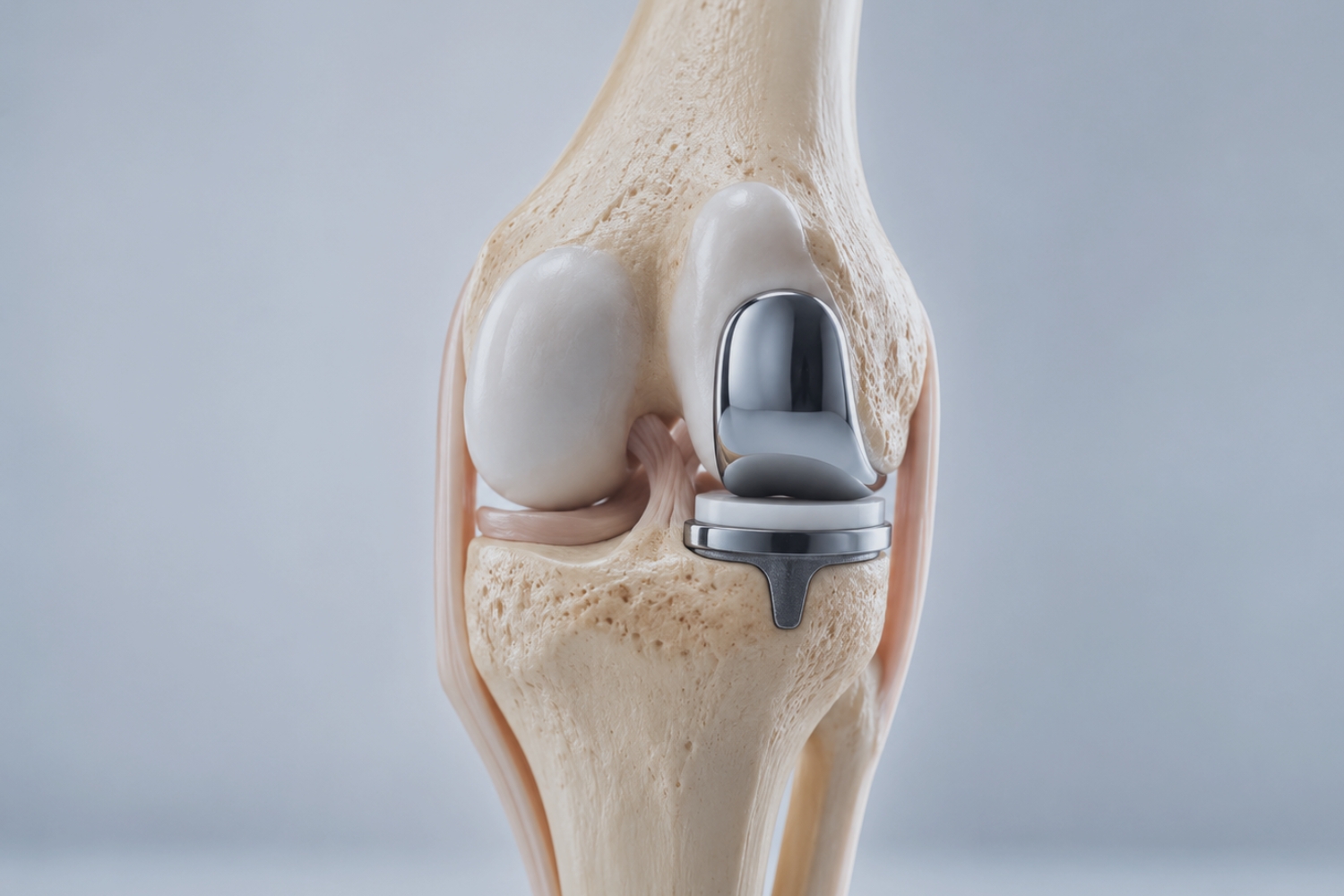
Especially valuable here, as controlled, measured bone removal preserves more of the healthy knee.
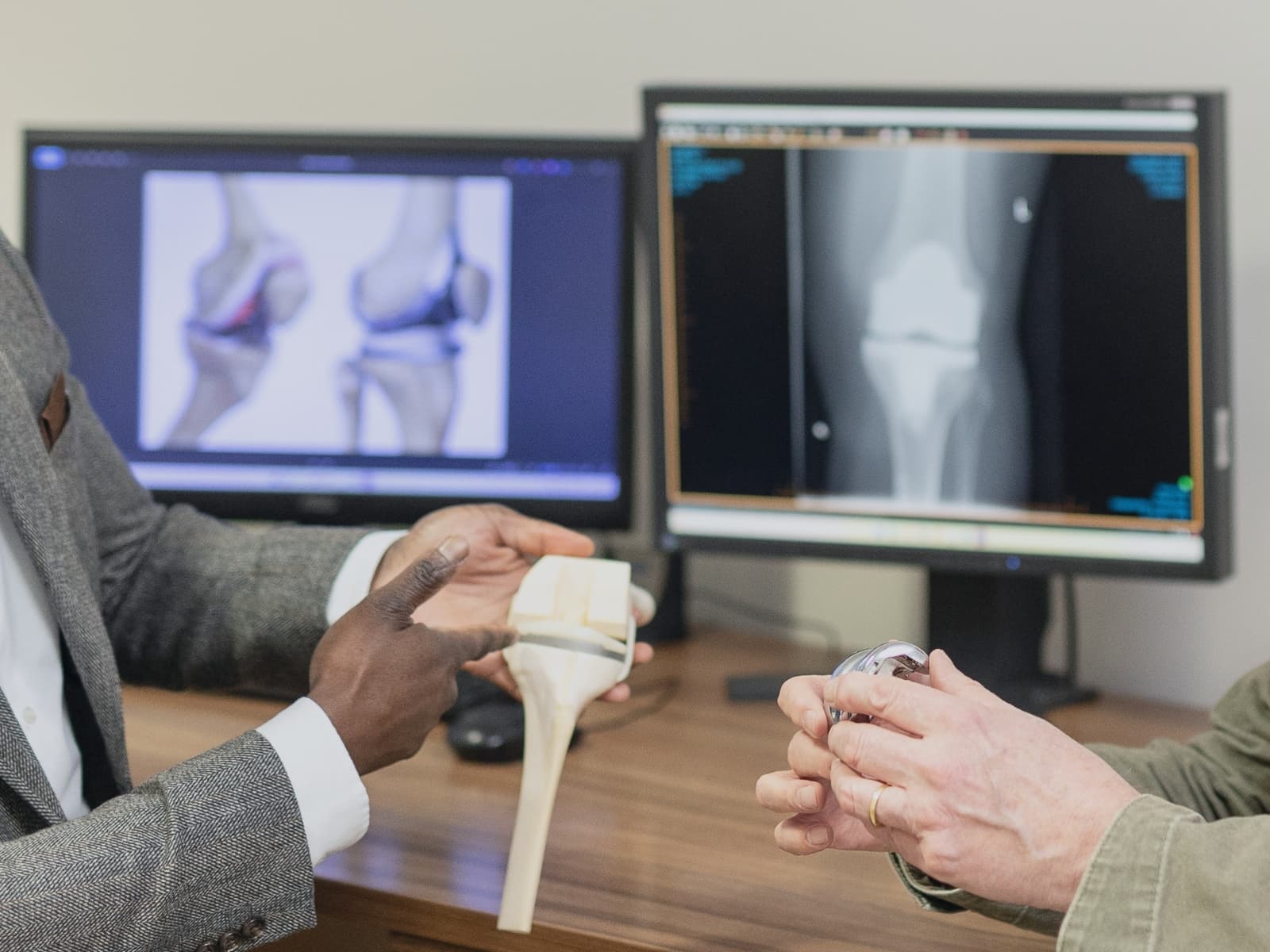
Anyone who wants their knee replacement planned and carried out around their own individual anatomy.
Not sure if you qualify?
Many patients come to Mr Oni uncertain whether their symptoms are "bad enough" for treatment. The answer always comes from a proper clinical assessment - not from a website. Book a consultation and Mr Oni will give you an honest view.
outcomes
These are the benefits and outcomes typically expected from this treatment. Realistic expectations matter, so you go into any treatment fully informed.
A 3D CT model lets Mr Oni plan your knee replacement precisely for your individual joint.
Robotic guidance supports precise bone preparation and implant alignment, key to a comfortable, well-functioning knee.
Controlled, measured bone removal protects more of your healthy bone and soft tissue, especially in partial knee replacement.
The robot is a tool, not the surgeon. Mr Oni plans and performs every step, with technology supporting his expertise.
Recovery follows the same path as your knee replacement. By supporting precise alignment and preserving healthy tissue, robotic assistance may help with comfort and a smoother early recovery.
Physiotherapy begins and you are up and walking short distances, with pain managed by medication.
Walking with a stick and managing stairs, with most patients driving an automatic from around six weeks, sometimes sooner.
Most daily activities, office work and light exercise are resumed within this window.
Continued improvement in strength and movement, with most patients reaching their best outcome at about 12 months
YOU MAY ALSO WANT TO EXPLORE
Replacing the damaged joint surfaces can relieve pain and restore movement.
YOU MAY ALSO WANT TO EXPLORE
Resurfacing only the worn part of the knee to relieve pain and restore movement.
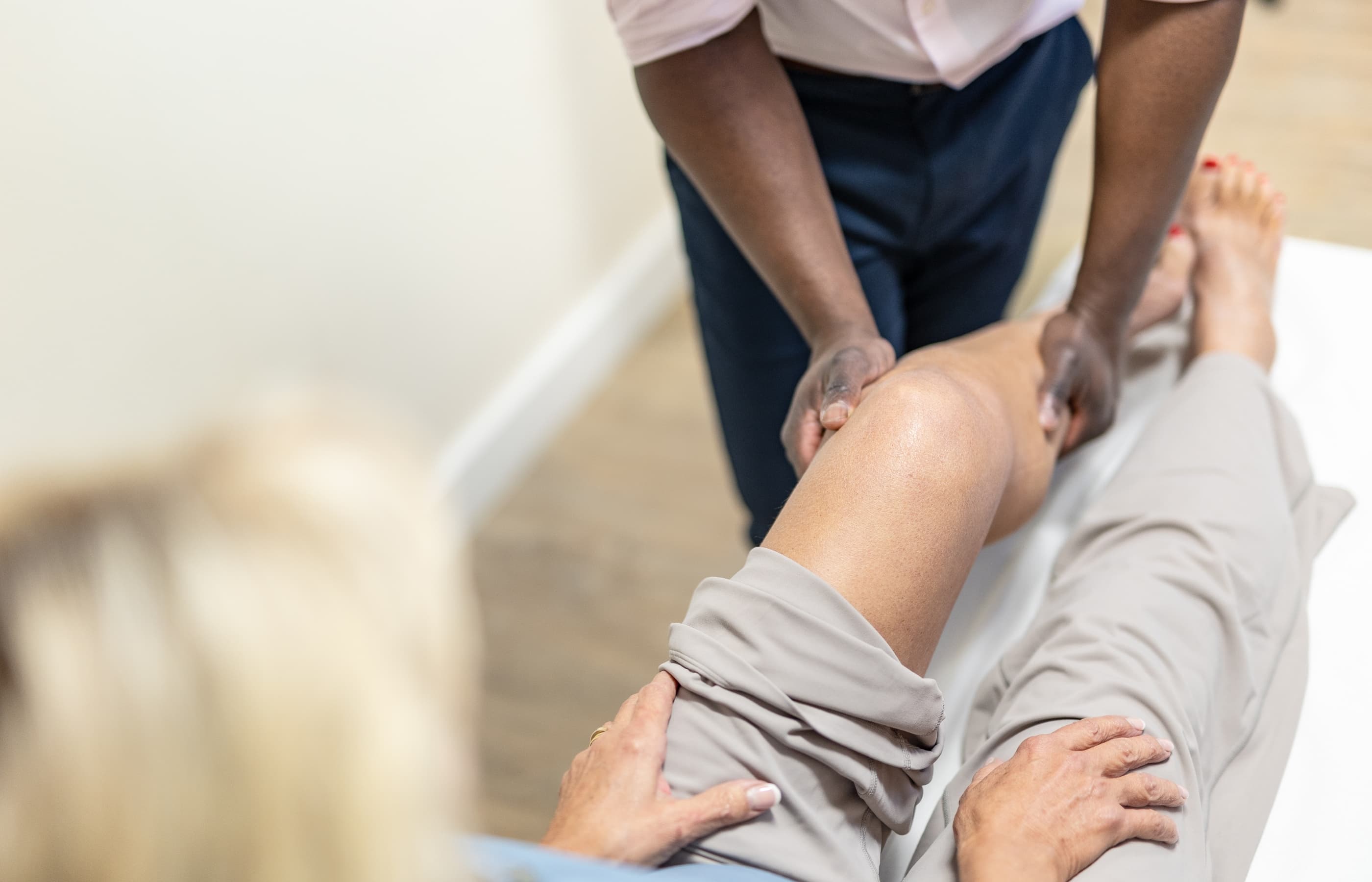
YOU MAY ALSO WANT TO EXPLORE
Keyhole knee surgery to diagnose and treat mechanical problems such as a torn meniscus, a loose fragment, or a knee that locks or catches.
No. Mr Oni performs the operation and stays in full control throughout. The robotic system assists with planning and accuracy, guiding bone preparation within safe boundaries, but it does not make decisions or operate on its own.
Knee replacement is highly successful with traditional techniques. Robotic assistance can improve precision, alignment and personalisation. There is some good long-term evidence on implant survival and increased satisfaction.
Yes. The system works within carefully planned, safe boundaries and adds an extra layer of accuracy, while all the surgical judgement and control remain with Mr Oni.
Mr Oni uses robotic assistance for knee replacement, both total and partial. For hip replacement and revision surgery he uses proven, well-established techniques tailored to your hip.
Any difference in cost is discussed and quoted clearly at your consultation. You can find more detail on our treatment costs page.
It may support a smoother early recovery through precise alignment and preservation of healthy tissue, but your overall recovery follows that of your knee replacement.
Answers written by Mr Tofunmi Oni, Consultant Orthopaedic Surgeon (MBChB BSc PGDip FRCS (Tr & Orth), GMC 7074916), who uses the ROSA Knee system for robotic assisted knee replacement. Figures come from NICE, the National Joint Registry and the trials listed in the sources at the end. Last reviewed October 2026.
No. I perform the operation. The ROSA system builds a plan of where the implant should sit from your own anatomy and then guides the bone cuts to that plan, and I am in control throughout, checking and adjusting the plan during surgery. The robot is a precision tool, in the same way that a satnav does not drive the car.
The honest answer is more accurate, not yet proven better. A 2023 meta analysis of randomised trials found robotic assistance produces fewer alignment outliers, but no meaningful difference in patient reported outcomes, range of movement, complications or revision rates, and the only long term randomised trial found 98% implant survival in both groups at around 15 years. A 2026 BMJ analysis of 697,145 NJR knee replacements, including 22,111 robotic cases, found no difference in implant survival, revision or complications at an average of two and a half years. The theory is that more consistent alignment and soft tissue balance will pay off over decades.
A slightly longer operation, small extra pin holes in the bone to hold the tracking arrays, higher cost, and limited long term data. Whether the operation goes well depends far more on the implant, the surgeon and your own healing than on the robot. Patients with major deformity, previous metalwork or unusual anatomy are sometimes better served by conventional techniques, which is a judgement made at consultation with your X rays.
Yes. The randomised trials and the 2026 registry analysis show no increase in complications or revisions compared with conventional surgery. NICE's 2025 early value assessment allows six robotic systems, including ROSA Knee, to be used in the NHS while further evidence is collected. That is a statement that the technology is safe enough to use, not that NICE considers it superior.
Robotic assisted hip replacement exists and is included in the same NICE evidence generation programme, and the NIHR funded RACER-Hip trial is testing whether it is any better or worse than conventional surgery. The evidence base is thinner than for knees, and long term hip implant survival in the registry is driven by implant choice, fixation and surgical experience rather than by how the cuts are guided.
In some hospitals, yes. NICE's April 2025 assessment allows the ROSA Knee, Mako, CORI, VELYS, ApolloKnee and SkyWalker systems to be used in the NHS during a three year evidence collection period, but availability depends on the hospital. Robotic cases were about 3% of UK knee replacements recorded between 2018 and 2024.
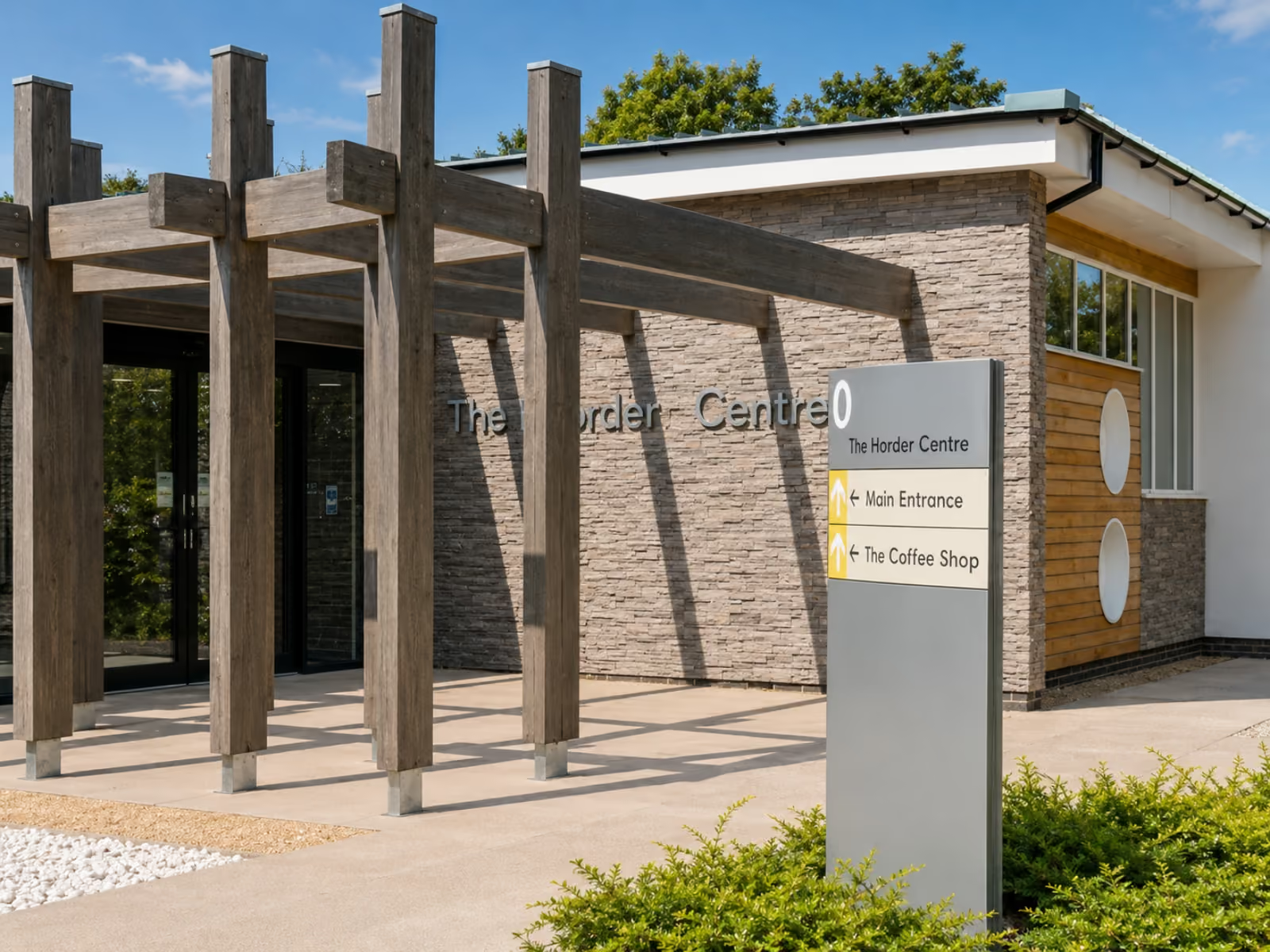
Privately, some hospitals charge more for a robotic procedure, and published guides quote several thousand pounds above a conventional package, while others quote the same fixed price. In my practice the fixed price knee replacement package at The Horder Centre and Nuffield Health Tunbridge Wells is typically in the region of £15,000 to £17,000, and a written quote is provided after consultation so you can see exactly what is included.
Not reliably. The trials show no consistent difference in recovery speed, range of movement or pain scores between robotic and conventional knee replacement. Recovery is governed by the operation itself, your physiotherapy and your general health. If anyone tells you the robot means you will be back on your feet faster, ask them for the study.
The same as for a conventional knee replacement: up on the day of surgery or the next day, home in one to four days, walking without aids at around six weeks, driving at about six weeks after a total knee, and three to twelve months for the knee to reach its final state. See the total knee replacement page for the full timeline.
Anyone who is not a good candidate for knee replacement in the first place, since the robot changes how the operation is done rather than who should have it. Specific situations where I may choose conventional instruments include retained metalwork from previous surgery, bone deformity that the planning software handles poorly, and very poor bone quality where the tracking pins are a concern.
NICE HTG743 (formerly HTE22), Robot assisted surgery for orthopaedic procedures: early value assessment (April 2025). https://www.nice.org.uk/guidance/htg743
British Orthopaedic Association, comment on the NICE early value assessment of robot assisted surgery in orthopaedics (April 2025). https://www.boa.ac.uk
Clinical and radiological outcomes of robotic assisted versus conventional total knee arthroplasty: systematic review and meta-analysis of randomised trials. Acta Orthopaedica 2023;94:60-79. https://doi.org/10.2340/17453674.2023.9411
Robotic versus conventional knee replacement: target trial emulation using National Joint Registry data. BMJ 2026. https://doi.org/10.1136/bmj-2026-100691
RACER-Hip trial, Warwick Clinical Trials Unit, NIHR Health Technology Assessment programme. https://warwick.ac.uk/fac/sci/med/research/ctu/trials/racer-hip
National Joint Registry, 22nd Annual Report 2025. https://reports.njrcentre.org.uk
Zimmer Biomet, ROSA Knee System (manufacturer information). https://www.zimmerbiomet.com
Mr Oni consults and operates at several leading private hospitals across the region, so you can choose the location most convenient for you.
get in touch
See Mr Oni at The Horder Centre, The Nuffield Hospital or The Vale Health Clinic.
Fill in the form below or get in touch directly:
Libby aims to respond to all requests within two working days

We accept most major UK private medical insurers, and welcome self-funding patients too.