Answers written by Mr Tofunmi Oni, Consultant Orthopaedic Surgeon (MBChB BSc PGDip FRCS (Tr & Orth), GMC 7074916), who sees patients with hip arthritis at Nuffield Health Tunbridge Wells, The Horder Centre in Crowborough and Vale Health Clinic. Figures come from NICE, the NHS, Arthritis UK (formerly Versus Arthritis), Cochrane and the studies listed in the sources at the end. Last reviewed October 2026.
What are the first signs of arthritis in the hip, and what does it feel like?
Early hip osteoarthritis is pain that is worse on walking and stiffness after resting, typically in someone over 45. The pain is usually felt deep in the groin, but the buttock and the front of the thigh are common too, and it can be felt in the knee. Stiffness tends to be worst first thing in the morning and loosens within half an hour or so; morning stiffness lasting longer than 30 minutes points to something other than osteoarthritis. Early practical signs are difficulty with shoes and socks and getting in and out of a car.
What are the symptoms of severe hip osteoarthritis?
As it advances people describe pain on every step, a limp, grinding or catching, difficulty with shoes and socks, pain that wakes them at night and markedly reduced movement, particularly rotating the hip. The NHS describes severe cases as continuous problems that make everyday activities difficult. That is the point at which the NHS and NICE say a hip replacement should be considered.
What are the stages of hip osteoarthritis, and what stage needs a replacement?
X rays are often graded on the Kellgren Lawrence scale from 0 (no change) to 4 (large bone spurs, marked narrowing of the joint space, hardened bone and deformity). The grade does not decide surgery. NICE says to refer for a hip replacement when symptoms substantially affect quality of life and non surgical treatment has failed, using clinical assessment rather than a score. X ray appearance and pain correlate poorly: in the Framingham study only 16% of hips with frequent pain showed arthritis on X ray, and many hips with X ray arthritis had no pain.
Can hip arthritis cause groin pain, and how do I tell if groin pain is from the hip?
Yes. Hip joint pain is classically felt deep in the front of the groin, and groin pain is fairly specific for hip arthritis, though not very sensitive, so plenty of people with arthritis feel it in the buttock or thigh instead. Groin pain that comes from the hip usually comes with reduced rotation, pain on weight bearing and difficulty with shoes and socks. Groin pain can also come from the back, a hernia or the soft tissues, so examination is needed.
Why does my hip hurt at night, and why in bed but not during the day?
Night pain is a recognised feature of hip osteoarthritis and some people describe a severe ache that keeps them awake. Lying on your side also loads the outer hip, so bursitis of the hip is often worst at night and worst on the painful side. The precise mechanism is not well established; the joint stiffening at rest and the loss of daytime distraction both seem to play a part. A pillow between the knees and a short walk before bed help some people.
Is hip pain at night a red flag, and what are the red flags of hip pain?
Night pain on its own is common in arthritis and bursitis and is not by itself a red flag, though the NHS advises seeing a GP if hip pain is affecting your sleep. The warning signs that need urgent assessment are sudden severe hip pain with no fall or injury, a hip that is swollen and hot, hip pain with fever or feeling hot, cold or shivery, an inability to walk or bear weight, severe pain after a fall, and numbness or tingling. NICE lists recent trauma, prolonged morning stiffness, rapid worsening, a hot swollen joint and any concern about infection or cancer as features that need imaging rather than a clinical diagnosis. Bone pain that is constant or worse at night, especially with unexplained weight loss, should be checked by a GP.
How do I tell if my hip pain is serious?
Most hip pain is not serious, and the NHS suggests two weeks of self care before seeing a GP unless it is getting worse, keeps returning or stops you doing normal activities. The features that need same day assessment are the red flags above. Morning stiffness lasting more than 30 minutes is a reason to see a GP because it points away from osteoarthritis.
How can I tell if hip pain is from the joint or from muscle and tendon?
Hip joint pain is typically deep in the groin, spreads to the thigh or knee, limits rotation and makes shoes and socks difficult. Pain from the tendons and bursa on the outside of the hip, often called hip bursitis, sits over the bony point on the outer hip and thigh, is tender to touch there, and is worse lying on that side, crossing your legs and climbing stairs. A study comparing the two found that difficulty with shoes and socks is the most useful pointer to arthritis, and tenderness over the outer hip with pain on the figure of four test the most useful pointer to bursitis. Single tests have weak accuracy, so an examination and often an X ray are needed.
What can be mistaken for hip pain, and what is mistaken for hip arthritis?
The NHS lists fracture, sprain and tendon problems, osteoarthritis, rheumatoid arthritis, septic arthritis and bursitis as causes of hip pain. Pain from the lower back is the great mimic, and bursitis on the outer hip is often mislabelled as arthritis. Inflammatory arthritis gives stiffness that lasts longer than half an hour and often affects other joints. Avascular necrosis, where the blood supply to the ball of the hip fails, can look like arthritis in younger people. Rarely, bone tumours cause hip pain that is worse at night.
Can I test my hip for arthritis at home?
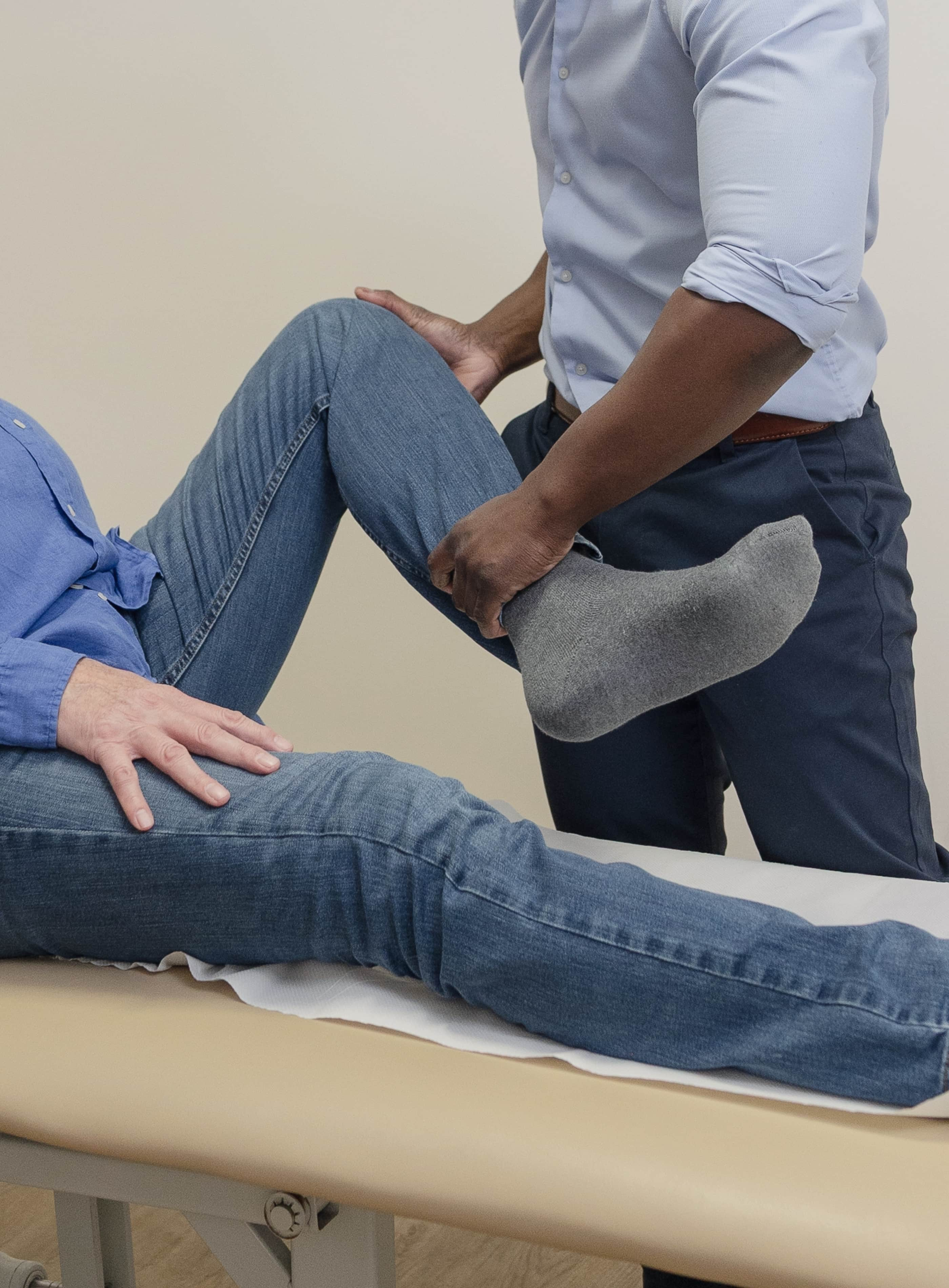
The figure of four (FABER) test is used in clinic, and pain in the groin on that manoeuvre with limited rotation points to the joint, while pain on the outer hip points to bursitis. A systematic review found most physical tests for hip pain have weak diagnostic accuracy, so a home test can raise suspicion but cannot make the diagnosis. NICE says osteoarthritis is diagnosed clinically by a clinician from age, activity related pain and brief morning stiffness, without an X ray in typical cases.
How do I stop my hip hurting when I walk, and should I keep walking?
Keep moving, but do not overdo it. The NHS advises supportive shock absorbing shoes, losing weight if you are overweight, avoiding carrying heavy loads and low chairs, and paracetamol or an anti inflammatory gel or tablet when needed. NICE suggests a walking stick for lower limb arthritis, used in the opposite hand to the painful hip, which takes a surprising amount of load off the joint. Pace activity and take breaks rather than stopping altogether.
Does walking make hip arthritis worse, and is it okay to walk with severe arthritis?
There is no evidence that walking or exercise damages an arthritic hip. A Cochrane review of ten trials found high quality evidence that land based exercise reduces pain and improves function in hip osteoarthritis, with the only adverse events being temporary increases in pain from the programme. NICE says pain may rise when you start exercising but that regular, consistent exercise is beneficial. The sensible rule is that some ache during and after activity is fine, and escalating pain that lasts more than a day is a sign to ease back.
What exercises should I avoid, and what not to do with hip arthritis?
No guideline bans specific exercises. NICE recommends exercise tailored to you, and the NHS advises avoiding heavy carrying and low chairs, which load the hip. Activities that reliably flare your pain for more than a day or so are worth modifying, and Arthritis UK advises not to push through pain. Beyond that, the thing not to do is stop moving, because muscles waste and stiffness increases.
Can physio help hip arthritis?
Yes. Exercise is a NICE core treatment and NICE recommends considering supervised sessions. Cochrane found exercise reduced pain by about 8 points and improved function by about 7 points on a 0 to 100 scale, with high quality evidence. Manual therapy is only supported alongside exercise, and acupuncture, TENS and ultrasound are not recommended. Many NHS areas allow self referral to physiotherapy if pain has not settled within a few weeks.
What is the best painkiller for hip osteoarthritis?
NICE prefers a topical anti inflammatory first for joints other than the knee, then an oral anti inflammatory with a stomach protecting tablet if topical treatment is ineffective or unsuitable. Paracetamol has weak evidence and NICE says not to offer it routinely, though many people use it before exercise; Arthritis UK says it is not that effective for osteoarthritis. NICE advises against strong opioids and against glucosamine. The NHS hip pain page still lists paracetamol as first line self care, and NICE is the stricter and more authoritative source.
What injection options are there for hip arthritis, do they hurt, and can you walk afterwards?
NICE supports a steroid injection when other treatments are ineffective or unsuitable, with the warning that relief is short term, two to ten weeks. Hyaluronic acid injections are not recommended by NICE and are not available on the NHS. A hip injection is done under ultrasound or X ray guidance; most people describe pressure rather than pain, walk out the same day and are advised to take it easy for a day or two. One important timing point: large studies show a higher infection risk if a hip replacement is done within three months of a steroid injection, so if surgery is likely soon an injection may be better avoided. Arthritis UK suggests no more than three steroid injections a year into a joint.
How do I ease hip pain without surgery, and can you live with hip arthritis without a replacement?
Yes, most people with arthritis never need surgery. The core of non surgical treatment is exercise, weight management and information; any weight loss is likely to help and losing 10% of body weight is better than 5%. Add a topical or oral anti inflammatory, a walking stick and, where needed, a steroid injection for short term relief. The NHS notes osteoarthritis does not necessarily get worse over time and can sometimes gradually improve. Surgery is for when these measures no longer control symptoms that are affecting your life.
Does hip arthritis pain ever go away?
The joint changes do not reverse and there is no cure, but symptoms fluctuate from day to day and often improve with the right treatment. The NHS says symptoms can be mild and come and go, and Arthritis UK says being diagnosed with osteoarthritis does not mean it will get worse. NICE defines a flare as a temporary worsening lasting at least 24 hours, which is the pattern most people recognise.
What aggravates arthritis in the hip?
Weight bearing activity such as walking and stairs, stiffness after long periods of rest, low chairs, heavy carrying, and pain that builds towards the end of the day are the common patterns. Excess body weight adds strain on the hip with every step. Cold damp weather is widely blamed but is not well established in the evidence.
What is the best sleeping position for hip arthritis?
Arthritis UK advises a pillow between the legs if you lie on your side. If the outer hip is the painful part, lie on the other side with a pillow between the knees so the top hip and knee are level, or on your back. A firmer mattress topper helps some people and a softer one helps others; there is no evidence for either, so go with what lets you sleep.
What disease starts with hip pain, and what does cancer related hip pain feel like?
Common conditions presenting with hip pain are osteoarthritis, rheumatoid arthritis, bursitis, tendon problems, fracture and septic arthritis; rheumatoid arthritis usually starts in the small joints of the hands and feet rather than the hip. Bone cancer is rare, and the NHS describes it as bone pain or tenderness that may be constant or come and go, often worse at night, sometimes with swelling, tiredness, fever or weight loss. Persistent bone pain that is worse at night should be seen by a GP, who will usually be able to reassure you.
Sources
NICE NG226, Osteoarthritis in over 16s: diagnosis and management (October 2022). https://www.nice.org.uk/guidance/ng226
NHS.uk, Hip pain in adults (reviewed November 2025). https://www.nhs.uk/conditions/hip-pain-adults/
NHS.uk, Osteoarthritis (reviewed March 2023). https://www.nhs.uk/conditions/osteoarthritis/
NHS.uk, Bone cancer symptoms (reviewed May 2025). https://www.nhs.uk/conditions/bone-cancer/symptoms/
Arthritis UK (formerly Versus Arthritis), Osteoarthritis of the hip (December 2025) and State of Musculoskeletal Health 2025. https://www.arthritis-uk.org
Fransen M et al. Exercise for osteoarthritis of the hip. Cochrane Database of Systematic Reviews 2014, CD007912.
Kim C et al. Association of hip pain with radiographic evidence of hip osteoarthritis: the Framingham Osteoarthritis Study. BMJ 2015;351:h5983.
Fearon AM et al. Greater trochanteric pain syndrome: defining the clinical syndrome. Br J Sports Med 2013;47:649-53.
Reiman MP et al. Diagnostic accuracy of clinical tests of the hip: a systematic review with meta-analysis. Br J Sports Med 2013;47:893-902.
Paskins Z et al. Clinical effectiveness of one ultrasound guided intra-articular corticosteroid and local anaesthetic injection in addition to advice and education for hip osteoarthritis (HIT trial). BMJ 2022;377:e068446.
Werner BC et al. The timing of total hip arthroplasty after intraarticular hip injection affects postoperative infection risk. J Arthroplasty 2016;31:820-3; Albanese J et al. J Arthroplasty 2023;38:1184-93.
Kellgren JH, Lawrence JS. Radiological assessment of osteo-arthrosis. Ann Rheum Dis 1957;16:494-502.