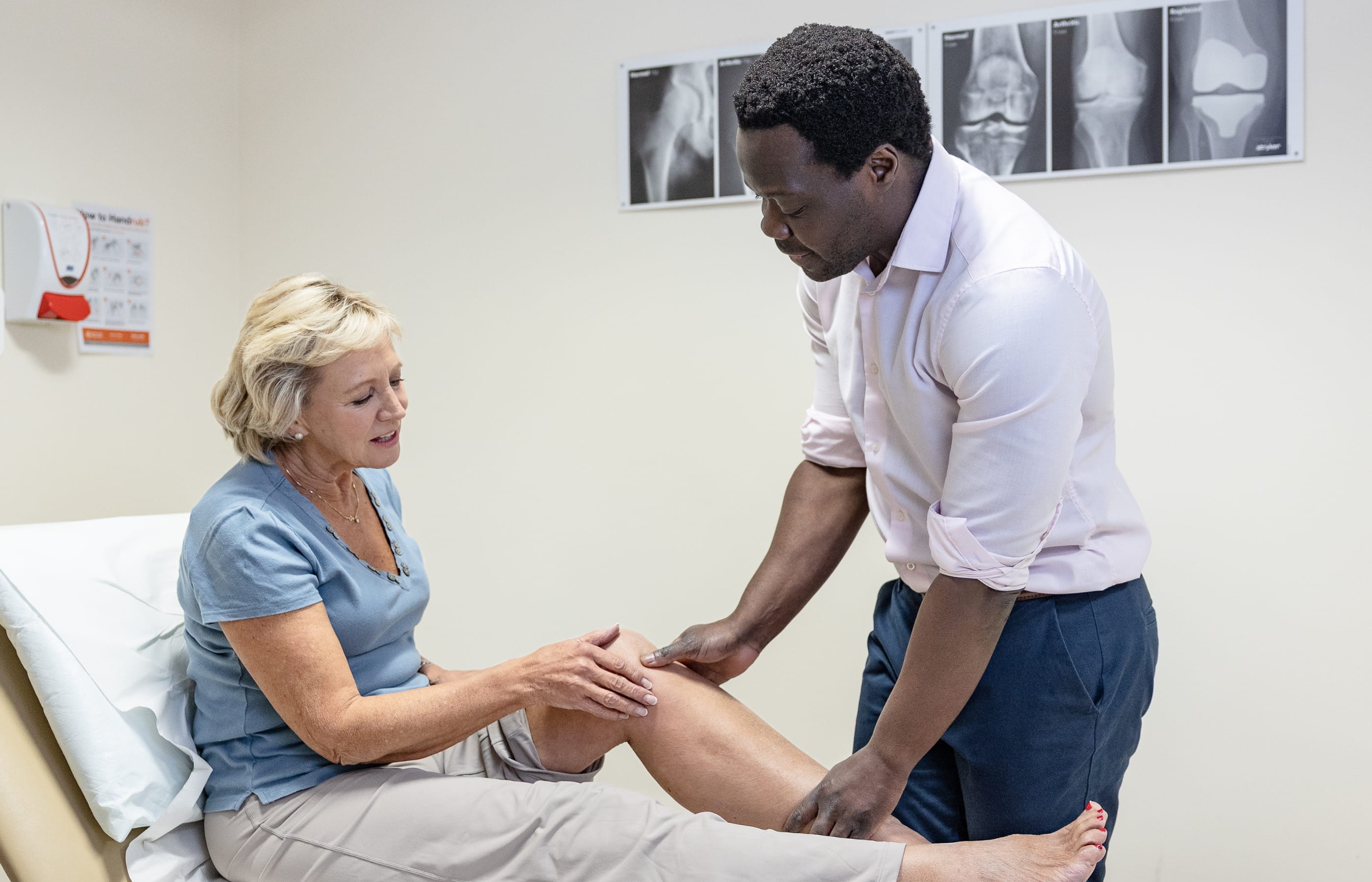
Mr Oni standing and examining the knee of a female patient in his consulting room. It has knee x-ray images up on wall behind them.

conditions

Knee Locking

A knee that suddenly gets stuck, will not fully straighten, or needs a wiggle to free it up. Knee locking is usually a sign of something mechanical inside the joint, and it is almost always treatable. Mr Oni will find out what is causing it and talk you through your options.

What does it mean when your knee locks?

Why a knee locks: true locking and pseudo-locking

Knee locking means the knee gets stuck and will not move through its full range, usually so you cannot fully straighten it. There are two different kinds, and telling them apart is the key to treating it.

True, or mechanical, locking is when something physically blocks the joint. The usual culprits are a torn fragment of cartilage, often a bucket-handle meniscal tear, or a loose body, which is a small free-floating piece of cartilage or bone caught between the joint surfaces. The knee genuinely jams, and you may have to ease or wiggle it to free it up again.

Pseudo-locking, which is actually more common, is when the knee feels stuck but is not truly blocked. Pain, swelling, or the muscles tightening protectively, often from arthritis or after an injury, stop the knee straightening fully. It can feel just as alarming, but the cause and the treatment are different, which is why Mr Oni first works out which type of locking you have.

knee with sports tape across the kneecap

Recognising the condition

Common symptoms of a locking knee

The hallmark of a locking knee is the joint getting stuck so it will not fully straighten, often suddenly, and sometimes needing a wiggle or a particular movement to free it again. For some people it locks up repeatedly, for others it happens occasionally, and it is frequently accompanied by clicking, catching, pain or swelling. These are the signs and symptoms patients most commonly notice.

The knee getting stuck

The knee suddenly jams and will not move, usually so it cannot fully straighten.

Needing to wiggle it free

Having to ease, twist or wiggle the knee in a certain way before it releases and moves again.

Locking that keeps coming back

Repeated episodes of the knee locking, sometimes with everyday movements, sometimes out of the blue.

Clicking or catching

A click, clunk or catch as the knee moves, sometimes just before it locks.

Unable to fully straighten

A knee that will not straighten all the way, leaving it feeling blocked or held back.

Pain when it locks

A sharp pain at the moment the knee locks, often easing once it releases.

Swelling

The knee swelling, particularly after an episode of locking or a lot of activity.

Loss of confidence in the knee

Becoming wary of the movements that might trigger the locking, and trusting the knee less.

A locking knee can have several causes, most often a meniscal tear or a loose body blocking the joint, but sometimes arthritis or swelling holding the knee back, which can feel similar but is treated differently. It can also be confused with the knee giving way, which is a separate problem. Getting the cause right matters, and Mr Oni will pinpoint it, usually with an examination and a scan, at your first appointment.

Most true locking comes from something physically caught in the joint. The commonest cause is a meniscal tear, particularly a bucket-handle tear, where a torn flap of cartilage flips into the middle of the knee and jams it. The other common cause is a loose body, a small fragment of cartilage or bone that has broken away and floats inside the joint until it catches between the surfaces.

Pseudo-locking has different causes. Here the knee is not physically blocked, but pain, swelling, or the surrounding muscles tightening up stop it straightening fully. This is often due to arthritis, or a flare-up after an injury or a lot of activity, and the stiffness can come and go.

Less often, locking comes from problems around the kneecap or from scar tissue after a previous injury or operation. Whatever the cause, true locking from a trapped fragment is worth assessing promptly, because the joint usually needs help to free it and to prevent further damage.

Meniscal tear

The most common cause of a truly locking knee. A torn flap of cartilage, often a bucket-handle tear, flips into the joint and jams it.

Loose body

A small fragment of cartilage or bone that has broken away and floats in the joint, catching between the surfaces and blocking movement.

Pseudo-locking

The knee feels stuck but is not physically blocked. Pain, swelling or muscle guarding, often from arthritis, stops it straightening fully.

causes and types

What causes a knee to lock?

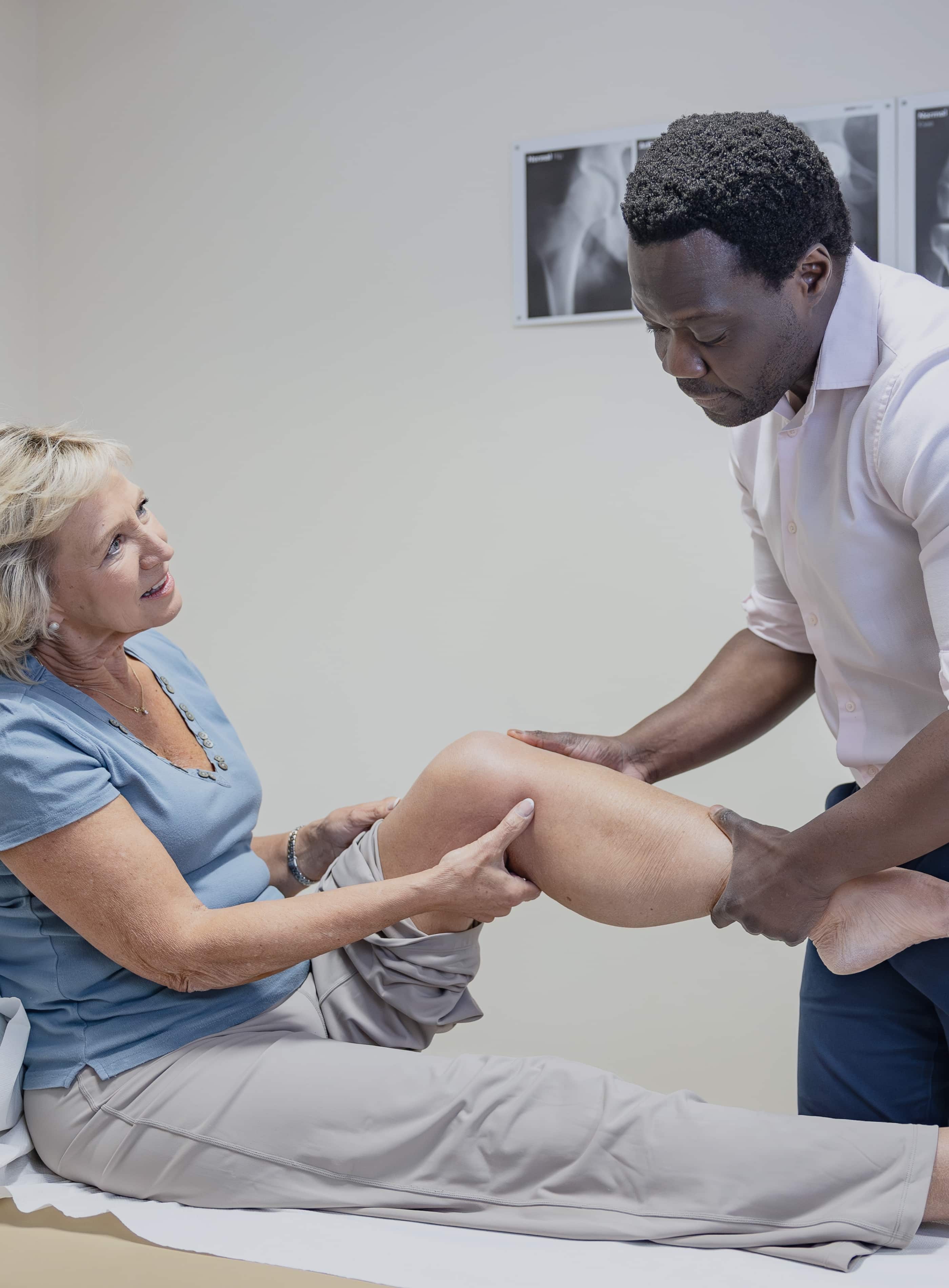
Mr Oni helping to lift a female patients knee during an examination, she is also holding behind her knee and discussing her issues.

how mr oni Helps

diagnosis & Next Steps

Getting the diagnosis right comes first, and with a locking knee the first job is working out whether it is true mechanical locking or pseudo-locking, because the two are treated very differently. Mr Oni will ask exactly how and when the knee locks and examine it carefully, then use imaging to confirm the cause, an MRI shows a meniscal tear or a soft loose body clearly, while an X-ray can pick up a bony loose body or arthritis. That way your treatment targets the real cause, not just the symptom.

01

consultation

A thorough consultation reviewing your symptoms, movement, and any existing imaging. No assumptions, no rushed conclusions.

02

clinical examination

A hands-on assessment of the joint - checking movement, strength and what triggers your pain - to understand exactly what's going on.

03

imaging

Where needed, an X-ray or scan to confirm the diagnosis and see the joint clearly, so nothing is left to guesswork.

04

treatment plan

Every option considered. From load management and physiotherapy to further investigations and surgical options. A plan built around your lifestyle and goals, not a one-size-fits-all protocol.

}

with the right treatment

life after treatment

A knee that straightens fully again

With the blockage cleared, the knee regains its full range and straightens properly once more.

No more sudden locking

The episodes of the knee jamming or getting stuck settle, so you are no longer caught out mid-step or on the stairs.

Confidence to move without bracing

You can walk, turn and stand up without bracing for the knee to lock, and start to trust it again.

Back to activity

Sport, stairs, kneeling and the activities you had been avoiding become possible again.

Recognising the condition

How a locking knee is treated

How a locking knee is treated depends entirely on what is causing it. True locking from a trapped fragment, such as a bucket-handle meniscal tear or a loose body, usually needs a short keyhole operation, knee arthroscopy, to remove or repair what is blocking the joint, and this often settles the locking straight away. Pseudo-locking is treated by tackling the underlying problem. Where that is arthritis, the options are the same as for knee arthritis, ranging from physiotherapy and injections through to a partial or total knee replacement when the arthritis is advanced. Mr Oni will recommend the right approach once he knows the cause.

related treatments

Knee Arthroscopy

Keyhole knee surgery to diagnose and treat mechanical problems such as a torn meniscus, a loose fragment, or a knee that locks or catches.
Knee Arthroscopy
↗︎
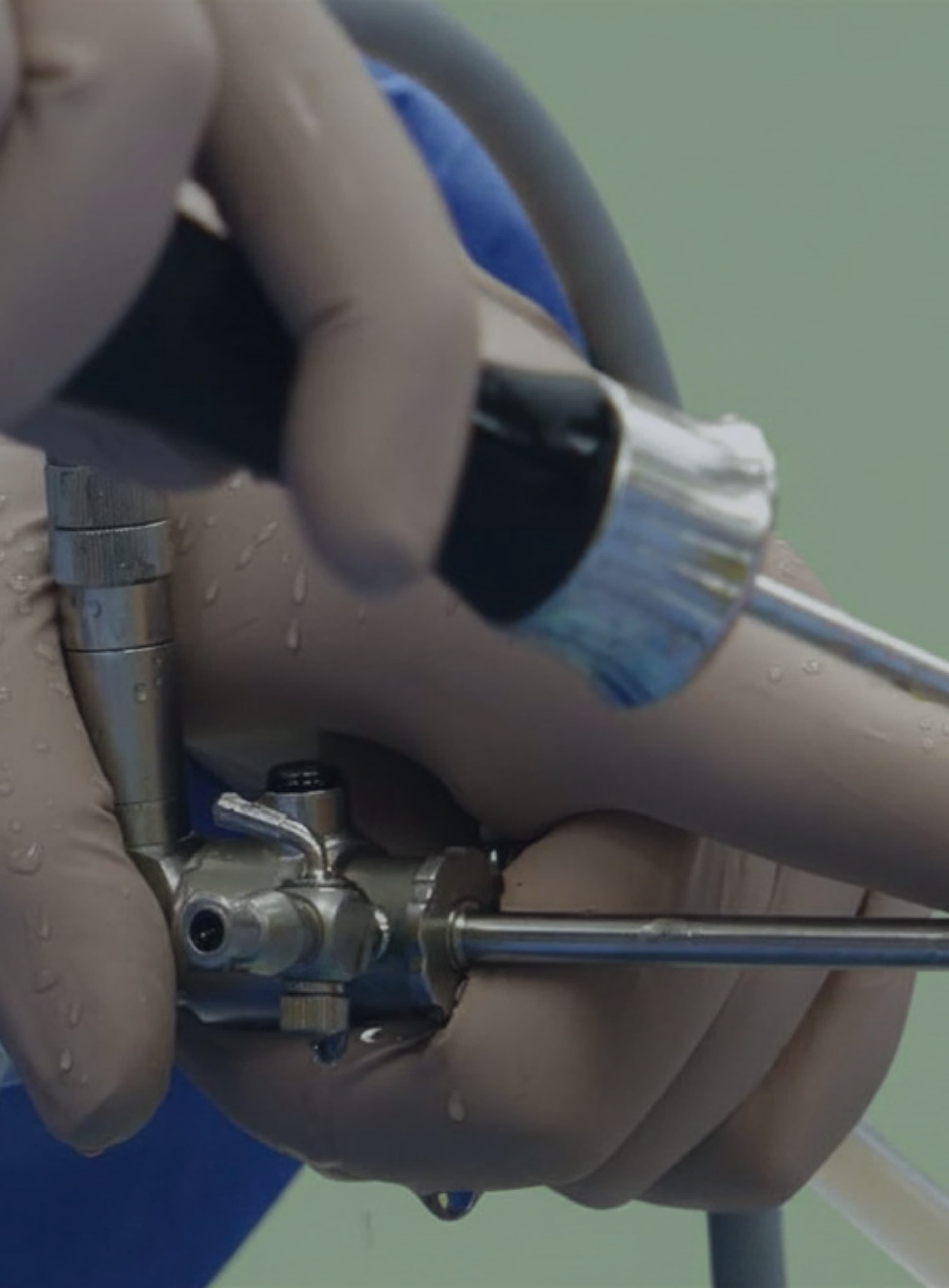
a close up image of surgeons hands holding knee arthroscopy equipment. the handles and probes are visible only.

related treatments

Arthrosamid Injection

A non-surgical injectable treatment for knee osteoarthritis that can provide lasting relief from joint pain.


Arthrosamid Injection
↗︎
Hands blue glove with black sleeves, holding an arthrosamid injection needle in both hands.

Patient Stories

Hear from patients who have undergone investigations and treatments for their hip and knee problems with Mr Oni.

★ ★ ★ ★ ★

Mr Richard M.

Mr Oni explained everything clearly and the whole process was faultless. I was walking the corridors within two days and driving again in a fortnight. The scar is so neat you can hardly see it.

Treatment

Hip Replacement

★ ★ ★ ★ ★

Mr Robert F.

Mr Oni and the team were very professional throughout. The recovery was tough, but I stuck to the exercises and only needed over-the-counter painkillers. Two months on, I completed a nine-mile bike ride.

Treatment

Robotic Knee Replacement

★ ★ ★ ★ ★

Ms Liz.

Mr Oni and Libby are a really good team and made me feel completely comfortable. I'd been limping for a year, but almost marched into my follow-up. I've got my life back.

Treatment

Arthrosamid Injection

★ ★ ★ ★ ★

Mr Tony G.

Mr Oni gave me real confidence going into surgery, and I cannot fault my experience. I'm back to walking the dogs, gardening and farm work. The steep hills that once bothered me, now I don't even notice.

Treatment

Robotic Knee Replacement

★ ★ ★ ★ ★

Ms Zoe G.

Mr Oni and the team were incredibly supportive, kind and patient. I was walking with a frame the same day and dressing myself the next morning. Within two weeks I could pick my daughter up from school.

Treatment

Hip Replacement

★ ★ ★ ★ ★

Mr Ian F.

Mr Oni recommended the Arthrosamid injection and everything has been brilliant. Two weeks later I was rotovating the garden for two hours. It felt like some sort of miracle, I didn't notice I'd had bad knees.

Treatment

Arthrosamid Injection

Take the next step

Book a consultation about your locking knee

A knee that keeps locking is worth getting checked, especially if it truly jams, because a trapped fragment usually needs freeing. Mr Oni will work out exactly why it is happening, arrange a scan if needed, and talk you through a clear plan, often a short keyhole procedure for true locking, or treating the underlying cause for the rest. No pressure, no assumptions.

locations

Mr Oni consults and operates at several leading private hospitals across the region, so you can choose the location most convenient for you.

Exterior Image of The Horder Centre Crowborough East Sussex

The Horder Centre

St John's Road
Crowborough
East Sussex
TN6 1XP

Exterior Image of the Nuffield Health Private Hospital in Tunbridge Wells

Nuffield Health

Kingswood Road
Tunbridge Wells
Kent
TN2 4UL

Exterior Image of the Vale Health Clinic in Tunbridge Wells, Kent

Vale Health Clinic

31-33 Vale Road
Tunbridge Wells
Kent
TN1 1BS

Frequently asked questions

Repeated locking usually means something inside the knee is catching, most often a torn piece of meniscus or a loose body that gets in the way as the joint moves. Sometimes it is pseudo-locking, where pain or swelling from arthritis stops the knee straightening rather than a true block. Either way, locking that keeps coming back is worth having assessed so the cause can be treated.

It is not usually an emergency, but it should not be ignored, particularly if the knee truly jams and will not straighten. A trapped fragment can damage the joint surfaces over time, so getting it assessed early gives the best outcome and the most options.

Try to relax, gently straighten the leg and rock or wiggle the knee a little, which often lets a trapped fragment slip back and free the joint. If the knee stays locked and will not straighten, or it is very painful, it is best to be seen promptly rather than forcing it.

It depends on the cause. True locking from a trapped meniscal fragment or loose body usually needs a short keyhole operation to free the joint. Pseudo-locking is treated by addressing the underlying problem, which for arthritis ranges from physiotherapy and injections through to a knee replacement if the arthritis is advanced. The right treatment depends entirely on what is causing the locking.

Locking is when the knee gets stuck and will not move, while giving way is when the knee buckles or feels like it cannot support you. They have different causes and are assessed differently, though a meniscal tear can sometimes cause both. Mr Oni will tell them apart at your appointment.

A one-off episode can settle if a fragment shifts back into place, but a knee that keeps truly locking will not resolve on its own and needs the cause treating. Pseudo-locking can ease as the underlying problem, such as a flare of arthritis, calms down.

get in touch

Book your initial
consultation

See Mr Oni at The Horder Centre, The Nuffield Hospital or The Vale Health Clinic.

Fill in the form below or get in touch directly:

Thank you - your request has been received.
Oops! Something went wrong while submitting the form. Please try again or contact Libby directly.

Libby aims to respond to all requests within two working days

Mr Oni walking with his practice manager in a hospital corridor
Accepted Insurers

We accept most major UK private medical insurers, and welcome self-funding patients too.

We’re committed to keeping your information safe. By submitting this form, you agree that we’ll use your details to respond to your enquiry. If you’re asking about accessing services, we might need to follow up with a few extra questions. You can read more about how we handle your information in our Privacy Policy.