
Treatments
One of the most successful operations in modern medicine. Mr Oni replaces the worn hip joint with a durable implant to relieve pain and restore movement, with most patients up and walking the day of surgery and back to everyday activities within weeks.
about this treatment
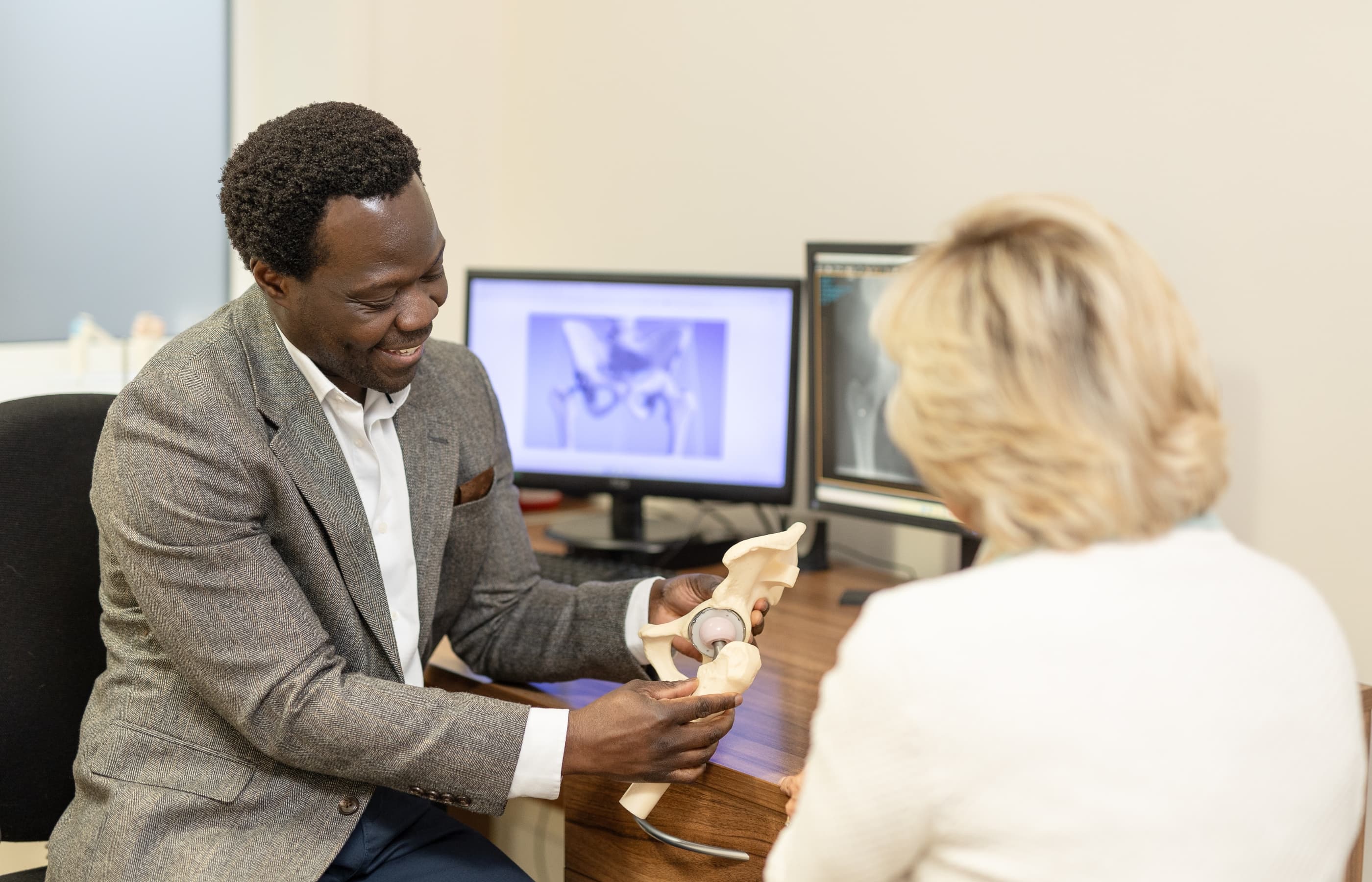
A total hip replacement removes the worn ball and socket of the hip and replaces them with a durable implant, a new socket fitted into the pelvis and a new ball on a stem inside the thigh bone. The components are made of metal, ceramic or hard-wearing plastic, and the result is a smooth, stable joint that no longer causes pain.
It is one of the most common and most successful operations in modern medicine. It is most often needed for hip osteoarthritis, but also for rheumatoid arthritis, hip impingement, dysplasia, loss of blood supply to the bone, or injury. Mr Oni specialises in hip and knee surgery only, has performed thousands of joint procedures, and guides you personally through your options.
Modern hip implants are designed to last fifteen to twenty years, and in many cases significantly longer. Surgery is considered when pain and stiffness significantly limit daily life and conservative treatments are no longer helping. Mr Oni will examine your hip and review your X-rays to advise whether a hip replacement is right for you.
is this right for me?
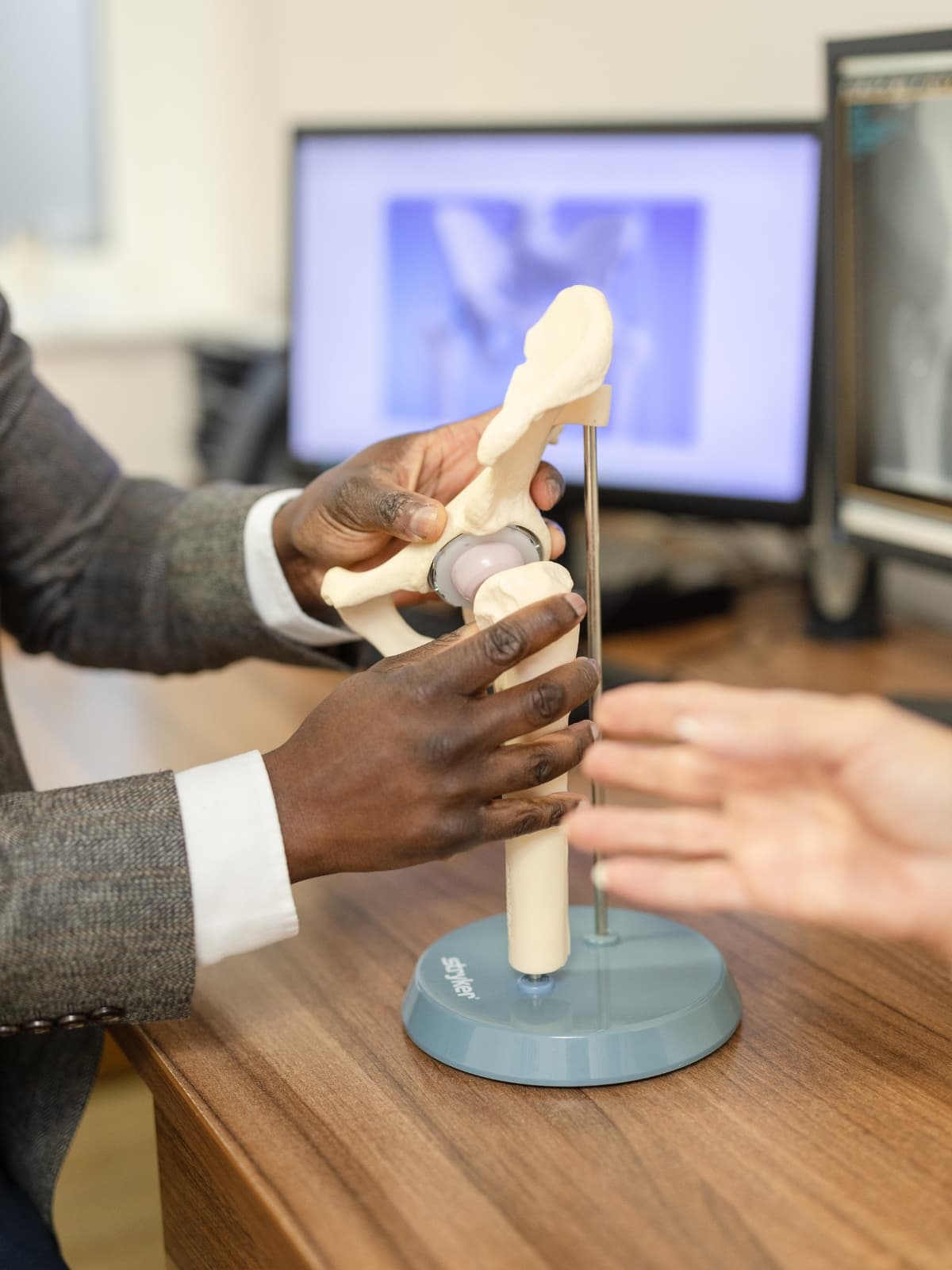
Surgery is never the automatic answer. Mr Oni considers a hip replacement when arthritis or joint damage significantly limits your life and conservative treatments are no longer enough.
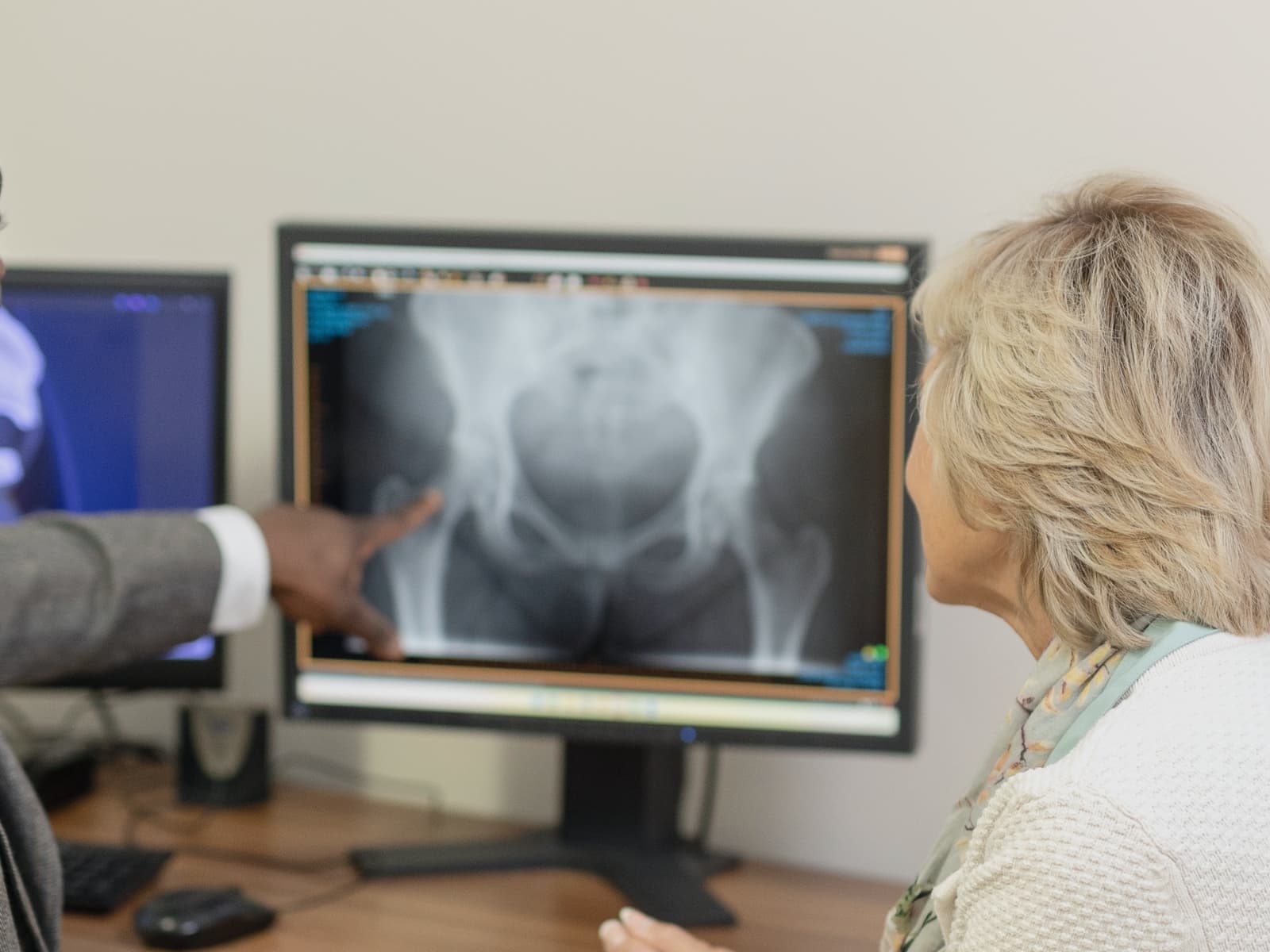
X-rays confirm significant wear, with pain and stiffness from arthritis, impingement, dysplasia or injury limiting your daily activities.
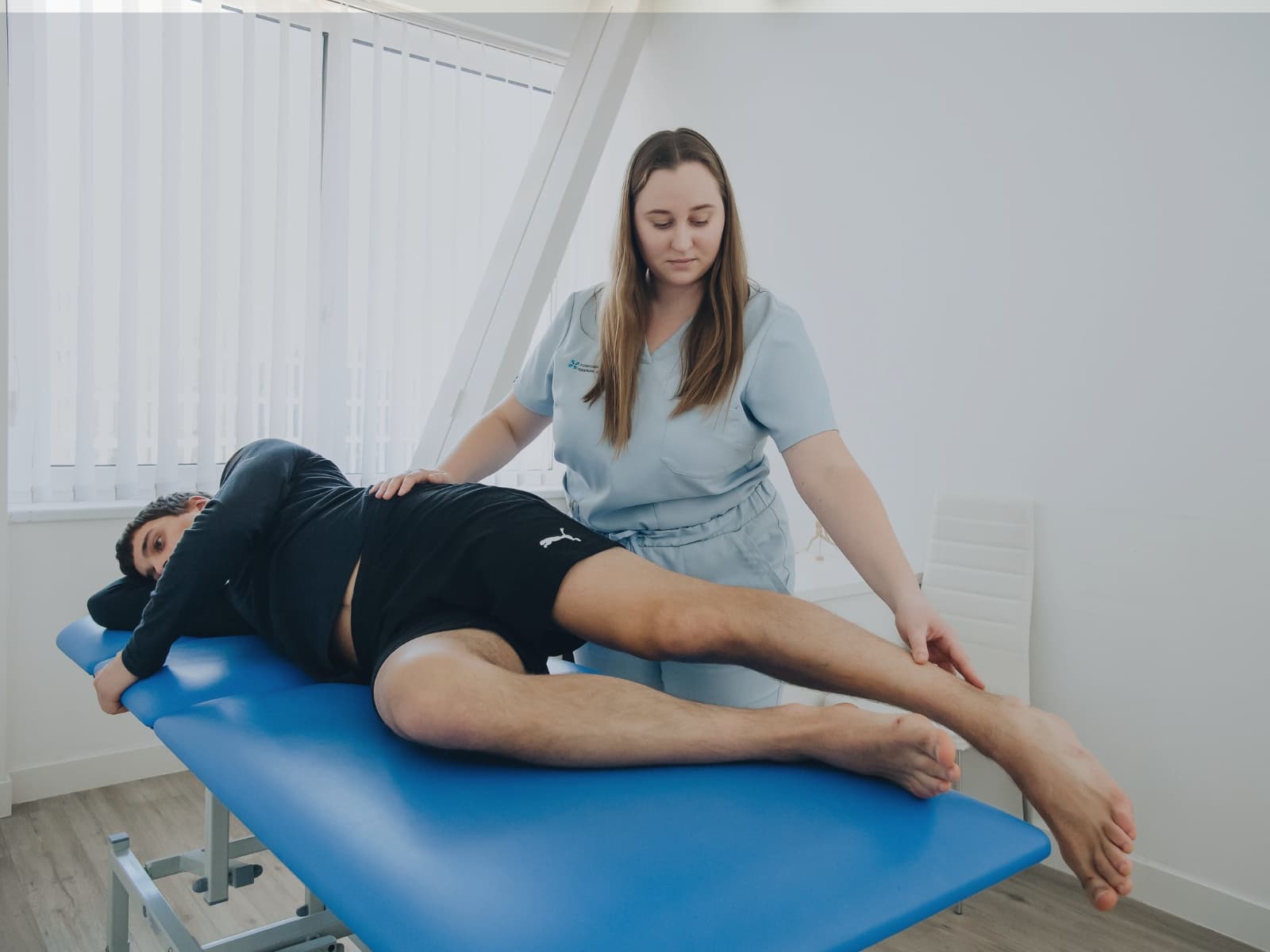
Physiotherapy, weight management, injections and pain relief are no longer providing adequate relief.

Hip or groin pain is affecting your sleep, walking, work, and the activities you value.
Not sure if you qualify?
Many patients come to Mr Oni uncertain whether their symptoms are "bad enough" for treatment. The answer always comes from a proper clinical assessment - not from a website. Book a consultation and Mr Oni will give you an honest view.
outcomes
These are the benefits and outcomes typically expected from this treatment. Realistic expectations matter, so you go into any treatment fully informed.
A worn, arthritic hip is replaced with a smooth implant, relieving the pain that limits walking, sleep and daily life.
Most patients return to walking, stairs, driving and the activities they value within weeks of surgery.
Modern hip implants are designed to last twenty to thirty years for most patients.
Mr Oni specialises in hip and knee surgery only and guides you personally from consultation through to recovery.
Recovery after a hip replacement is steady and well-established. The timeline below is a general week-by-week guide, and Mr Oni gives you a realistic, personalised expectation at your consultation.
You will be helped up onto your feet and walking with support within 24 hours. Pain is managed with medication, and injections are given to prevent blood clots.
Walking with crutches or a stick, increasing your distance daily. Simple precautions, such as not bending the hip past 90 degrees, protect the new joint while it heals.
Most patients return to everyday activities within weeks.
A follow-up reviews your progress. Strength and confidence continue to build, with most patients reaching their best outcome within a few months.
YOU MAY ALSO WANT TO EXPLORE
Replacing or repairing a hip implant that has worn, loosened or failed, including complex cases referred by other surgeons.

Most patients are up and walking within 24 hours, home within a few days, and back to driving and work at around six weeks. Strength and confidence keep building, with most people reaching their best outcome within a few months. Mr Oni gives you a personalised timeline at your consultation.
Most patients return to driving at around six weeks, once they can comfortably perform an emergency stop and Mr Oni has confirmed they are ready at follow-up.
For the first few weeks there are simple precautions to protect the new joint, mainly avoiding bending the hip more than 90 degrees and avoiding twisting on the leg. Mr Oni's team show you how to move, sit and sleep safely while the hip heals.
Modern hip implants are designed to last many years. For most patients they last 15 to 20 years or more, after which a revision may eventually be needed.
It is a major operation, but it is also one of the most common and most successful, carried out routinely every day. As with any surgery there are risks, including infection, blood clots and dislocation, which Mr Oni discusses fully. For most suitable patients the benefits clearly outweigh the risks.
The cost depends on the hospital and whether you are self-funding or using private medical insurance. Mr Oni's team can provide a clear, itemised quote at your consultation, and you can find more detail on our treatment costs page.
Answers written by Mr Tofunmi Oni, Consultant Orthopaedic Surgeon (MBChB BSc PGDip FRCS (Tr & Orth), GMC 7074916), who performs hip replacement at The Horder Centre in Crowborough and Nuffield Health Tunbridge Wells. Figures below come from the National Joint Registry, NICE and the published studies listed in the sources at the end. Last reviewed October 2026.
A hip replacement is usually considered when hip pain and stiffness are having a big effect on daily life and the non surgical options, meaning exercise, weight management, painkillers, a walking stick and sometimes an injection, have stopped working. NICE puts it as pain, stiffness, reduced function or progressive deformity that substantially affect quality of life despite non surgical treatment. In practice the things I listen for are night pain, pain at rest, a shrinking walking distance and losing the ability to put on your own shoes and socks. Osteoarthritis is the reason in just over 90% of hip replacements recorded by the National Joint Registry.
There is no X ray threshold or score that decides it. NICE specifically says to use clinical assessment rather than a numerical scoring system, and the decision rests on how much the hip is affecting your life and whether other treatment has failed. A badly worn hip on X ray in someone who is coping well does not need surgery, and a hip that looks moderate on X ray in someone who cannot sleep or walk may well do.
Waiting does not damage the eventual replacement, and NICE makes no recommendation on timing. What waiting does is extend the time you live with pain and reduced mobility, which can affect fitness, muscle strength and general health, and there is some evidence that people who go into surgery with very poor function recover less fully. The sensible approach is to have surgery when the hip is limiting your life, not to put it off until you can barely walk and not to rush into it while non surgical measures are still working.
The median age at primary hip replacement in the NJR is 69, with about a third of patients aged 65 to 74 and a third aged 75 or over, and roughly one in eight under 55. There is no best age. NICE says age must not be a barrier to referral. The trade off is that younger patients ask more of the implant for longer, so their lifetime chance of needing a revision is higher: NJR data show a 10 year revision rate of around 5 to 6% for patients under 55 compared with 2 to 3% for those over 75.
Yes. Hip osteoarthritis is not dangerous to life, and NICE core treatment is exercise, weight management, education, a topical or oral anti inflammatory, a walking aid and, when needed, a steroid injection for short term relief of two to ten weeks. Surgery is for when those no longer control the symptoms. NICE advises against strong opioids and routine paracetamol for osteoarthritis, against hyaluronic acid injections, and against arthroscopic washout.
It is major surgery, taking around one to two hours under a spinal or general anaesthetic, with most people home within one to three days. Serious complications are uncommon. UK registry data put 90 day mortality at around 0.3%, deep infection at about one in a hundred, and the overall chance that a hip replacement is ever revised at about 3%. NICE notes that risk varies with age, other health conditions, smoking and weight, which is why those are discussed with you rather than used to exclude you.
It depends on the timeframe. Over the lifetime of the implant the commonest reason for a revision in the NJR is aseptic loosening, followed by dislocation, fracture around the implant and infection. In the early weeks the main concerns are dislocation (a Danish national study found a true two year rate of 3.5%, with most UK series lower) and blood clots (symptomatic venous thromboembolism around 1% at 90 days, which is why you take a blood thinner after surgery). A small leg length difference is common and usually goes unnoticed.
Pain is controlled with a spinal or general anaesthetic plus local anaesthetic infiltrated around the joint, and NICE expects you to be up and walking on the day of surgery or within 24 hours. Most people go home in one to three days on crutches, and the NHS advises that swelling and leg discomfort usually settle over a few weeks, with return to work around six weeks and full recovery over several months. In NHS patient reported outcome data for 2024/25, 85.8% of hip replacement patients said they felt much better after surgery and a further 9.4% a little better.
Most patients tell me the first two to three weeks are the hardest: disturbed sleep, swelling, tiredness and the sheer effort of doing the exercises when you would rather rest. After that the improvement tends to be quick and obvious. That is experience rather than a measured outcome, but it is consistent enough that it is worth planning for, with help at home for the first fortnight.
You walk with a frame or crutches from the first day. Many people are walking unaided indoors by four to six weeks, and the limp settles over about three months as the muscles around the hip recover. The NHS puts return to work at about six weeks for a desk job, and Versus Arthritis suggests three months or more for a job that involves a lot of walking.
Little and often. The NHS advice is to walk daily, as far as is comfortable, and to keep doing the exercises the physiotherapist gives you. There is no target distance or step count in any guideline. A reasonable pattern is several short walks a day in the first fortnight, extending as comfort allows, and NICE recommends supervised outpatient physiotherapy for anyone not progressing with self directed exercises.
Traditionally patients were told to sleep on their back for six weeks with a pillow between the legs. The evidence has moved on: a 2020 systematic review of 6,900 patients found no difference in dislocation rates with or without hip precautions after the posterior approach, and NICE NG157 makes no recommendation for restrictions. Advice therefore varies by surgeon and approach. My own advice is a pillow between the knees if you lie on your side, and whatever position lets you sleep.
Much less than you have probably read. The old rules about not bending past 90 degrees, not crossing your legs and avoiding low chairs still appear on NHS pages, but the 2020 review above found they made no difference to dislocation and NICE does not recommend them. What most surgeons, including me, still advise against long term is repetitive high impact loading such as running on hard surfaces, jumping and contact sport, because the long term implant data for those activities are thin rather than because they are proven to cause failure.
The ones with evidence behind them are stopping the blood thinning medication early (NICE advises a course of up to 28 to 38 days depending on the drug), driving before you can do an emergency stop or without telling your insurer, skipping the exercises, and ignoring new pain, a limp or loss of function months or years later, which NICE says should always be referred back to an orthopaedic service.
The NHS and the Royal College of Surgeons advise at least six weeks, and only once you can press the pedals hard enough for an emergency stop without hesitation. Tell your insurer. You do not need to notify the DVLA unless you are still unable to drive three months after the operation. Some people with a left hip and an automatic car are driving sooner in practice, but that is a judgement to make with your surgeon rather than a guideline.
The NHS puts return to work at about six weeks, depending on the job. Versus Arthritis advises walking straight away, swimming once the wound has healed and been checked, and golf, bowls and dancing at about three months; skiing, running on hard surfaces, jumping and high impact sport may be advised against. A static bike is often used early in rehabilitation, with road cycling once balance and strength allow, usually six to twelve weeks. In a Bristol survey, 61% of patients who played sport before surgery had returned to it one to three years later, with swimming, walking and golf the commonest.
The NJR data on 1.68 million hips show 3.6% revised by 10 years, 5.8% by 15 and 8.4% by 20, so roughly nine in ten are still in place at 20 years, and for hips done in 2014 the 10 year revision estimate is 2.7%. A 2019 Lancet analysis pooling older case series and registries found 89% surviving at 15 years, 70% at 20 and 58% at 25, which reflects earlier generations of implants. The NHS advice that a modern hip should last at least 15 years is, if anything, conservative. Younger patients carry a higher lifetime revision risk simply because they live longer with the implant.
Wear or loosening shows up as new pain, often in the groin or thigh on standing up and starting to walk, sometimes with swelling or a feeling of instability, and it is confirmed on X ray. NICE says any new or worsening pain, limp or loss of function after a joint replacement should be referred back to an orthopaedic service. The treatment is revision surgery, which exchanges some or all of the components. Aseptic loosening is the single commonest reason for revision in the NJR, and most of that burden occurs after seven years. This is the area of hip surgery I specialise in; see the hip revision page.
The arthritic surfaces are removed, so arthritis pain in that joint should go. Even so, prospective studies find that between 7% and 23% of patients report some long term pain after hip replacement, and the best quality studies put it at 9% or more. The usual culprits are the back, the other hip, the tendons on the outside of the hip, or occasionally infection or loosening. Persistent or new pain should be assessed rather than put down to the arthritis.
At The Horder Centre and Nuffield Health Tunbridge Wells a fixed price hip replacement package is typically in the region of £15,000 to £17,000, which covers the operation, implant, hospital stay and standard follow up; the initial consultation is £250 and is charged separately. Published guide prices elsewhere in Kent and nationally run from about £13,000 to £15,000 for the hospital element. Whether it is worth it is a personal judgement: what you are buying is the timing, the choice of surgeon and implant, and a private room, not a different operation. The implants and the registry monitoring are the same whether you have it privately or on the NHS.
NHS England figures for June 2026 show 7.3 million pathways waiting, a median wait of 11.9 weeks, and in trauma and orthopaedics only 60.9% of patients seen within 18 weeks against a 92% standard, with waits for the operation itself varying widely by trust. There is no hip specific national figure. Privately, surgery is normally arranged within a few weeks of the consultation, subject to pre operative assessment.
The criteria used across the NHS come from NICE: consider referral when symptoms substantially affect quality of life and non surgical treatment is ineffective or unsuitable; use clinical assessment rather than scoring systems; and do not exclude anyone because of age, sex, smoking, other conditions or body weight, while explaining that these can affect surgical risk. Some local commissioning policies still apply their own thresholds, which is a known point of tension with NICE.
All mainstream combinations perform well, and the differences are small. NJR 10 year revision rates are 2.7% for cemented, 2.8% for hybrid and 4.1% for uncemented hips, and by bearing surface ceramic on polyethylene has the lowest revision rate at around 2.2% to 2.5% at 10 years. Metal on metal bearings are the clear exception with 17.8% revised at 10 years, and they are no longer used. NICE requires any implant to have a projected revision rate of 5% or less at 10 years. The choice is made on your age, bone quality and anatomy, and on the combination your surgeon has the best results with.
The surgical approach and the use of robots get a lot of marketing attention. NICE NG157 recommends considering a posterior or anterolateral approach and could not make a recommendation on the direct anterior approach for lack of evidence. For robotics, NICE allows six systems to be used in the NHS only while evidence is collected, and the NIHR funded RACER-Hip trial is testing whether robotic hip replacement is any better or worse. Long term implant survival in the registry is driven mainly by implant choice, fixation and surgeon experience rather than by the approach or the robot.
The commonest grumbles are a feeling that the operated leg is slightly longer, an ache around the thigh or the outside of the hip, and a slower than expected return to sport. Persistent pain affects somewhere between 7% and 23% of patients in prospective studies, and about a quarter of people who played sport before surgery do not get back to it, usually because of pain. Most of these settle over the first year, and the ones that do not deserve a proper look.
National Joint Registry, 22nd Annual Report 2025 (data to 31 December 2024), hip chapter and executive summary. https://reports.njrcentre.org.uk
NICE NG157, Joint replacement (primary): hip, knee and shoulder (June 2020). https://www.nice.org.uk/guidance/ng157
NICE NG226, Osteoarthritis in over 16s: diagnosis and management (October 2022), section 1.6. https://www.nice.org.uk/guidance/ng226
NICE NG89, Venous thromboembolism in over 16s (2018, updated 2021). https://www.nice.org.uk/guidance/ng89
NICE HTG743, Robot-assisted surgery for orthopaedic procedures: early value assessment (2025). https://www.nice.org.uk/guidance/htg743
NHS.uk, Hip replacement: recovery and complications (reviewed March 2024). https://www.nhs.uk/tests-and-treatments/hip-replacement/
Royal College of Surgeons of England, Recovering from surgery: total hip replacement, driving. https://www.rcseng.ac.uk/patient-care/recovering-from-surgery/total-hip-replacement/
GOV.UK, Surgery and driving. https://www.gov.uk/surgery-and-driving
Evans JT et al. How long does a hip replacement last? Lancet 2019;393:647-54. https://doi.org/10.1016/S0140-6736(18)31665-9
Hunt LP et al. 90-day mortality after 409,096 total hip replacements for osteoarthritis. Lancet 2013;382:1097-104.
Lenguerrand E et al. Risk factors associated with revision for prosthetic joint infection after hip replacement. Lancet Infect Dis 2018;18:1004-14.
Hermansen LL et al. True cumulative incidence of hip dislocation within 2 years after primary total hip arthroplasty. J Bone Joint Surg Am 2021;103:295-302.
Osagie-Clouard L et al. Do hip precautions after posterior approach total hip arthroplasty affect dislocation rates? Acta Orthop 2020;91:687-92. https://doi.org/10.1080/17453674.2020.1813047
Beswick AD et al. What proportion of patients report long-term pain after total hip or knee replacement? BMJ Open 2012;2:e000435. https://doi.org/10.1136/bmjopen-2011-000435
Wylde V et al. Return to sport after joint replacement. J Bone Joint Surg Br 2008;90-B:920-3.
NHS Digital, Patient Reported Outcome Measures, final 2024/25 data (April 2026). https://digital.nhs.uk/data-and-information/publications/statistical/patient-reported-outcome-measures-proms
NHS England, Referral to Treatment waiting times, June 2026 statistical press notice (August 2026). https://www.england.nhs.uk/statistics/statistical-work-areas/rtt-waiting-times/
Mr Oni consults and operates at several leading private hospitals across the region, so you can choose the location most convenient for you.
get in touch
See Mr Oni at The Horder Centre, The Nuffield Hospital or The Vale Health Clinic.
Fill in the form below or get in touch directly:
Libby aims to respond to all requests within two working days

We accept most major UK private medical insurers, and welcome self-funding patients too.