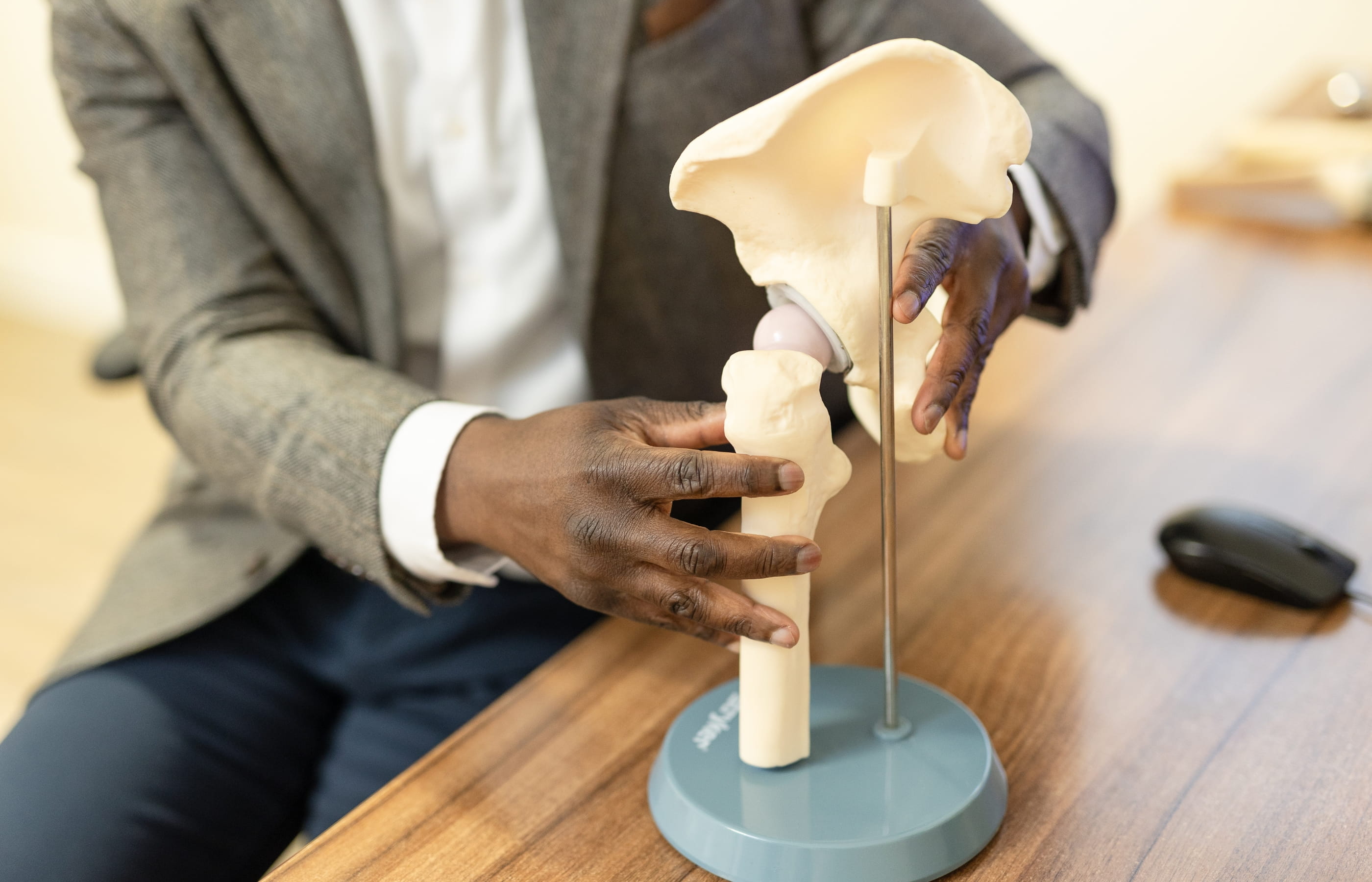

Mr Oni holding a model of the hip joint, the ball and socket is visible.

conditions

Instability Following Hip Replacement

A hip replacement that feels unstable, that clunks, slips, or has dislocated, can be frightening and make you wary of everyday movements. It is uncommon, and it is treatable. As regional lead for the revision hip service in East Kent, Mr Oni specialises in correcting unstable hip replacements.

What is instability after a hip replacement?

Instability and dislocation after a hip replacement

Instability after a hip replacement means the new joint does not stay reliably in place. At its most obvious this is a dislocation, where the ball comes out of the socket and has to be put back, but more often it is a feeling that the hip is loose, clunking, or about to give way in certain positions.

It is an uncommon problem, but an unsettling one, and it tends to make people guard their movements for fear of it happening again. The reassuring point is that it can usually be improved once the cause is found.

Instability usually comes down to how the components sit, the tension in the muscles and soft tissues around the hip, particularly the abductors, or a combination of the two. As regional lead for the revision hip service in East Kent, Mr Oni has particular expertise in working out why a replacement is unstable and putting it right.

knee with sports tape across the kneecap

Recognising the problem

Signs of an unstable hip replacement

Instability shows itself in different ways, from a frank dislocation that needs putting back, to a hip that clunks, catches, or feels as though it might pop out in certain positions, such as bending low or crossing the legs. Many people also become wary of these movements. These are the signs Mr Oni looks out for.

The hip dislocating

The ball coming out of the socket, usually needing to be put back in place by a doctor.

Clunking or catching

A clunk, catch or sensation of the hip shifting as you move into certain positions.

A feeling it might pop out

The sense that the hip is about to give way or dislocate, often in particular positions.

Apprehension with certain movements

Becoming wary of bending low, crossing the legs, or twisting, for fear the hip will go.

Giving way or buckling

A feeling that the hip cannot be trusted to hold your weight.

Recurrent episodes

More than one episode of the hip slipping or dislocating, which makes future episodes more likely.

Pain with instability

Pain at the moment the hip slips, or after an episode.

Loss of confidence

Holding back from activities and movements you used to do freely.

A feeling of instability is not always a true dislocation risk, it can also come from muscle weakness or pain after surgery. Telling genuine mechanical instability apart from a hip that simply feels weak is important, because the treatment is different, and Mr Oni will make that distinction at your assessment.

An unstable hip replacement usually comes down to the balance between how the components are positioned and how well the surrounding muscles and soft tissues hold the joint in place. If the socket or stem sits at an angle that allows the ball to lever out in certain positions, the hip becomes prone to dislocation.

The soft tissues matter just as much. The muscles on the outside of the hip, the abductors, are key to keeping the joint stable, and if they are weak or have not healed well after surgery, the hip can feel unreliable. A previous dislocation also stretches the tissues, which is why instability can become recurrent.

Other contributors include the type and size of the original implant, and certain movements or positions that put the hip at risk. Identifying which of these is responsible guides whether the answer is rehabilitation or revision surgery.

Component position

If the socket or stem sits at an angle that lets the ball lever out, the hip is prone to slipping or dislocating.

Soft-tissue and muscle weakness

Weak or poorly healed muscles around the hip, especially the abductors, leave the joint less well held in place.

Recurrent dislocation

Once a hip has dislocated, the stretched tissues make further episodes more likely, often needing surgical correction.

causes and types

What causes an unstable hip replacement?

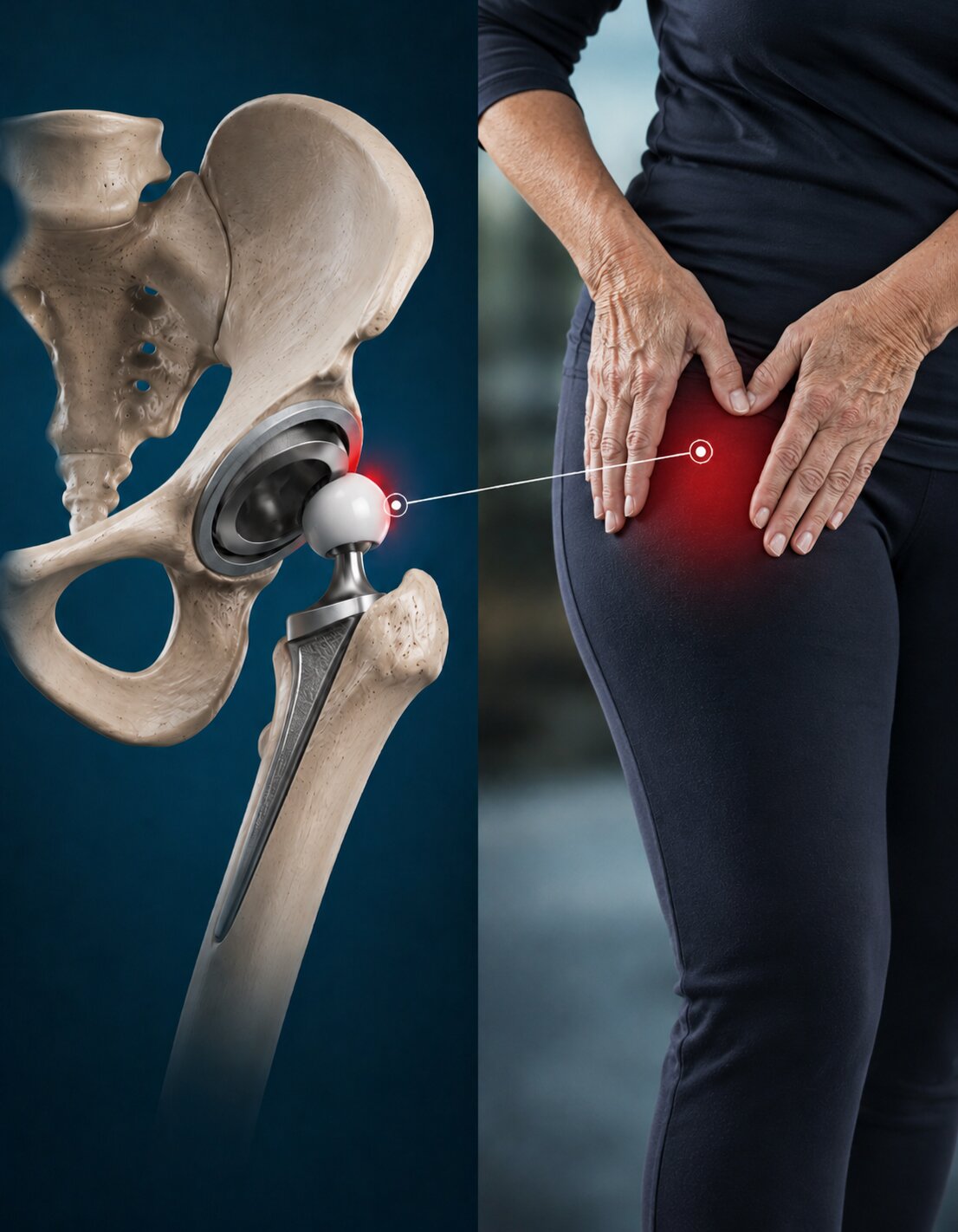
an image of skeletal hip joint with an arrow showing where the pain is on the image next to it of a women in sportswear holding her red hip.

how mr oni Helps

diagnosis & Next Steps

Getting the diagnosis right comes first. Mr Oni will ask exactly when and how the hip feels unstable or has dislocated, examine its movement and the strength of the surrounding muscles, and use X-rays, and sometimes a CT scan, to check the position of the components. As regional lead for the revision hip service in East Kent, he is experienced in pinpointing why a replacement is unstable, so the right solution can be chosen.

01

consultation

A thorough consultation reviewing your symptoms, movement, and any existing imaging. No assumptions, no rushed conclusions.

02

clinical examination

A hands-on assessment of the joint - checking movement, strength and what triggers your pain - to understand exactly what's going on.

03

imaging

Where needed, an X-ray or scan to confirm the diagnosis and see the joint clearly, so nothing is left to guesswork.

04

treatment plan

Every option considered. From load management and physiotherapy to further investigations and surgical options. A plan built around your lifestyle and goals, not a one-size-fits-all protocol.

}

with the right treatment

life after treatment

A hip you can trust again

With the cause corrected, the hip stays put, and the fear of it slipping or dislocating fades.

Moving freely without guarding

Bending, turning and everyday positions stop being something to worry about.

An end to repeated dislocations

For recurrent instability, the right treatment breaks the cycle of the hip going again.

Confidence and independence back

Returning to the activities and movements you had been avoiding.

Recognising the problem

How an unstable hip replacement is treated

How instability is treated depends on its cause and how often it happens. A first dislocation or a hip that only feels unstable can sometimes be managed without surgery, with physiotherapy to strengthen the muscles and advice on positions to avoid while things settle. Where the components are poorly positioned, or dislocations keep happening, revision surgery to reposition the implant or fit a more stable design, such as a dual-mobility hip, is usually the answer. As regional lead for the revision hip service in East Kent, Mr Oni offers the full range of solutions for an unstable replacement.

related treatments

Hip Revision Surgery

Replacing or repairing a hip implant that has worn, loosened or failed, including complex cases referred by other surgeons.

Hip Revision Surgery
↗︎
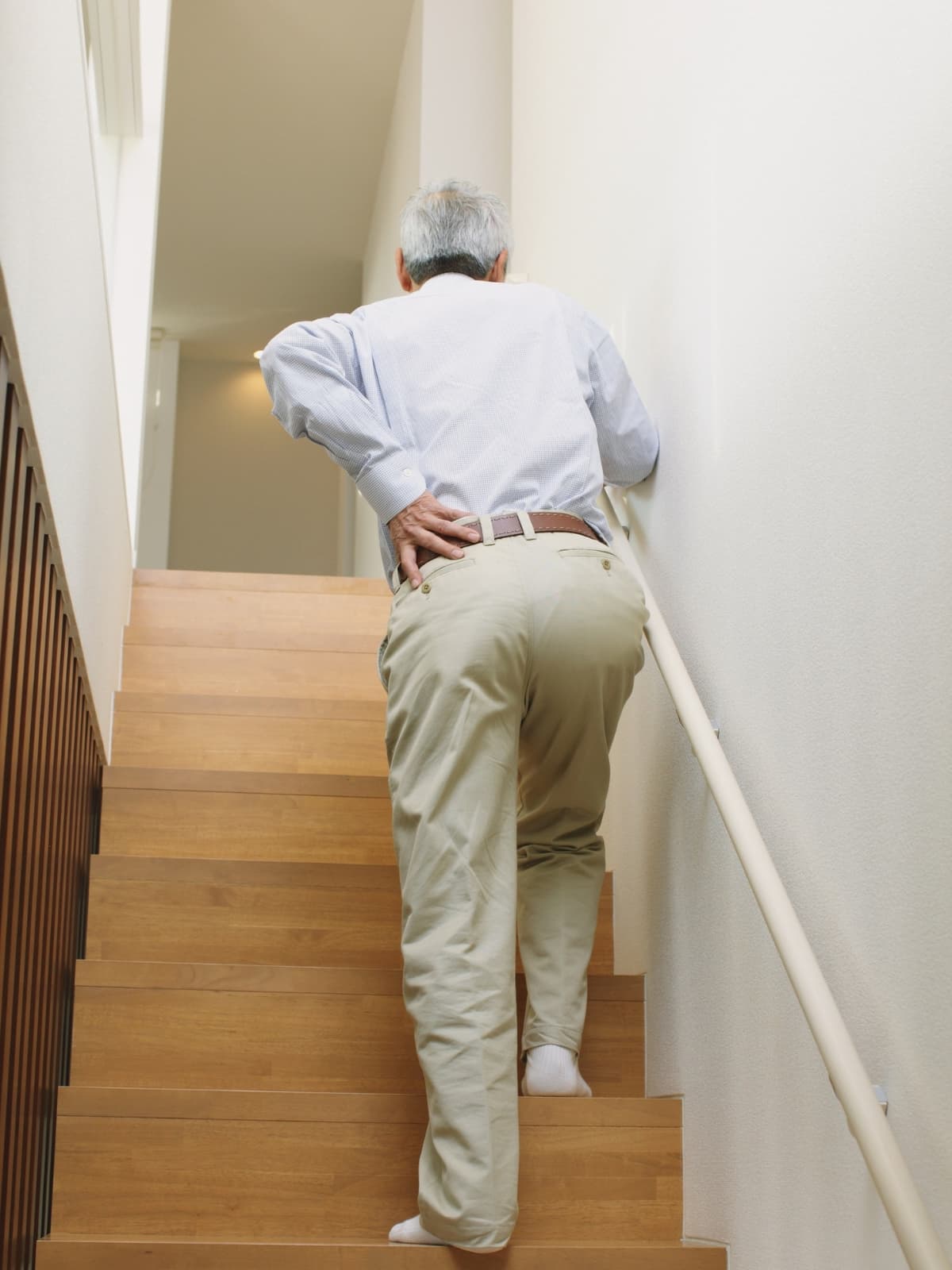
	an elderly person climbing the stairs clutching their lower back in pain

Patient Stories

Hear from patients who have undergone investigations and treatments for their hip and knee problems with Mr Oni.

★ ★ ★ ★ ★

Mr Richard M.

Mr Oni explained everything clearly and the whole process was faultless. I was walking the corridors within two days and driving again in a fortnight. The scar is so neat you can hardly see it.

Treatment

Hip Replacement

★ ★ ★ ★ ★

Mr Robert F.

Mr Oni and the team were very professional throughout. The recovery was tough, but I stuck to the exercises and only needed over-the-counter painkillers. Two months on, I completed a nine-mile bike ride.

Treatment

Robotic Knee Replacement

★ ★ ★ ★ ★

Ms Liz.

Mr Oni and Libby are a really good team and made me feel completely comfortable. I'd been limping for a year, but almost marched into my follow-up. I've got my life back.

Treatment

Arthrosamid Injection

★ ★ ★ ★ ★

Mr Tony G.

Mr Oni gave me real confidence going into surgery, and I cannot fault my experience. I'm back to walking the dogs, gardening and farm work. The steep hills that once bothered me, now I don't even notice.

Treatment

Robotic Knee Replacement

★ ★ ★ ★ ★

Ms Zoe G.

Mr Oni and the team were incredibly supportive, kind and patient. I was walking with a frame the same day and dressing myself the next morning. Within two weeks I could pick my daughter up from school.

Treatment

Hip Replacement

★ ★ ★ ★ ★

Mr Ian F.

Mr Oni recommended the Arthrosamid injection and everything has been brilliant. Two weeks later I was rotovating the garden for two hours. It felt like some sort of miracle, I didn't notice I'd had bad knees.

Treatment

Arthrosamid Injection

Take the next step

Book an assessment for an unstable hip replacement

If your hip replacement has dislocated or feels unstable, it is worth being seen by a surgeon who specialises in revision hip work. Mr Oni will find out why it is happening and talk you through how to put it right, from strengthening and precautions to corrective surgery where needed. No pressure, no assumptions.

locations

Mr Oni consults and operates at several leading private hospitals across the region, so you can choose the location most convenient for you.

Exterior Image of The Horder Centre Crowborough East Sussex

The Horder Centre

St John's Road
Crowborough
East Sussex
TN6 1XP

Exterior Image of the Nuffield Health Private Hospital in Tunbridge Wells

Nuffield Health

Kingswood Road
Tunbridge Wells
Kent
TN2 4UL

Exterior Image of the Vale Health Clinic in Tunbridge Wells, Kent

Vale Health Clinic

31-33 Vale Road
Tunbridge Wells
Kent
TN1 1BS

Frequently asked questions

Recurrent dislocation usually comes down to the position of the components, the strength of the muscles around the hip, or both, and each dislocation stretches the tissues further, making the next one more likely. The good news is that the cause can be identified and corrected.

No, a replacement should feel secure. Instability is uncommon, but it is not something to put up with, and it is very treatable once the cause is found. It is worth being assessed rather than simply avoiding the movements that trigger it.

Sometimes. A first or occasional episode can settle with physiotherapy to strengthen the muscles and advice on positions to avoid. Where dislocations keep happening or the components are poorly positioned, revision surgery is usually the more reliable solution.

A dual-mobility hip is an implant design with an extra bearing that allows more movement before the hip can dislocate, greatly improving stability. It is one of the options Mr Oni may use when revising an unstable replacement.

Until you have been assessed, it is wise to avoid the positions that most often trigger a dislocation, such as bending the hip up very high, crossing the legs, and twisting on the leg. Mr Oni will give you advice tailored to your hip.

An unstable replacement is best assessed by a surgeon who specialises in revision hip work. Mr Oni is regional lead for revision hip surgery in East Kent and has particular expertise in correcting unstable hip replacements.

get in touch

Book your initial
consultation

See Mr Oni at The Horder Centre, The Nuffield Hospital or The Vale Health Clinic.

Fill in the form below or get in touch directly:

Thank you - your request has been received.
Oops! Something went wrong while submitting the form. Please try again or contact Libby directly.

Libby aims to respond to all requests within two working days

Mr Oni walking with his practice manager in a hospital corridor
Accepted Insurers

We accept most major UK private medical insurers, and welcome self-funding patients too.

We’re committed to keeping your information safe. By submitting this form, you agree that we’ll use your details to respond to your enquiry. If you’re asking about accessing services, we might need to follow up with a few extra questions. You can read more about how we handle your information in our Privacy Policy.