Answers written by Mr Tofunmi Oni, Consultant Orthopaedic Surgeon (MBChB BSc PGDip FRCS (Tr & Orth), GMC 7074916), who specialises in revision hip surgery and leads the weekly revision hip multidisciplinary meeting at East Kent Hospitals University NHS Foundation Trust. Figures come from the National Joint Registry, the British Hip Society and the studies listed in the sources at the end. Last reviewed October 2026.
What is normal pain after a hip replacement, and for how long?
The NHS says pain and swelling usually improve over a few weeks, with most people home within one to three days, back to work at around six weeks and recovering fully over several months. A useful rule from NHS rehabilitation leaflets is that a moderate ache which settles quickly is acceptable, and severe pain that takes hours to settle is not. Pain that is getting worse rather than better, fever, or a wound that leaks or reddens need review at any stage.
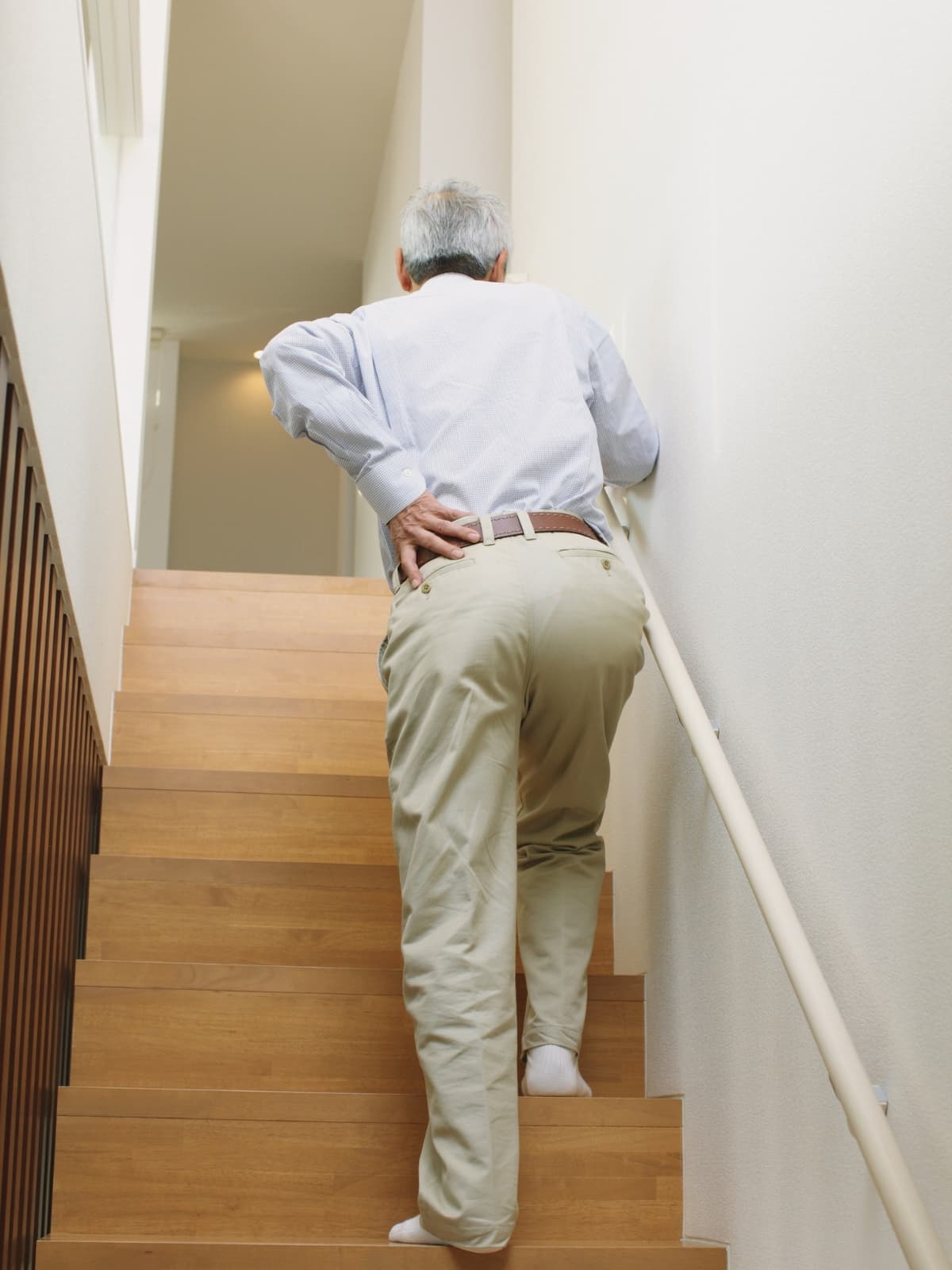
Is pain years after a hip replacement normal?
No. Pain that starts after a period of being well is a signal that something has changed and NICE says new or worsening pain, a limp or loss of function after a joint replacement should be referred back to an orthopaedic service. The usual causes years later are loosening, wear, bone loss around the implant, a fracture around the implant, or a reaction to metal debris. Earlier on, within the first year or two, the commoner causes are infection, instability, a tendon catching on the implant, or a stem that has not bedded in.
Why do I have groin pain after my hip replacement?
Groin pain after a hip replacement comes from a short list. The iliopsoas tendon can catch on the front edge of the cup, which is reported in anywhere from 4% to 30% of patients and is usually treatable with a guided injection or a tendon release. A loose cup causes groin pain on weight bearing. Infection causes more constant groin pain, often with night pain. Less often it is referred from the spine or from a hernia. An X ray, blood tests and sometimes a diagnostic injection sort these out.
What causes buttock pain after a hip replacement?
Buttock and outer hip pain are most often from the gluteal tendons and the bursa over the outer hip, which affect 4% to 17% of people after hip replacement, or from the lumbar spine. The British Hip Society standard specifically asks surgeons assessing a painful hip replacement to examine leg length, the strength of the abductor muscles, the spine and the other hip, because these are so commonly the source.
What causes thigh pain after a hip replacement?
Thigh pain is classically linked to an uncemented stem that has not fully bonded to the bone or that loads it unevenly, reported in around 5% to 8% of patients in small series. It usually settles over the first year or two as the bone adapts. Persistent or worsening thigh pain needs X rays to exclude loosening or a crack in the bone around the stem.
How do I know if something is wrong with my hip replacement?
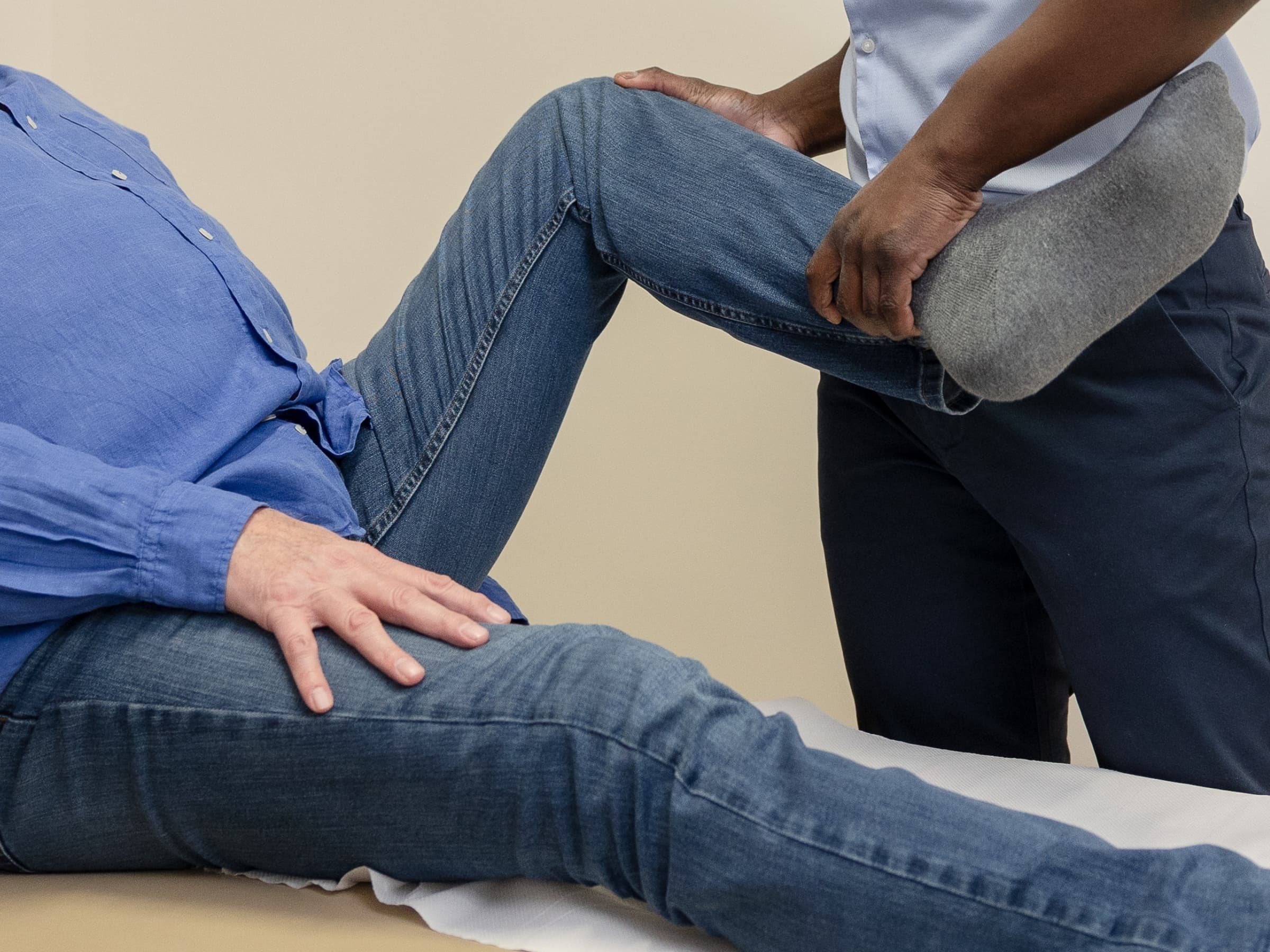
Warning signs are new or worsening pain, a hip that feels unstable or gives way, clicking or clunking, a limp, a leg that seems shorter, swelling, redness or discharge at the scar, or fever. The NHS advises urgent GP or 111 contact for throbbing or cramping pain, a high temperature, pus from the wound, or worsening redness and swelling. Patients with a metal on metal hip should report new pain, reduced mobility or a popping or clicking sound. The only way to know is an X ray and blood tests with a hip surgeon.
What does a failed or loose hip replacement feel like?
Loosening typically causes start up pain on the first steps after sitting and a deep ache in the groin or thigh on weight bearing that eases with rest, sometimes with a shortening leg or limp. Infection causes more constant pain with warmth, swelling or feeling unwell. A fracture around the implant causes sudden severe pain and an inability to bear weight. Some failures, particularly reactions to metal debris, cause few symptoms, which is why follow up X rays matter.
How do you know if a hip replacement is infected?
Deep infection affects roughly one in a hundred hip replacements. Signs are persistent pain, a wound that keeps leaking, redness, swelling, fever or feeling unwell, though normal blood tests do not exclude it. The standard work up is a CRP with or without ESR plus X rays, then aspiration of the joint under sterile conditions with cultures kept for at least seven days. Antibiotics should not be started before the samples are taken unless you are seriously unwell, because they mask the result and make the infection harder to cure.
What tests will be done to find the cause?
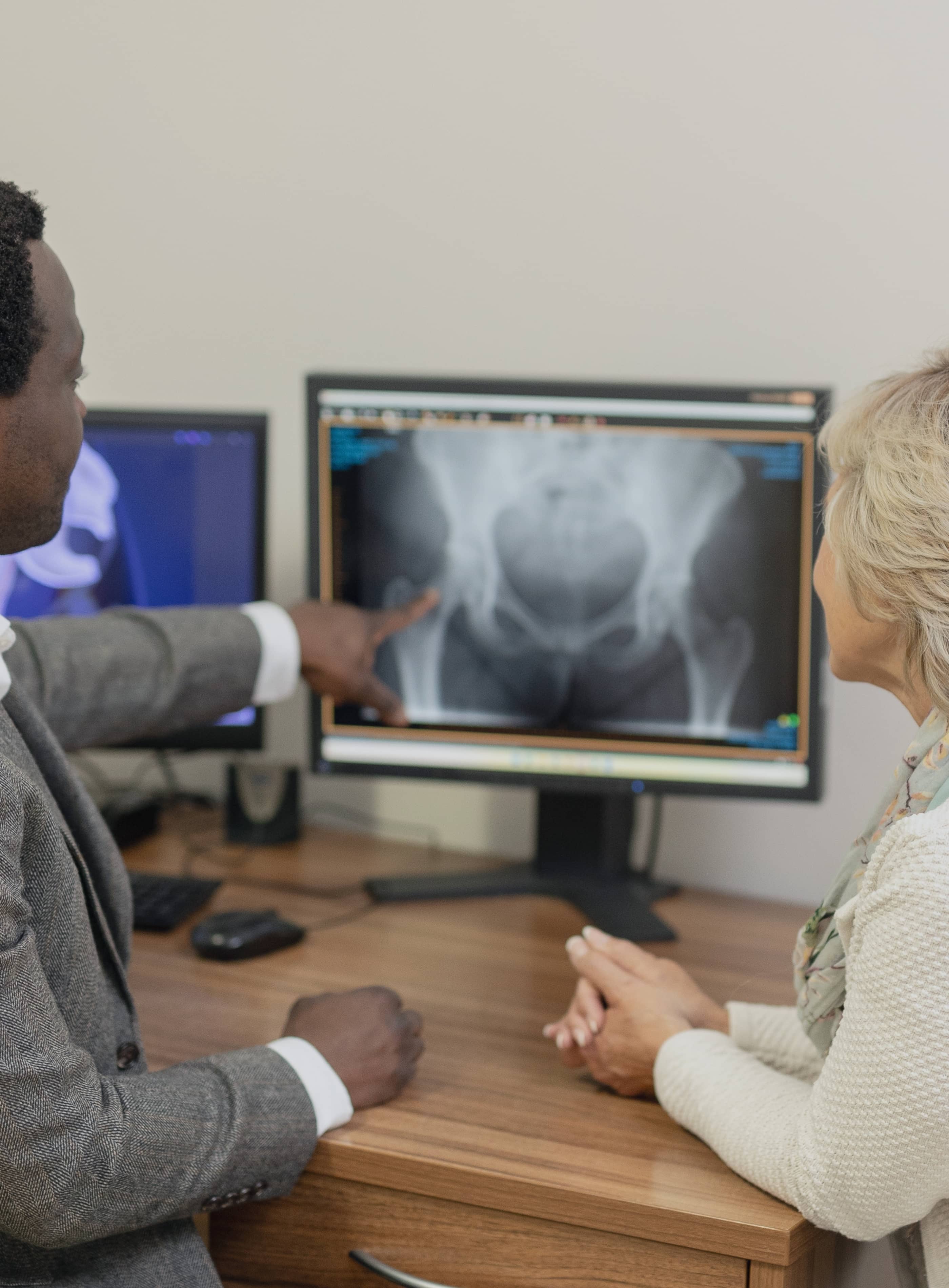
Plain X rays compared with your earlier films, blood tests including a full blood count, CRP and kidney function, and, if infection is possible, a joint aspiration. CT is used for bone loss, MARS MRI or ultrasound for soft tissue and metal reactions, whole blood cobalt and chromium levels for metal on metal hips, and sometimes a diagnostic injection of local anaesthetic into the joint or a tendon. Bone scans are rarely helpful.
Will I need another operation to fix the pain?
Often not. Tendon problems, bursitis and spinal causes are treated without revision surgery, with physiotherapy, guided injections or occasionally a minor tendon release. Revision surgery is for loosening, wear, fracture, recurrent dislocation, confirmed infection and symptomatic metal reactions. The first step is always a diagnosis; operating on an unexplained painful hip replacement without one has poor results, and the British Hip Society standard is that infection must be excluded in every case before anything else is done.
Who should I see about a painful hip replacement?
Your GP or the surgeon who did the operation can arrange X rays and blood tests. UK standards say suspected failure should be investigated by an orthopaedic consultant with a special interest in hip arthroplasty, and that confirmed infection and complex or repeat revisions should be discussed at a hip revision multidisciplinary meeting. I provide second opinions on painful hip replacements and review scans from other hospitals; you are entitled to ask for one, and the GMC requires every doctor to respect that request.
Sources
NICE NG157, Joint replacement (primary): hip, knee and shoulder (June 2020), recommendation 1.11.1. https://www.nice.org.uk/guidance/ng157
NHS.uk, Hip replacement: recovery and complications (reviewed March 2024, updated 2025). https://www.nhs.uk/tests-and-treatments/hip-replacement/
National Joint Registry, 22nd Annual Report 2025. https://reports.njrcentre.org.uk
British Hip Society Surgical Standards: Investigation and Management of Prosthetic Joint Infection; Management of Aseptic Loosening; Revision of the Unstable Hip Arthroplasty. https://www.britishhipsociety.com
British Orthopaedic Association, BOAST: Acute management of peri-prosthetic joint infection (2023, updated 2024). https://www.boa.ac.uk
Lenguerrand E et al. Risk factors associated with revision for prosthetic joint infection after hip replacement. Lancet Infect Dis 2018;18:1004-14.
Iliopsoas tendonitis after total hip arthroplasty. Bone & Joint Open 2023;4:3-12.
Greater trochanteric pain syndrome after total hip replacement. International Orthopaedics 2018;42:77-85.
MHRA, MDA/2017/018 All metal-on-metal hip replacements: updated advice for follow-up of patients (2017). https://www.gov.uk/drug-device-alerts
GMC, Good medical practice (2024), paragraph 18. https://www.gmc-uk.org