.avif)
.jpeg)
Treatments
A bone and ligament preserving operation that resurfaces only the worn part of the knee, for arthritis affecting a single compartment. It often offers a quicker recovery and a more natural-feeling knee.
about this treatment
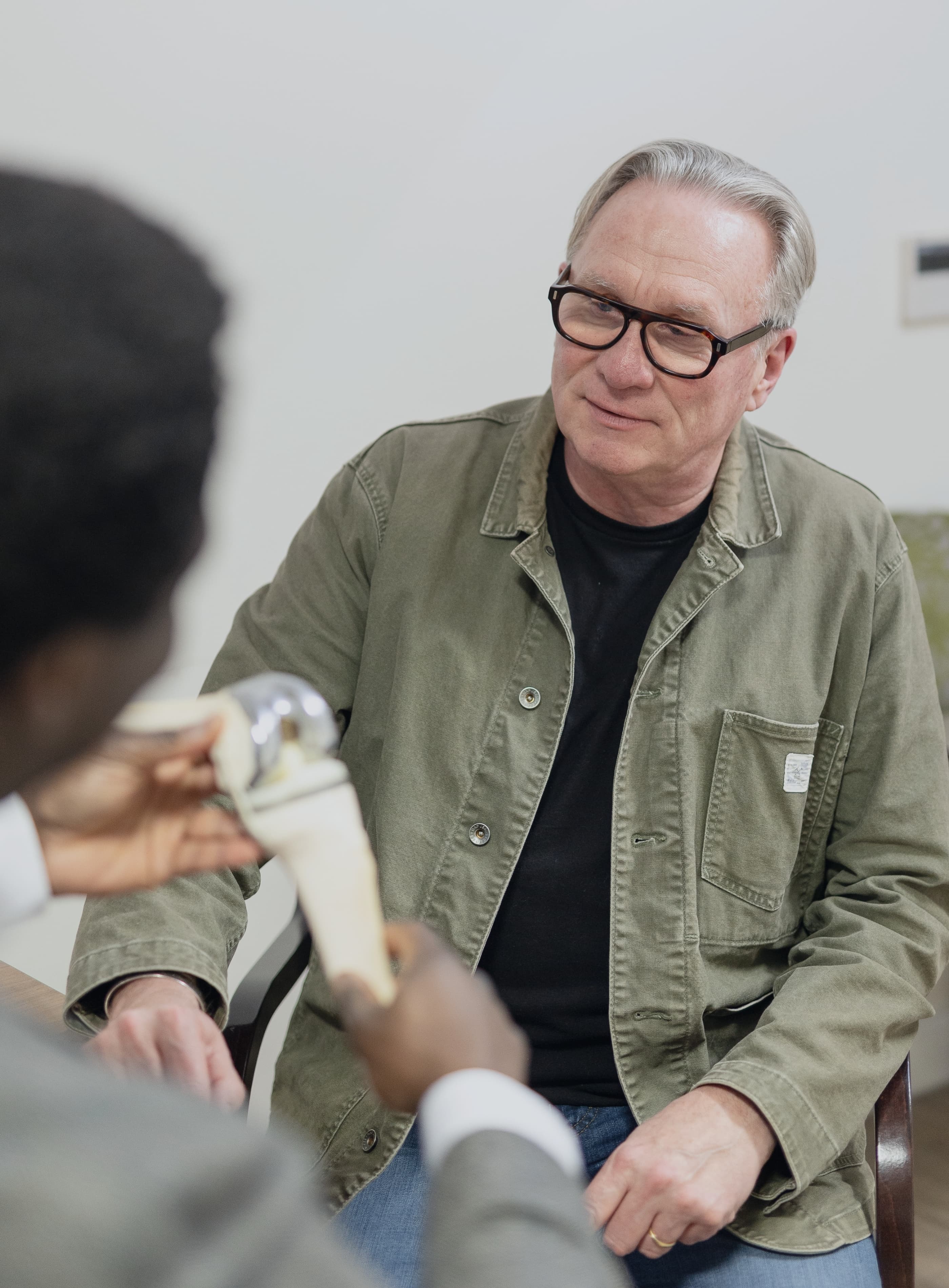
A partial knee replacement, also called a unicompartmental or half knee replacement, resurfaces only the worn part of the knee rather than the whole joint. The knee has three compartments, the medial (inner), the lateral (outer) and the kneecap, and when arthritis affects just one of them, often the medial side, only that compartment needs to be replaced.
Because Mr Oni removes less bone and keeps your healthy cartilage and ligaments, including the cruciate ligaments, a partial replacement preserves more of the natural feel and movement of the knee and usually allows a quicker recovery than a total knee replacement.
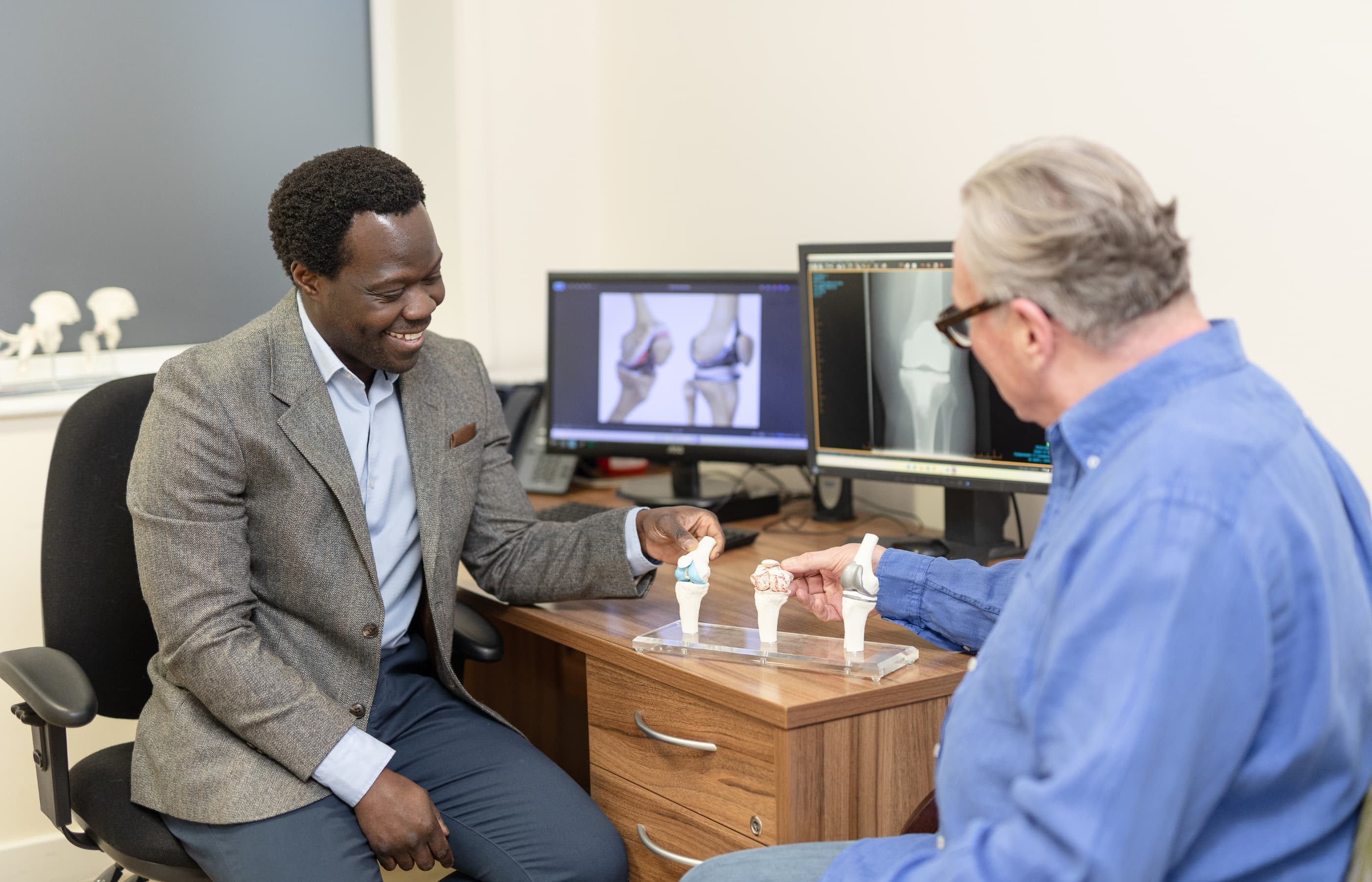
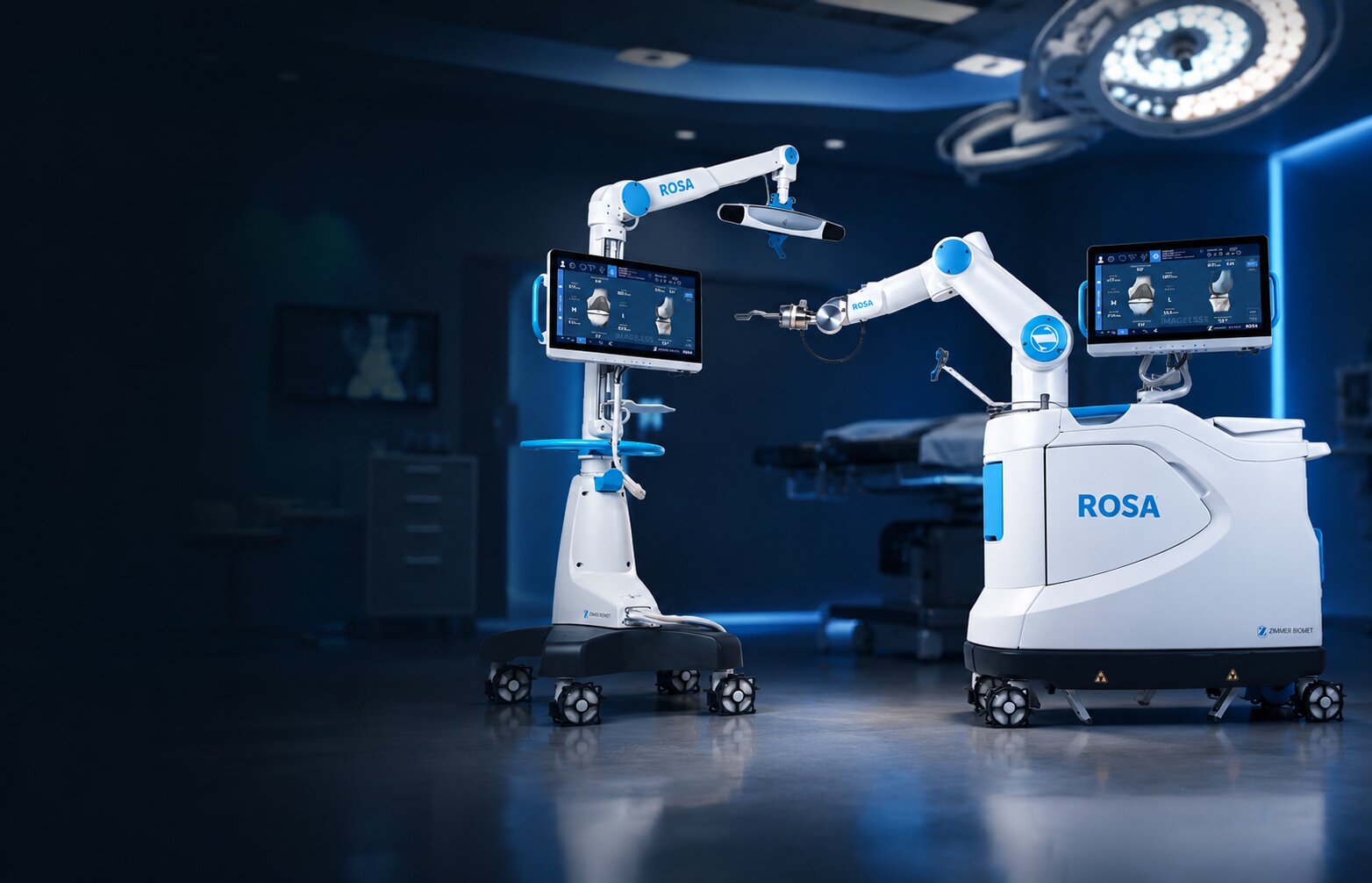
Robotic assistance can be used where appropriate and is discussed at your consultation. This can allow controlled, precise bone removal and is particularly valuable in partial knee replacement.
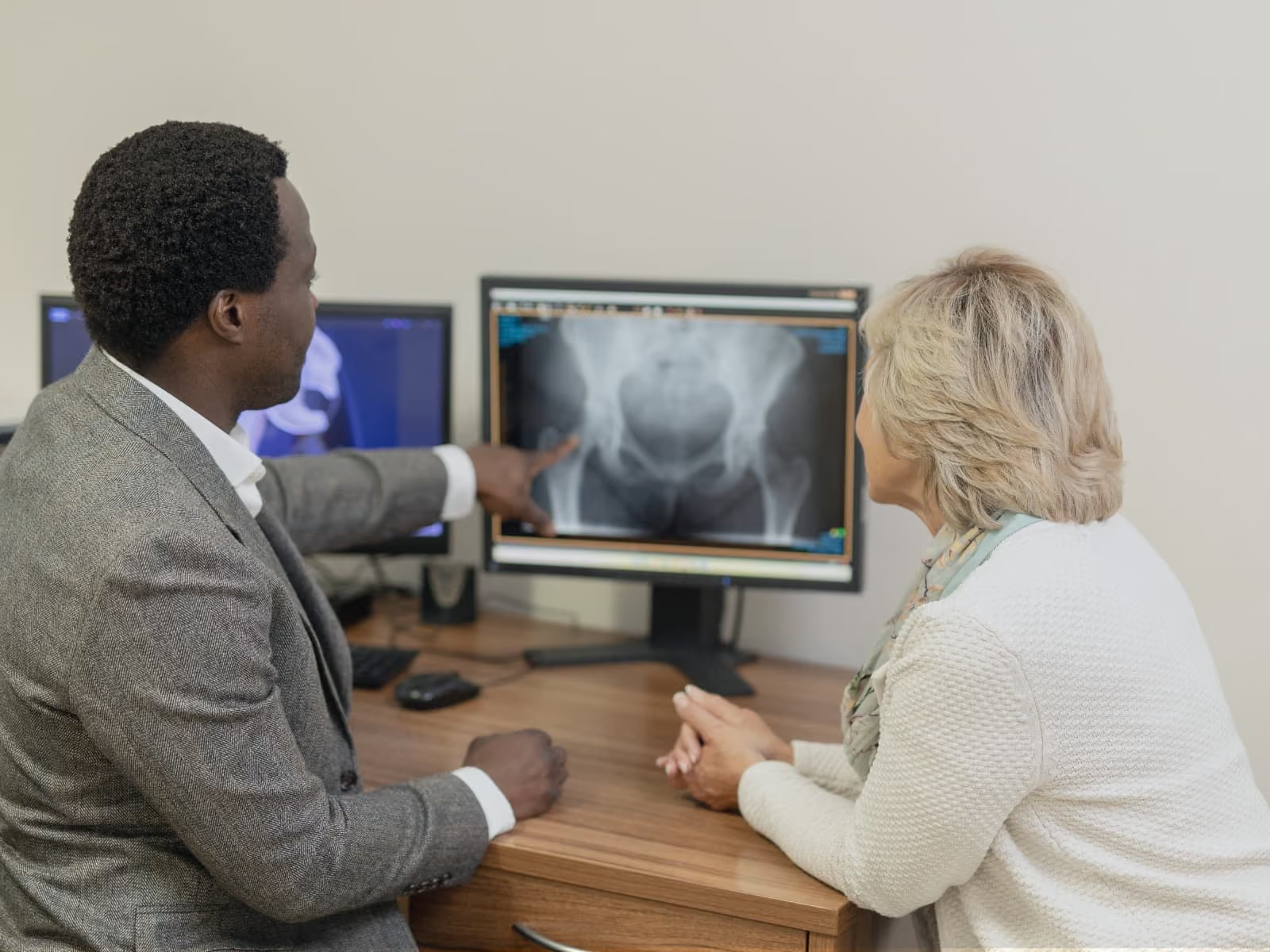
A partial replacement is only suitable when the other compartments and the ligaments are still healthy. If arthritis later develops elsewhere in the knee, a partial replacement can be converted to a total knee replacement. Mr Oni will examine your knee and review your X-rays to advise whether a partial or total replacement is right for you.
is this right for me?
Surgery is never the automatic answer. Mr Oni recommends a partial knee replacement only when arthritis is confined to one compartment of the knee, the other compartments and ligaments are healthy, and conservative treatments are no longer controlling the pain.
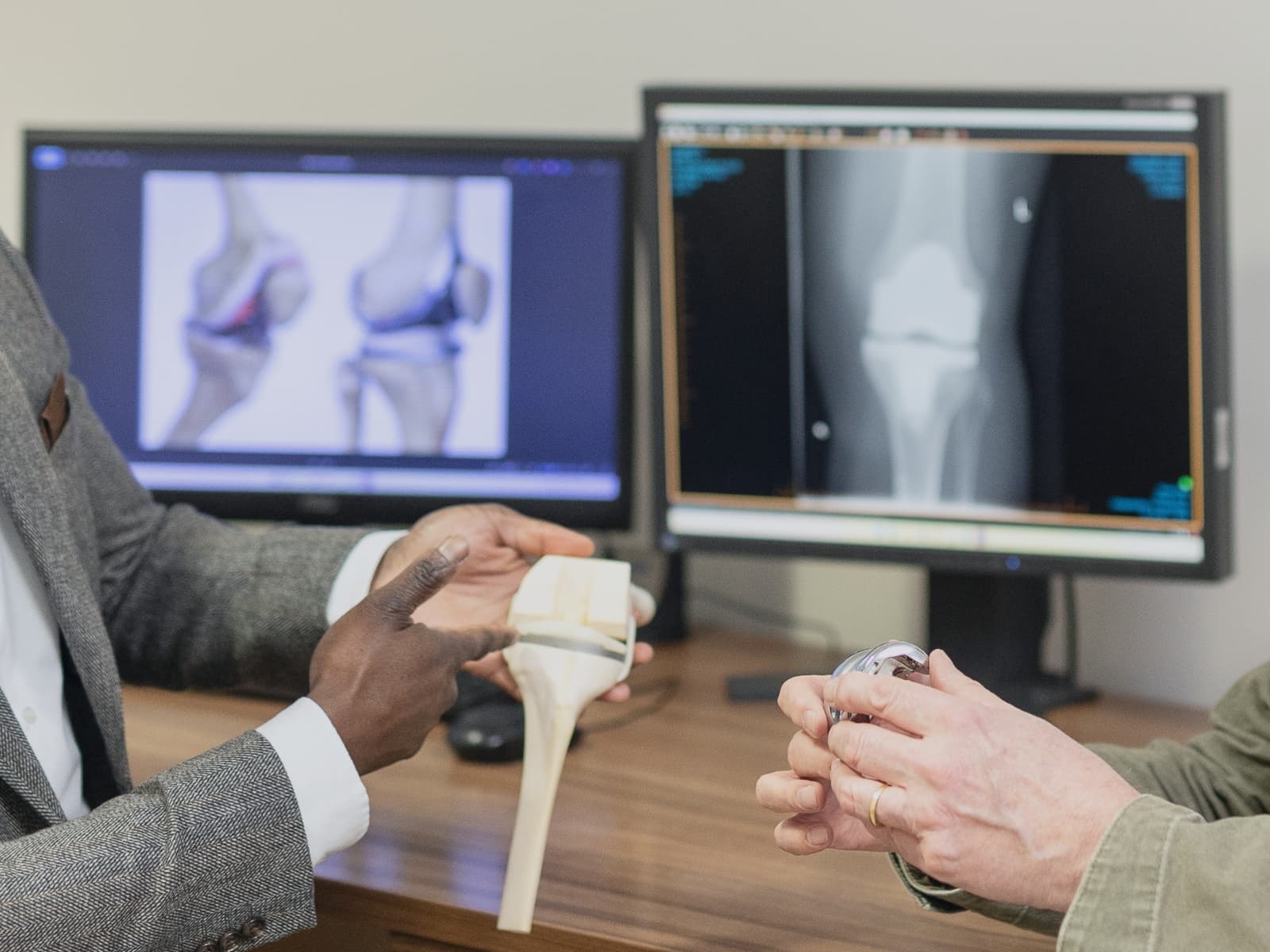
X-rays confirm arthritis in just one part of the knee, usually the medial (inner) compartment, with the rest of the joint and the ligaments still healthy.
.jpeg)
Physiotherapy, weight management, injections including Arthrosamid, and pain relief are no longer giving adequate relief.
.jpeg)
Knee pain is affecting your sleep, walking, work, or the activities you value such as golf and gardening.
Not sure if you qualify?
Many patients come to Mr Oni uncertain whether their symptoms are "bad enough" for treatment. The answer always comes from a proper clinical assessment - not from a website. Book a consultation and Mr Oni will give you an honest view.
outcomes
the benefits and outcomes that are typically expected with this treatment. giving you realistic expectations are important to ensure you go into any treatment fully informed.
Less bone is removed and the ligaments are preserved, so recovery is usually faster than after a total knee replacement, with most patients back to normal activities in about six weeks.
By keeping your healthy bone, cartilage and ligaments, a partial replacement preserves more of your natural knee movement than a total replacement.
A smaller incision and less surgery mean less pain afterwards, less blood loss, and often a shorter hospital stay.
Mr Oni plans the procedure with robotic assistance, which is especially valuable in partial knee replacement for accurate, controlled placement of the implant.
Recovery after a partial knee replacement is usually quicker than after a total knee replacement, because less bone is removed and the ligaments are preserved. The timeline below is a general guide, and Mr Oni will give you a realistic, personalised expectation at your consultation.
Physiotherapy begins. You will stand and walk short distances, often without a frame, with pain managed by medication.
Walking with a stick and then unaided, and managing stairs. Many patients can drive an automatic car from around six weeks, sometimes sooner.
Most patients return to normal daily activities and office work within about six weeks.
Continued improvement in strength and confidence, with a return to golf and other valued activities. Most patient will peak in their recovery journey at about a year
YOU MAY ALSO WANT TO EXPLORE
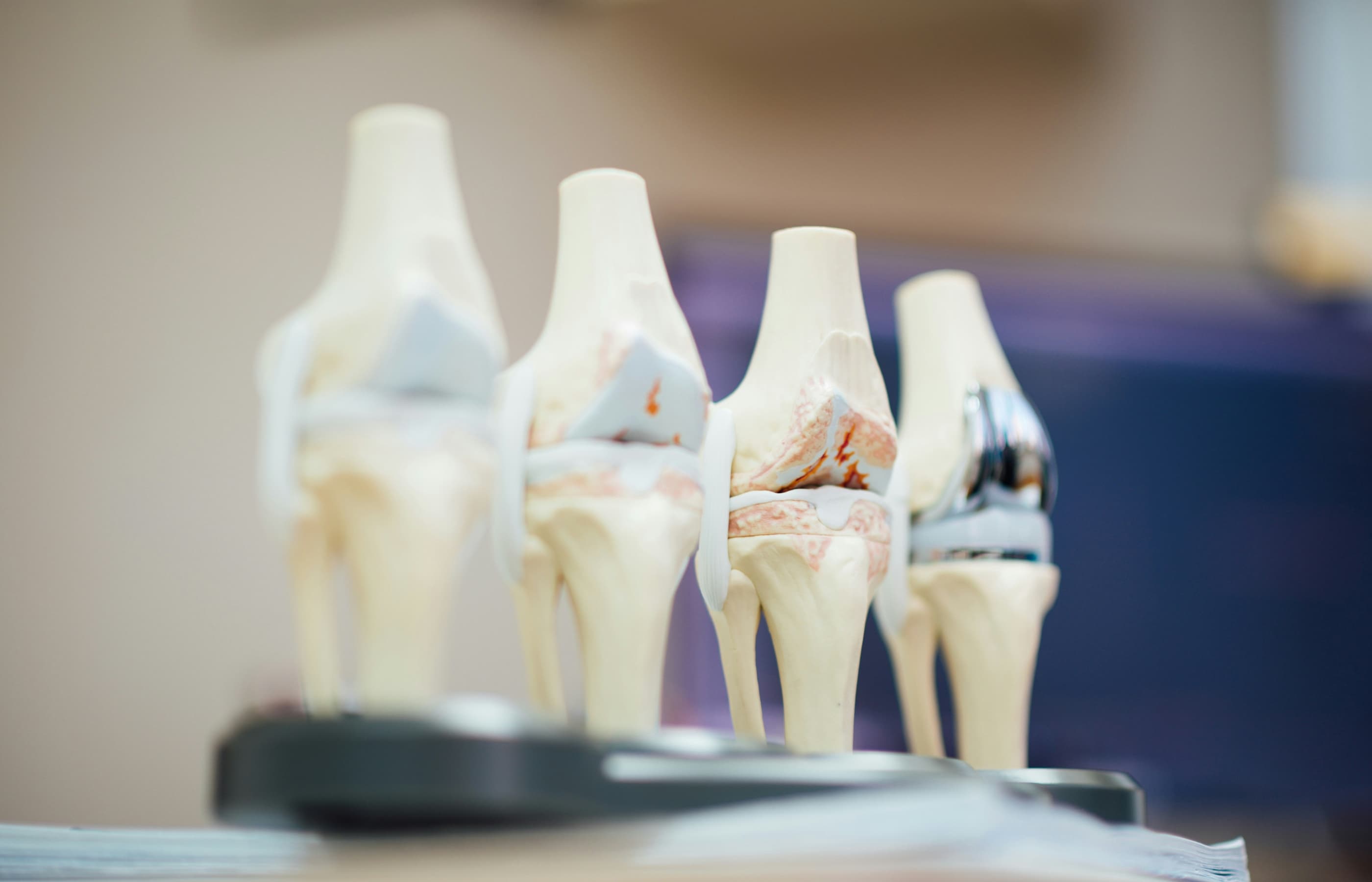
Replacing the damaged joint surfaces can relieve pain and restore movement.
YOU MAY ALSO WANT TO EXPLORE
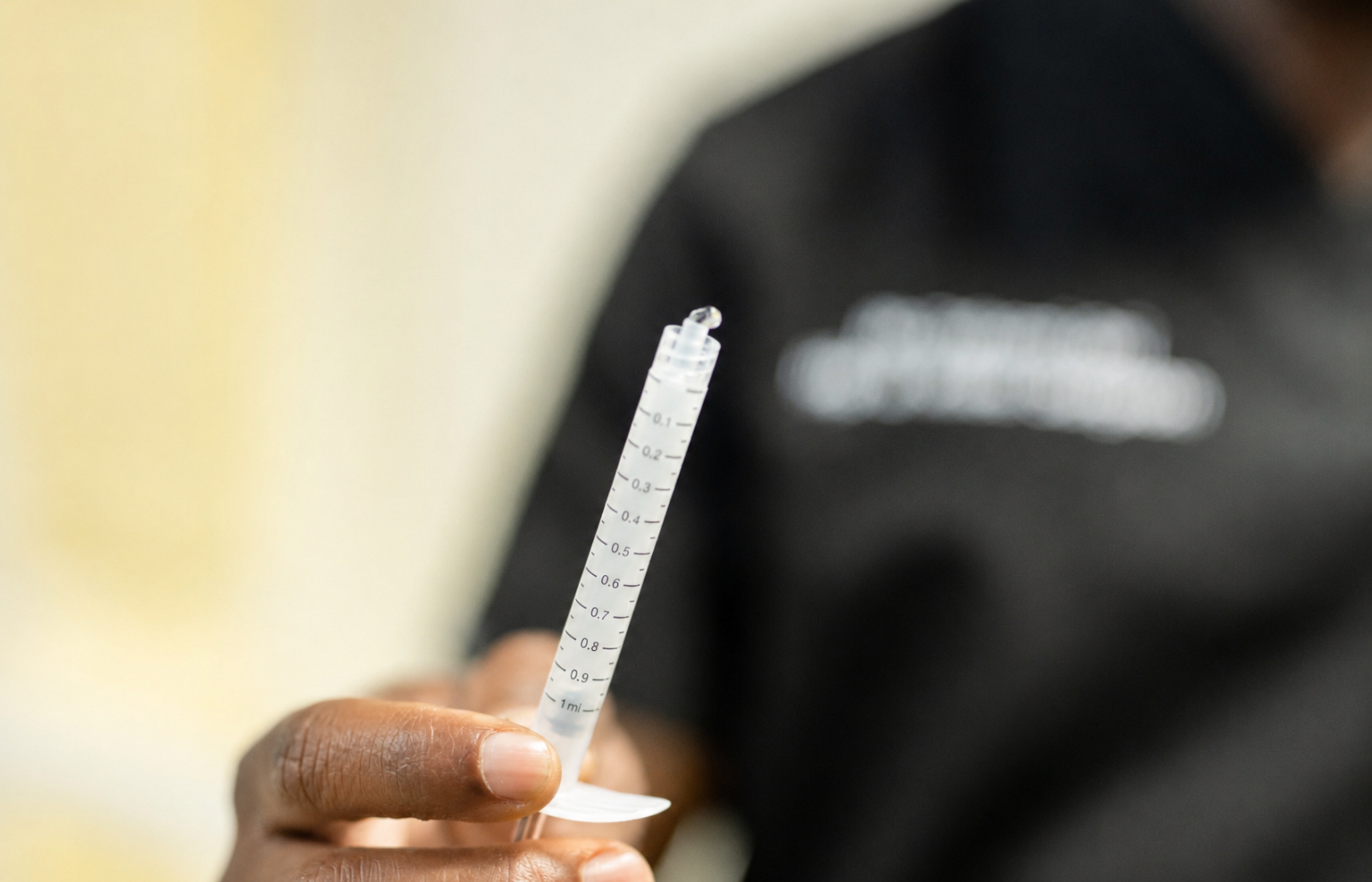
A non-surgical injectable treatment for knee osteoarthritis that can provide lasting relief from joint pain.
YOU MAY ALSO WANT TO EXPLORE
Keyhole knee surgery to diagnose and treat mechanical problems such as a torn meniscus, a loose fragment, or a knee that locks or catches.
YOU MAY ALSO WANT TO EXPLORE
Robotic-assisted knee replacement, planned and performed around your exact anatomy for greater precision.
The cost depends on the hospital and whether you are self-funding or using private medical insurance. Mr Oni's team can provide a clear, itemised quote at your consultation.
Recovery is usually quicker than after a total knee replacement. Most patients are walking the same day, driving an automatic at around four to six weeks, and back to normal daily activities within about six weeks, with continued improvement over the following months with recovery peaking at around one year.
A partial knee replacement is only suitable when arthritis affects a single compartment. If arthritis later develops in another part of the knee, a further operation to convert it to a total knee replacement may be needed. Mr Oni will advise whether it is the right choice for your knee.
Neither is simply better. When only one compartment is worn, a partial replacement preserves more of the natural knee and allows a quicker recovery. When arthritis is more widespread, a total knee replacement is more reliable. Mr Oni recommends whichever suits your knee.
Modern partial knee implants are designed to last many years. If it does wear out, or arthritis spreads to another compartment, it can be revised to a total knee replacement.
Most patients return to driving at around six weeks, sometimes sooner. This is confirmed with you at your follow-up appointment.
Mr Oni consults and operates at several leading private hospitals across the region, so you can choose the location most convenient for you.
get in touch
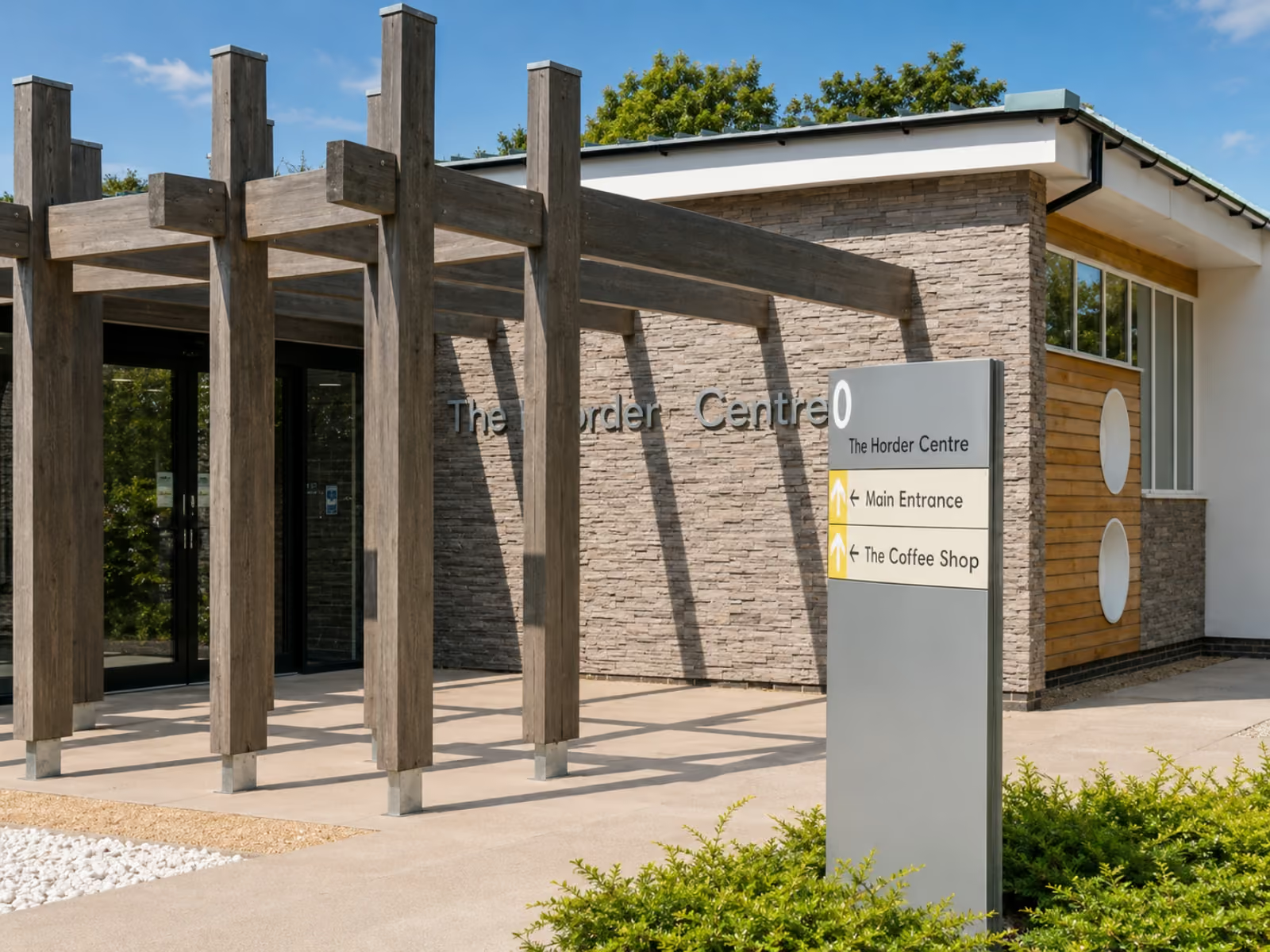
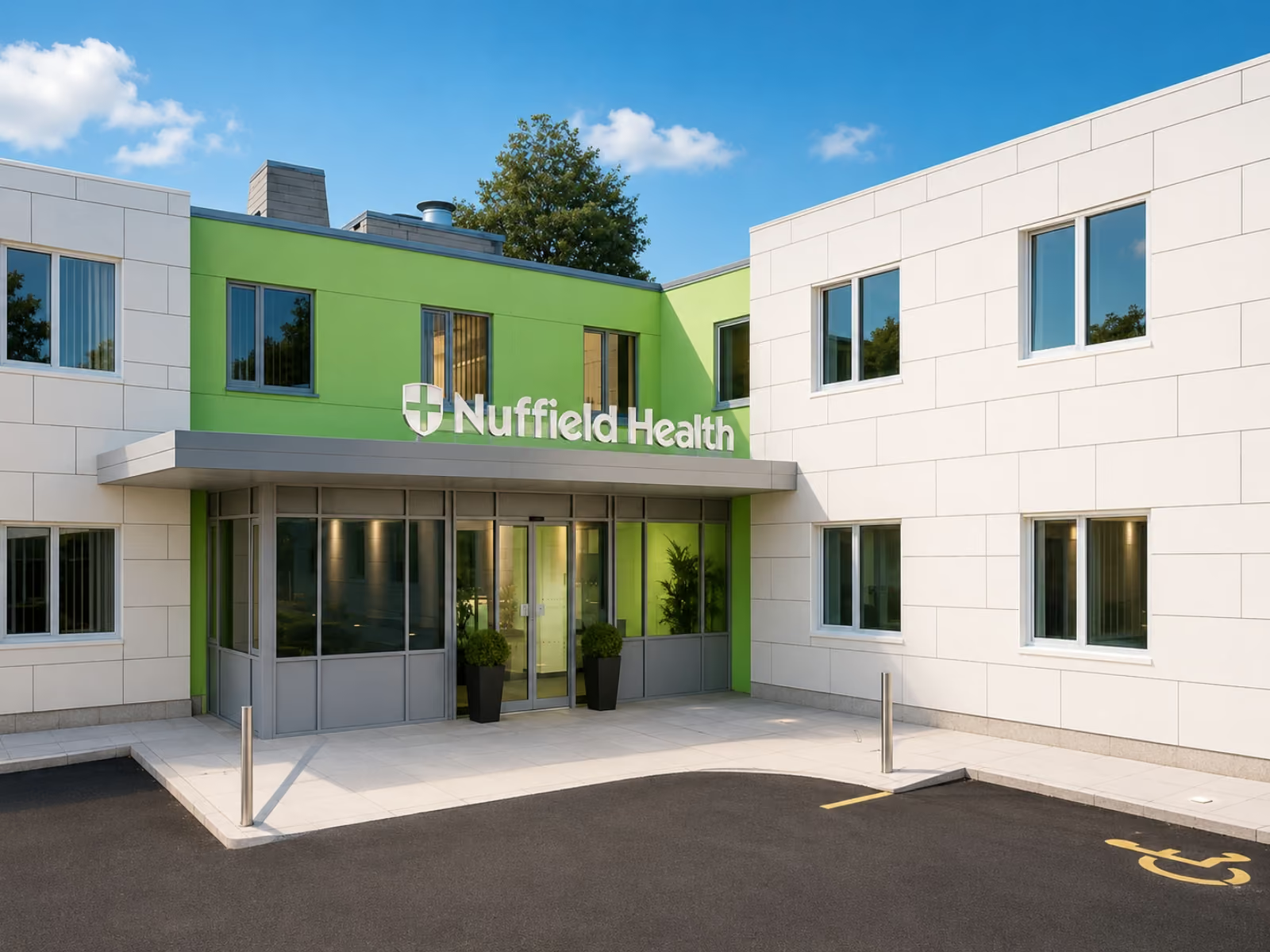
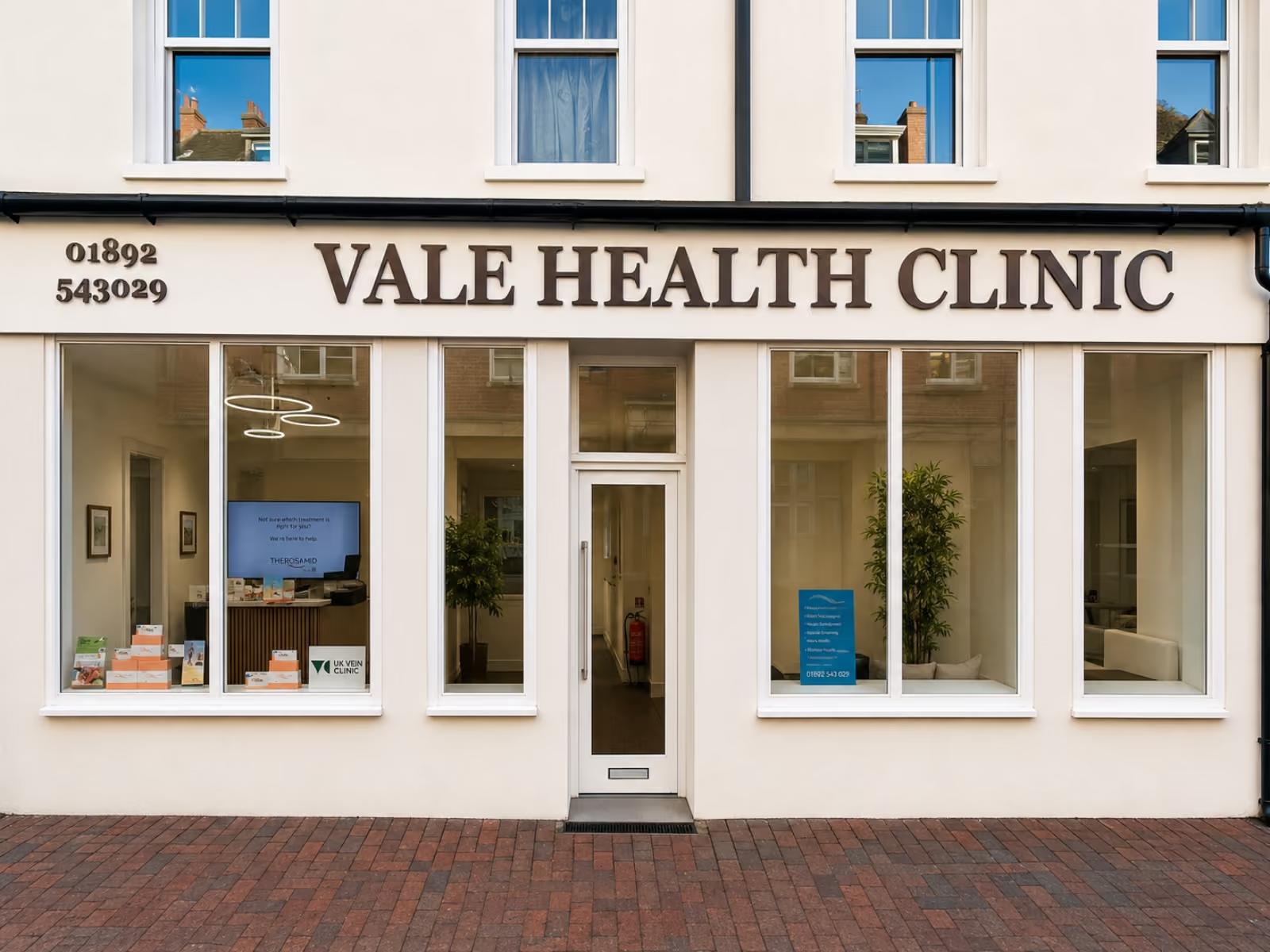
See Mr Oni at The Horder Centre, The Nuffield Hospital or The Vale Health Clinic.
Fill in the form below or get in touch directly:
Libby aims to respond to all requests within two working days
We accept most major UK private medical insurers, and welcome self-funding patients too.