Treatments
A single, non-surgical injection for knee osteoarthritis. Arthrosamid is a long-lasting hydrogel that eases joint pain and stiffness and can help delay, and in some cases avoid, a knee replacement, with relief shown to last for years. Treatment from £3,250, including your consultation.
about this treatment
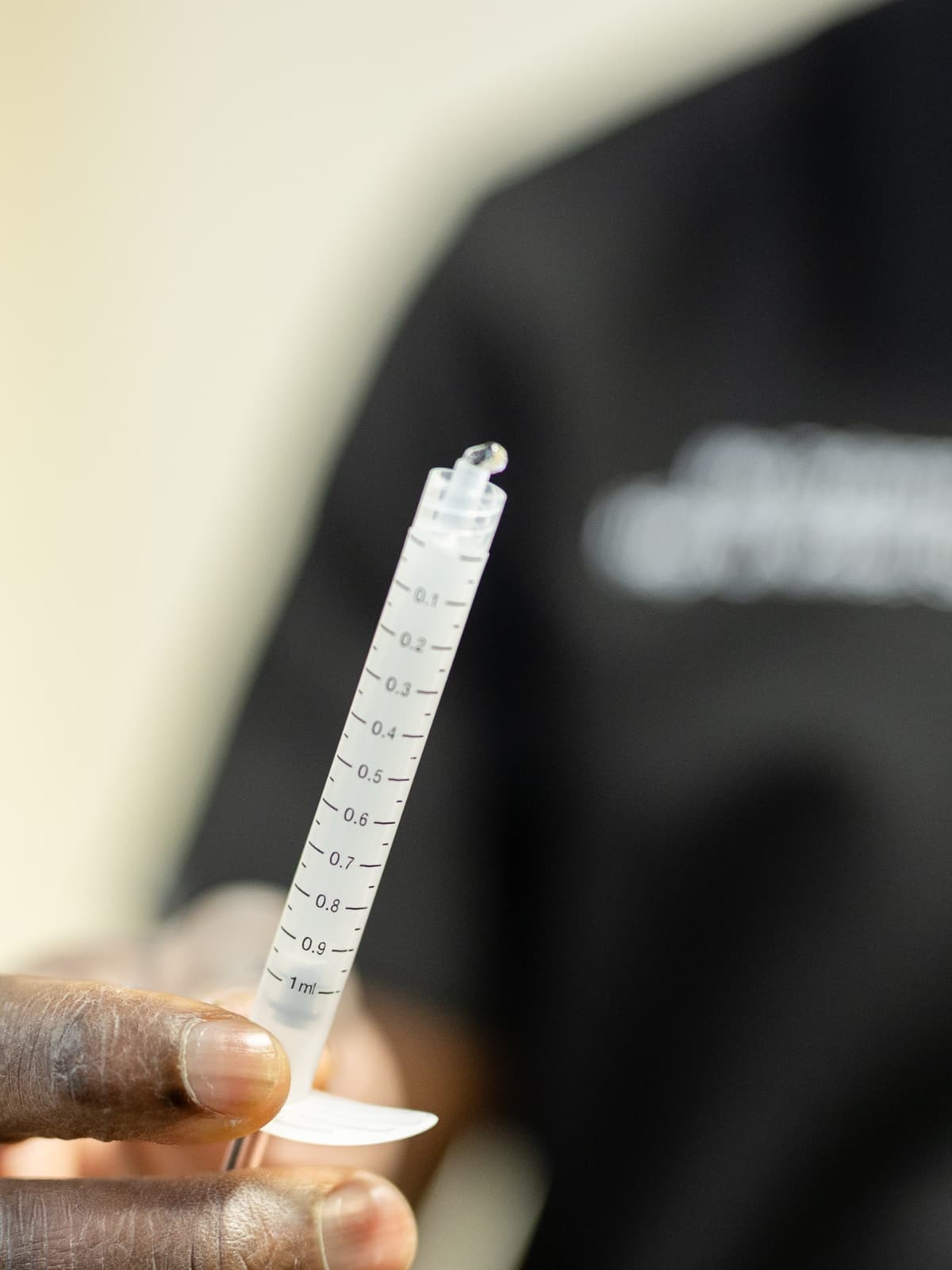
Arthrosamid is a non-surgical treatment for knee osteoarthritis. It is an injectable hydrogel, made of around 97.5% sterile water and 2.5% polyacrylamide, given as a single injection into the knee joint under local anaesthetic.
Unlike steroid or hyaluronic acid injections, which wear off and often need repeating, Arthrosamid integrates into the lining of the joint and stays there. It makes the joint lining more cushioned and elastic, which reduces pain and stiffness and improves how the knee works. The full benefit builds gradually over around six to twelve weeks, and most suitable patients experience meaningful relief.
It is important to be clear that Arthrosamid does not cure osteoarthritis or stop it progressing. What it can do is provide lasting relief, with studies showing benefit maintained at three to five years. It can help you delay, and in some cases avoid a knee replacement. Mr Oni will assess your knee and advise whether Arthrosamid is the right option for you.

is this right for me?
Arthrosamid suits people with knee osteoarthritis who want a non-surgical option, particularly when other measures have stopped helping or when a knee replacement is not yet wanted or appropriate.

Ongoing knee pain and stiffness from osteoarthritis, confirmed by Mr Oni on examination and imaging.
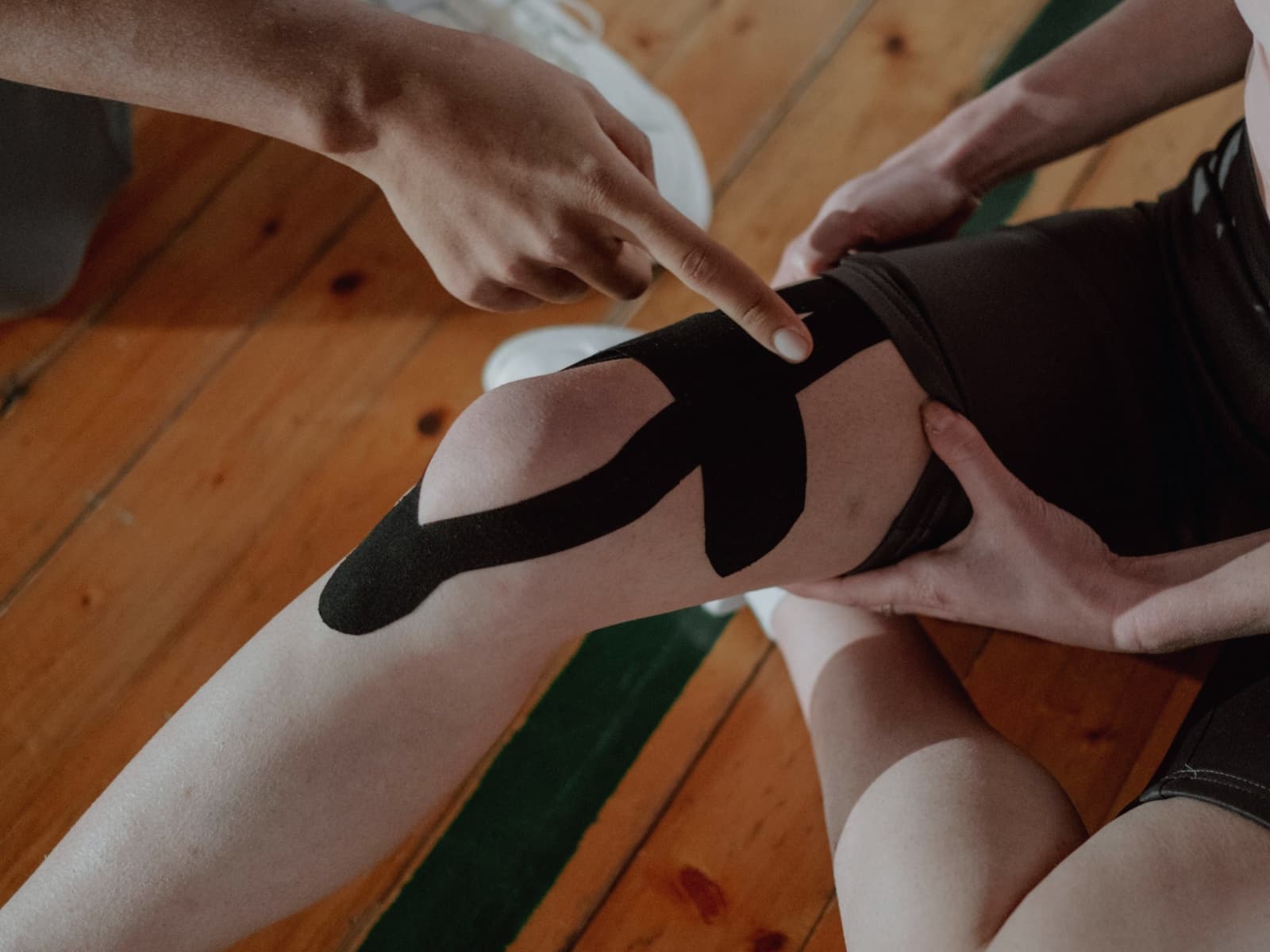
Physiotherapy, weight management, pain relief, or steroid and hyaluronic acid injections have stopped helping or do not last.

Not ready for, or not yet suitable for, a knee replacement and looking for lasting relief in the meantime.
Not sure if you qualify?
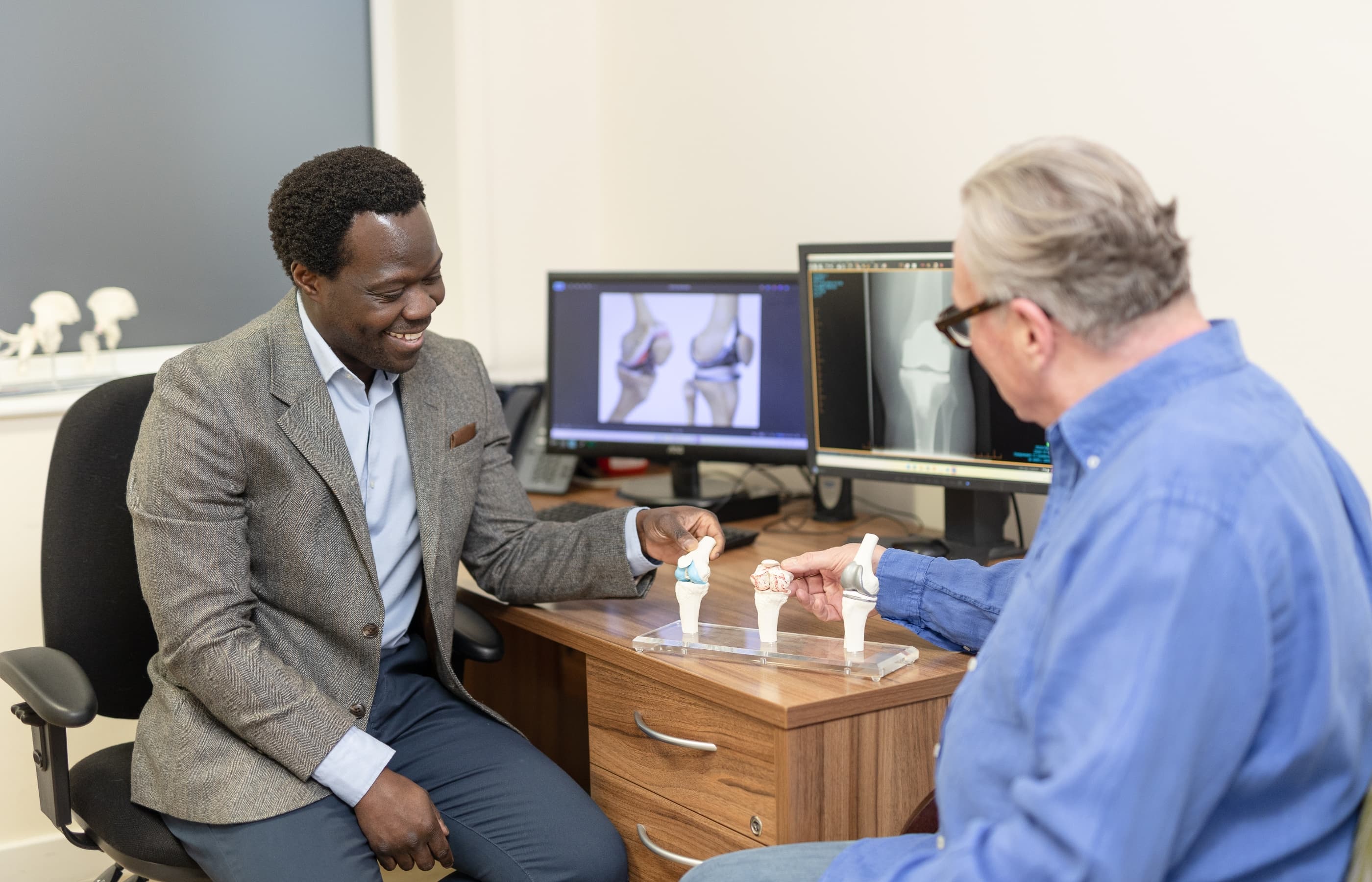
Many patients come to Mr Oni uncertain whether their symptoms are "bad enough" for treatment. The answer always comes from a proper clinical assessment - not from a website. Book a consultation and Mr Oni will give you an honest view.
outcomes
These are the benefits and outcomes typically expected from this treatment. Realistic expectations matter, so you go into any treatment fully informed.
A simple injection under local anaesthetic, with no surgery, no general anaesthetic and no hospital stay.
Unlike steroid or hyaluronic acid injections, a single Arthrosamid injection integrates with the joint and has been shown to keep working at five years.
One injection rather than a repeated course, with most people back to normal activities the same day.
For the right patient, Arthrosamid can give lasting pain relief and help delay or avoid a knee replacement.
There is no surgical recovery with Arthrosamid. Most people return to normal activities soon afterwards, while the full benefit builds gradually over the following weeks.
Some mild pain, stiffness or swelling is normal and usually settles within a few days. Rest and ice the knee as needed.
You can return to normal daily activity while the hydrogel integrates with the lining of the joint.
Pain and stiffness steadily improve as the hydrogel becomes fully integrated and starts working at its best.
Relief is long-lasting, with clinical studies showing benefit maintained at three to five years after a single injection.
YOU MAY ALSO WANT TO EXPLORE
Keyhole knee surgery to diagnose and treat mechanical problems such as a torn meniscus, a loose fragment, or a knee that locks or catches.
YOU MAY ALSO WANT TO EXPLORE
Resurfacing only the worn part of the knee to relieve pain and restore movement.

YOU MAY ALSO WANT TO EXPLORE
Replacing the damaged joint surfaces can relieve pain and restore movement.

Arthrosamid is designed to be long-lasting. Clinical studies show benefit maintained at three to five years after a single injection, although individual responses vary.
Steroid and hyaluronic acid injections are temporary and often need repeating. Arthrosamid is a single injection that integrates into the lining of the joint, which is why its relief tends to last far longer.
No. Arthrosamid does not cure osteoarthritis or stop it progressing, but it can give meaningful relief from pain and stiffness and help you delay and in some cases, avoid a knee replacement.
Treatment starts from £3,250 for one knee, including your initial consultation with Mr Oni. The final price depends on whether one or both knees are treated, and Mr Oni's team will give you a written quote at your consultation.
It is a single injection into the knee under local anaesthetic, taking only a few minutes as an outpatient. You are given antibiotics beforehand and go home the same day, with some mild soreness possible for a few days.
Arthrosamid is not used where there is an active knee infection, and where arthritis is very advanced a knee replacement may be a better option. Mr Oni will advise whether it is right for you.
Answers written by Mr Tofunmi Oni, Consultant Orthopaedic Surgeon (MBChB BSc PGDip FRCS (Tr & Orth), GMC 7074916), who injects Arthrosamid at The Horder Centre in Crowborough and Nuffield Health Tunbridge Wells. Every factual statement below is checked against the published studies and NICE guidance listed in the sources at the end. Last reviewed October 2026.
Arthrosamid is a soft, water based gel made of 2.5% cross linked polyacrylamide and 97.5% water. It is given as a single 6 ml injection into the knee joint under local anaesthetic, usually with ultrasound guidance. Unlike a steroid or hyaluronic acid injection it is not absorbed by the body. The manufacturer classes it as a permanent implant: it integrates with the lining of the joint (the synovium), where it appears to cushion the joint and change the character of the joint fluid. The exact mechanism is still being worked out and rests mainly on laboratory and animal work, with a UK study suggesting an anti inflammatory effect as well.
The published studies show meaningful improvements in knee pain and function after one injection, and the honest answer is that it works well for most people but not everyone. In the largest trial, 239 patients were randomly allocated to Arthrosamid or hyaluronic acid, and at one year Arthrosamid was at least as effective. Around 60 to 70% of patients count as responders at one year, meaning their pain improved by a clinically meaningful amount. The limits of the evidence matter too: the main studies were funded by the manufacturer, the long term follow up has no comparison group and a fair number of people dropped out, and independent reviewers have said the results should be read with caution. In my own practice the pattern matches the studies: most patients get worthwhile relief, a minority get little.
Published follow up now runs to five years. In the randomised trial group, pain scores were still around 16 points better (on a 0 to 100 scale) five years after a single injection, and in a smaller open label group around 15 points better. The manufacturer's labelling gives an expected performance lifetime of five years. Those five year figures come from the patients who stayed in the studies, so they probably overstate the average result slightly. There is no evidence beyond five years for how long the benefit lasts.
The common ones are temporary: aching, a feeling of swelling or fullness in the knee, and sometimes a bit less movement, usually over the first few weeks and occasionally for a few months. In the randomised trial about 29% of Arthrosamid patients had a side effect linked to the gel, compared with 8% in the hyaluronic acid group. All were mild or moderate and none were serious. A Baker's cyst behind the knee can form or enlarge. Joint infection after any knee injection is rare, well under 1%, and no infections were reported in the published Arthrosamid trials, but because the gel is permanent any infection needs urgent treatment, which is why you should contact the practice straight away if the knee becomes hot, red or increasingly painful.
Two groups of patients have now been followed for five years. After the first year no side effects were judged to be related to the gel and there were no serious gel related events. Polyacrylamide gels have been used in other areas of medicine for more than 20 years. A ten year retrospective follow up presented at a conference in 2025 reported very few problems and no unusual findings when some of those knees were later replaced. That ten year data has not yet been published in a peer reviewed journal and the numbers are small, so I describe it as reassuring rather than proof.
Arthrosamid is not routinely funded by the NHS. NICE has not assessed it and has published no guidance on it, so there is no national basis for NHS commissioning. NICE's 2022 osteoarthritis guideline recommends exercise, weight management and, where needed, short term steroid injection, and advises against hyaluronic acid injections on the NHS. A handful of NHS research studies have used Arthrosamid, which is not the same as routine availability. The manufacturer has said it is planning an NHS evaluation with a cost comparison.
In my practice Arthrosamid for one knee is self pay from £3,000, which includes the injection itself. The initial consultation is £250 and is charged separately, as is any imaging you need. Across the UK, private prices for one knee generally sit between about £2,500 and £3,700, with both knees usually priced at a discount. The setting matters: an injection in a clinic room costs less than one in an operating theatre, and some providers have a physiotherapist rather than a surgeon doing the injecting.
A steroid injection damps down inflammation and typically helps for a few weeks. NICE describes the relief as short term, two to ten weeks, and a Cochrane review found no evidence of benefit lasting six months. Hyaluronic acid (Durolane, Ostenil and similar) is a lubricant that the body absorbs over months, and NICE advises the NHS not to offer it. Arthrosamid is a permanent gel that is not absorbed. In the head to head trial it was at least as effective as hyaluronic acid at one year, with a higher rate of temporary side effects, and it has follow up data out to five years.
Usually yes. A previous steroid injection does not rule you out, though steroid should not be injected at the same time as Arthrosamid and I prefer to leave a gap of three months after a steroid injection. After hyaluronic acid you need to wait until that product has been absorbed, which depends on the brand and is typically a few months. Arthrosamid should not be given if a different permanent injectable has ever been used in that knee.
Yes. Arthrosamid does not stop you having a knee replacement later. In the longest follow up reported, a ten year conference series, about 44% of injected knees went on to replacement at an average of around three and a half years, and the surgeons reported no unusual reactions in the joint. That data is small and not yet peer reviewed, and the gel will be visible in the joint lining at surgery, so you should tell any future surgeon or dentist that you have a permanent implant in the knee. Arthrosamid cannot be injected into a knee that already has a replacement.
You should not have Arthrosamid if there is skin infection or skin disease around the knee, if the joint is infected or severely inflamed (for example an active flare of rheumatoid or another inflammatory arthritis), if you have a knee replacement or other foreign material in the knee, if a permanent injectable has been used in that knee before, if you have had keyhole surgery on that knee in the last six months, or if you have uncontrolled haemophilia or uncontrolled anticoagulation. It is licensed for the knee only and for adults. If you are likely to need a knee replacement within the next year it is unlikely to be good value, and if you have an inflammatory arthritis your rheumatologist should be involved.
The studies recruited adults with knee osteoarthritis confirmed on X ray (Kellgren Lawrence grade 2 to 4) who still had significant pain despite exercise, weight management and painkillers. It suits people who want to put off or avoid surgery, who are not ready or not fit for a knee replacement, or who have run out of mileage with steroid or hyaluronic acid. A UK cohort found that older patients, those with worse starting scores and those with more advanced X ray changes responded less well, so I am more cautious about recommending it in those groups.
It is an outpatient procedure that takes around 15 to 30 minutes. The skin is cleaned, local anaesthetic is given, any excess fluid in the knee is drawn off, and the 6 ml of gel is injected under ultrasound guidance into the upper outer part of the joint. Most people describe pressure or fullness rather than sharp pain. You walk out afterwards.
Aching, a sense of swelling or fullness and some stiffness are common for days to a few weeks. That is the knee adjusting to the extra volume and it usually settles on its own. Improvement in pain typically starts within about four weeks and builds over roughly three months. Avoid strenuous activity in the early weeks. A knee that becomes hot, red, feverish or increasingly painful needs urgent review to rule out infection.
Do not drive on the day of the injection; the local anaesthetic can affect how the knee feels and you need to be sure you can brake safely, so arrange a lift. Gentle walking and normal daily activity can start straight away. Running, tennis, long walks and other high impact exercise should wait a few weeks while the knee settles, and a graded return guided by a physiotherapist is sensible.
It is designed as a one off injection and all the published trials used a single 6 ml dose. The manufacturer states that repeat injections have not been evaluated in clinical studies. Some clinics offer a second injection after a partial response. There is no published evidence to guide that, so it is a decision to take case by case rather than a routine offer.
No. It treats the symptoms of knee osteoarthritis. It does not regrow cartilage or reverse the changes on your X ray. The manufacturer's own labelling describes it as symptomatic treatment, and the published studies measured pain and function rather than joint structure.
For some people it controls symptoms well enough to put surgery off for several years. There is no controlled evidence that it prevents knee replacement. In the ten year conference series roughly 44% of treated knees went on to replacement and 56% had not, and without a comparison group that cannot be credited to the injection. Claims that Arthrosamid can eliminate the need for a knee replacement are not supported by the evidence.
Severe, bone on bone knees (Kellgren Lawrence grade 4) were included in the trials and many of those patients improved. The UK Oswestry cohort found that more advanced X ray changes predicted a poorer response. It can still be a reasonable option for someone with advanced arthritis who cannot or does not want to have a knee replacement yet, provided expectations are realistic. If the knee is bone on bone and you are fit for surgery, a knee replacement remains the more reliable treatment.
No. Arthrosamid is licensed and studied for the knee only. I found no published human studies of Arthrosamid in the hip, and I do not offer it for hip arthritis.
There is no single best injection. Steroid gives the quickest but shortest relief and is the only injection NICE supports for NHS use. Hyaluronic acid gives modest relief for some months, and NICE advises against it on the NHS. Arthrosamid did at least as well as hyaluronic acid in a one year trial and has longer follow up data, with more temporary side effects and a much higher cost. The right choice depends on how advanced the arthritis is, how long you need relief for and whether surgery is likely soon.
The foundation of care is still exercise, weight management and education, with a short term steroid injection where needed, as set out in NICE's 2022 guideline. Newer options being studied include injectable polyacrylamide hydrogel (Arthrosamid), genicular artery embolisation, which NICE says should only be used within research, platelet rich plasma, radiofrequency treatment of the nerves around the knee, and awake nano arthroscopy. None has yet been recommended by NICE for routine NHS use. For advanced disease a knee replacement remains the definitive treatment.
The evidence is one manufacturer funded randomised trial of 239 patients against hyaluronic acid, with one, three and five year follow up of the Arthrosamid group; a 49 patient open label study followed to five years; an 84 patient proof of concept study; a 199 patient observational study (LUNA) with one year interim results presented in 2025; a UK cohort from Oswestry; and a ten year retrospective safety follow up presented at a conference. Independent assessments, including a Canadian health technology group, rate the evidence as limited and advise caution. Larger independent trials against placebo have been registered but not yet reported. I think that is a fair summary: promising, consistent, and not yet proven to the standard of a knee replacement.
NICE NG226, Osteoarthritis in over 16s: diagnosis and management (October 2022), recommendations 1.4.9 and 1.4.10. https://www.nice.org.uk/guidance/ng226
Jüni P et al. Intra-articular corticosteroid for knee osteoarthritis. Cochrane Database of Systematic Reviews 2015, Issue 10. https://doi.org/10.1002/14651858.CD005328.pub3
Bliddal H et al. Polyacrylamide hydrogel injection for knee osteoarthritis: a 6 months prospective study. J Orthop Res Ther 2021. Twelve month results: J Orthop Surg Res 2024. https://doi.org/10.1186/s13018-024-04756-2
Bliddal H et al. A prospective, open-label clinical investigation of a single intra-articular polyacrylamide hydrogel injection in participants with knee osteoarthritis: a 5-year extension study. J Orthop Surg Res 2026;21:43. https://doi.org/10.1186/s13018-025-06526-0
Bliddal H et al. Randomised trial of 2.5% polyacrylamide hydrogel versus hyaluronic acid in knee osteoarthritis: one year results. Clin Exp Rheumatol 2024;42:1729-35. https://www.clinexprheumatol.org/abstract.asp?a=20140
Bliddal H et al. Sustained symptom relief and safety over five years following a single intra-articular injection of 2.5% polyacrylamide hydrogel in patients with knee osteoarthritis. Clin Exp Rheumatol 2026;44:1410-17. https://www.clinexprheumatol.org/abstract.asp?a=23184
Snow M et al. Prospective UK cohort of intra-articular polyacrylamide hydrogel for knee osteoarthritis. ISAKOS 2025 e-poster. https://www.isakos.com/Assets/Meetings/2025Congress/ePosters/ABS_24651_Snow.pdf
Contura. Arthrosamid Instructions for Use (October 2025). Manufacturer document. https://contura.com
Contura. LUNA study one year interim results and 10-year safety follow-up, conference presentations 2025. Manufacturer data, not yet peer reviewed. https://arthrosamid.com
WorkSafeBC Evidence-Based Practice Group. Polyacrylamide hydrogel for knee osteoarthritis: mini health technology assessment (2025). https://database.inahta.org/article/33965
Mr Oni consults and operates at several leading private hospitals across the region, so you can choose the location most convenient for you.
get in touch
See Mr Oni at The Horder Centre, The Nuffield Hospital or The Vale Health Clinic.
Fill in the form below or get in touch directly:
Libby aims to respond to all requests within two working days

We accept most major UK private medical insurers, and welcome self-funding patients too.