.avif)
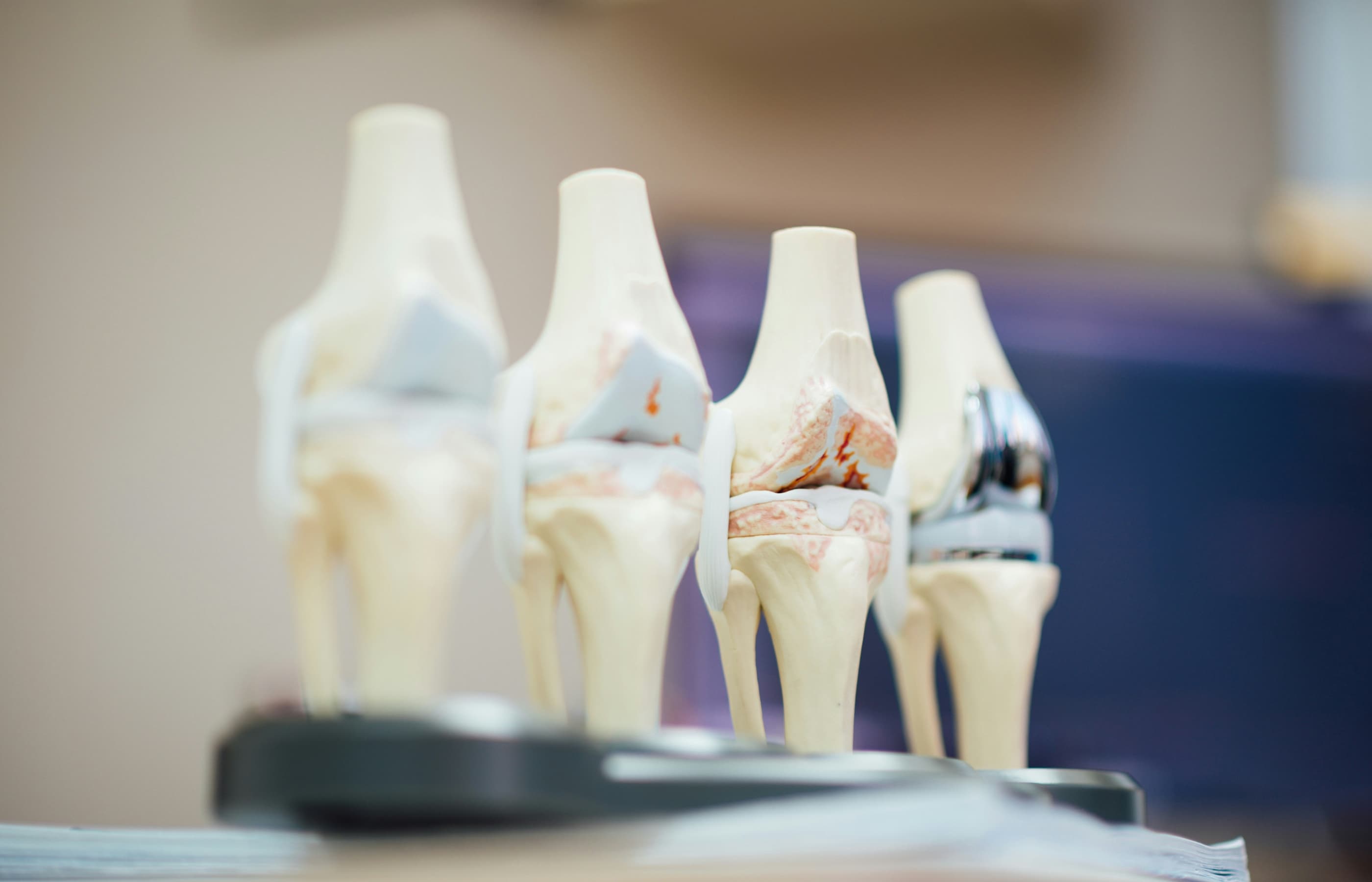
It comes up in clinic most weeks. Someone has read about keyhole surgery, they like the sound of a small cut and a quick recovery, and they arrive asking whether they can have their knee replaced that way.
The honest answer is that a keyhole knee replacement is not a procedure. The phrase exists because two very different operations have been blended together in the way people talk about them, and it matters, because patients occasionally end up having the wrong one.
Keyhole surgery of the knee means arthroscopy. A camera the width of a pen goes into the joint through a small puncture, instruments go in through another, and the surgeon works while looking at a screen. It is genuinely minor surgery and for the right problem it is excellent.
A knee replacement is a different undertaking. The worn surfaces at the end of the thigh bone and the top of the shin bone are removed and resurfaced with metal and plastic components. That requires access to the whole joint surface. You cannot deliver and position an implant through a puncture wound, which is why no surgeon anywhere offers a knee replacement performed arthroscopically.
Arthroscopy earns its place when something mechanical is wrong inside the joint. A torn meniscus that is catching, a fragment of cartilage floating loose, a knee that genuinely locks and will not straighten. In those situations the camera goes in, the problem is dealt with, and people are often walking out the same day.
I now do a proportion of these procedures with the patient awake under local anaesthetic, using a very small camera system. For a suitable patient that avoids a general anaesthetic entirely.
Arthritis. This is the part that disappoints people, and it is the reason the myth causes harm rather than simply being a bit of loose terminology.
For years it was common to wash out and tidy up arthritic knees arthroscopically. When that practice was studied properly it did not hold up, and national guidance in the UK now advises against arthroscopy for knee osteoarthritis unless there is a clear history of the knee mechanically locking. The camera can show you worn cartilage. It cannot put it back.
So if your knee hurts because it is arthritic, keyhole surgery is not a smaller version of the operation you need. It is a different operation that does not address your problem, and having one will usually leave you exactly where you started, minus a few weeks.
The term does get used in knee replacement, but it means something narrower than most patients assume. It refers to doing the operation through a shorter incision, handling the soft tissues carefully and disturbing as little of the surrounding muscle and tendon as possible. Robotic assistance and better planning have helped here, because more accurate bone preparation means less need to expose and correct as you go.
That is a real advantage and it does show up in early recovery. It is not keyhole surgery, and a surgeon who offers you a knee replacement and calls it keyhole is using language that should make you ask more questions.
If you go looking for keyhole knee surgery you will find clinics happy to sell you an arthroscopy. Some of those patients have a mechanical problem and will do well. Some of them have arthritis, will feel no better, and will have spent money and recovery time for nothing.
The thing worth establishing at your first appointment is not how big the cut will be. It is what is actually wrong with the knee, because the diagnosis determines the operation, and the size of the incision is the last part of that conversation rather than the first.
No. Knee replacement requires access to the joint surfaces to fit the implant. Smaller incision techniques exist, but they are not arthroscopic.
Only when there is a mechanical problem alongside the arthritis, such as a torn meniscus causing true locking. It does not treat the arthritis itself.
Keyhole surgery is arthroscopy, done through punctures with a camera. Minimally invasive knee replacement is a full replacement performed through a shorter incision with careful handling of the soft tissues.
In suitable patients, yes. A small camera system allows the procedure to be done with the patient awake under local anaesthetic.
An examination and usually an MRI scan. The pattern of your symptoms, particularly whether the knee catches or locks, tells us a great deal before any scan is done.
You can read more about what knee arthroscopy actually treats, and about total knee replacement, elsewhere on this site. If you have been offered keyhole surgery for an arthritic knee and want a second view, you can book a consultation at one of my clinics in Kent and East Sussex.