.avif)
By Mr Oni MBChB BSC PGDip FRCS (Tr &Orth), Consultant Hip and Knee Surgeon
Written: August 30th, 2026
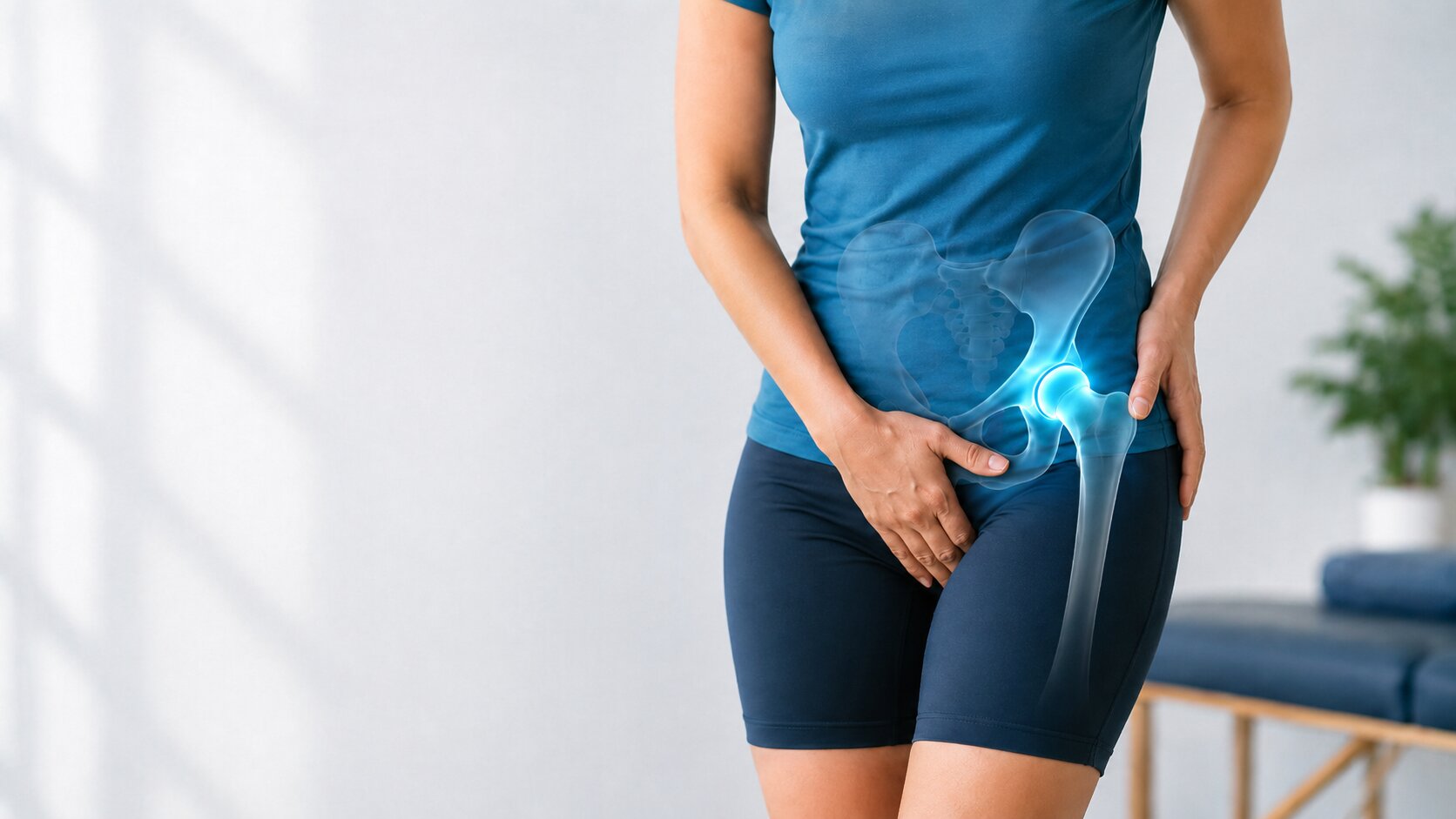
Ask someone to point to where hip pain lives and most people will touch the outside of the hip, or the buttock. So when pain appears in the groin, the hip is usually the last thing they suspect. In truth it should often be the first. Real hip joint pain usually sits in the groin, not the outer hip or the buttock, and because most patients expect the opposite, hip problems get missed.
I regularly see patients who have carried groin pain for months, sometimes longer, without anyone examining the hip. This article explains when groin pain is coming from the hip joint, when it is not, and a simple way to help tell the difference.
The hip is a deep ball and socket joint, and the nerves that supply it mostly refer pain to the front, into the groin and sometimes down towards the knee. Pain on the outer side of the hip more often comes from the tendons and soft tissues over the bone, and pain in the buttock frequently comes from the lower back. It is counterintuitive, but the location of the pain is one of the most useful clues we have.
Pain from the hip joint has a fairly recognisable pattern. The typical picture is a deep ache in the groin that is brought on by twisting, getting out of a car, or putting on socks and shoes. Alongside the ache there is usually stiffness and a gradual loss of movement. Patients often notice they can no longer cross their legs comfortably, or that cutting their toenails has quietly become difficult.
A few conditions account for most of the hip-related groin pain I see:
• Hip arthritis is the most common cause in people over 50. The groin ache builds gradually, often with stiffness first thing in the morning or after sitting.
• Hip impingement and labral tears are more typical in younger and sporty patients, where the shape of the joint or a tear in its cartilage rim causes sharp groin pain with certain movements.
• Avascular necrosis, where the blood supply to the ball of the joint is reduced, is less common but important not to miss.
Plenty of groin pain has nothing to do with the hip joint. The three causes I see most often are an inguinal hernia, a strained groin or adductor muscle, and pain referred from the lower back. In women the list of possible causes is longer still, which is one more reason persistent groin pain deserves a proper examination rather than guesswork.
Here is a useful rule of thumb. If moving the hip brings the pain on, it tends to be the joint. If coughing or straining brings it on, look elsewhere, because that pattern points more towards a hernia. It is not infallible, and it is not a substitute for an examination, but it is a sensible starting point when you are trying to work out what you are dealing with.
Most short-lived groin strains settle on their own. The pain worth taking seriously is groin pain that has lasted more than a few weeks, or pain that wakes you at night. At that point it deserves an assessment. The good news is that an examination and an X-ray usually give the answer quickly, and once we know what we are dealing with, the right treatment can start.
If groin pain has been hanging around and you would like a clear answer, you are welcome to book a consultation at one of my clinics in Kent and East Sussex.